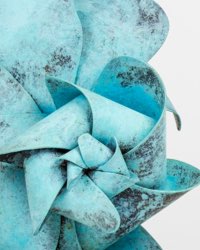
Thomas van Loon - under


02
days
08
hours
53
minutes
59
seconds
Current bid
€ 15
No reserve price

Expert
Selected by Anthony Chrisp
Over 10 years' experience in art trade and previously founded his own gallery.
Gallery Estimate € 2,000 - € 2,400
 | €15 | |
|---|---|---|
 | €12 | |
| €9 | |
Catawiki Buyer Protection
Your payment’s safe with us until you receive your object.View details
Trustpilot 4.4 | 139188 reviews
Rated Excellent on Trustpilot.
Thomas van Loon, ‘under’, a modern sculpture in resin and wood with a bronze and gold finish, measuring 20 × 45 × 20 cm, weighing 1 kg, hand-signed, from the Netherlands and sold by Galerie in good condition.
AI-assisted summary
Description from the seller
Thomas van Loon (born 1994)
is a Dutch visual artist who lives and works in the Netherlands. His practice moves decisively beyond the boundaries of classical sculpture. Although his work often appears sculptural, it arises from a hybrid process in which analogue actions, experimental materials and contemporary techniques come together.
In his work, Van Loon explores the human figure as a carrier of inner tension, vulnerability and stillness. The figure does not function as an anatomical starting point, but as a conceptual and physical condensation of mental and bodily states. His sculptures occupy the boundary between figuration and abstraction and are characterized by a sober, concentrated formal language.
Van Loon works with a broad palette of materials and techniques, including plaster, fabric, wood, synthetic supports, digital preparation and mixed media. New technologies and contemporary making processes are not used for their own sake, but as means to shape fragile, bodily presence. Traditional manual interventions seamlessly coexist with contemporary techniques; the work is as much constructed as formed.
The skin of his sculptures is never smooth or finished. It bears marks of processing, fractures, incisions and layering. These visible interventions refer to time, memory and bodily experience. The surface functions as a carrier of history, where control and chance alternate.
Central in Van Loon’s oeuvre is the human being as a fragile and bounded creature. Figures are often enclosed, enveloped or partially withdrawn from their own body. This enveloping is not a depiction of violence, but a metaphor for internal limitation, stillness and introspection. His work balances between tension and surrender, between holding on and letting go.
The head plays a recurring role and is regularly recognizable or elaborated in a concentrated way, while the body dissolves into abstract volumes, constructions or textile structures. This tension emphasizes the gap between thinking and feeling, between identity and corporeality, between control and vulnerability.
Van Loon works slowly and with great care. His studio is not a production space, but a place of research, repetition and reflection. Works emerge over a long period through a process of adding, removing and reinterpreting. Chance is given space, but is continuously questioned and corrected.
His sculptures are not narrative, but existential. They invite silence and prolonged observation. In a time of visual abundance, Van Loon consciously chooses restraint, concentration and delay. The works function not only as objects, but as physical presence in the space — almost like silent bodies, or silent witnesses.
Development and recognition
Since the start of his professional practice, Thomas van Loon has been gaining increasing attention within the contemporary art context. His work is valued for its substantive consistency, material sensitivity and contemporary approach to sculptural form. Critics praise his ability to evoke maximum physical and emotional intensity with minimal means.
Thomas van Loon continues to deepen his practice around the human figure and the tension between body, technology and inner experience. His work forms a quiet but powerful countervoice within contemporary visual art — an invitation to attention, bodily awareness and delay.
Thomas van Loon (born 1994)
is a Dutch visual artist who lives and works in the Netherlands. His practice moves decisively beyond the boundaries of classical sculpture. Although his work often appears sculptural, it arises from a hybrid process in which analogue actions, experimental materials and contemporary techniques come together.
In his work, Van Loon explores the human figure as a carrier of inner tension, vulnerability and stillness. The figure does not function as an anatomical starting point, but as a conceptual and physical condensation of mental and bodily states. His sculptures occupy the boundary between figuration and abstraction and are characterized by a sober, concentrated formal language.
Van Loon works with a broad palette of materials and techniques, including plaster, fabric, wood, synthetic supports, digital preparation and mixed media. New technologies and contemporary making processes are not used for their own sake, but as means to shape fragile, bodily presence. Traditional manual interventions seamlessly coexist with contemporary techniques; the work is as much constructed as formed.
The skin of his sculptures is never smooth or finished. It bears marks of processing, fractures, incisions and layering. These visible interventions refer to time, memory and bodily experience. The surface functions as a carrier of history, where control and chance alternate.
Central in Van Loon’s oeuvre is the human being as a fragile and bounded creature. Figures are often enclosed, enveloped or partially withdrawn from their own body. This enveloping is not a depiction of violence, but a metaphor for internal limitation, stillness and introspection. His work balances between tension and surrender, between holding on and letting go.
The head plays a recurring role and is regularly recognizable or elaborated in a concentrated way, while the body dissolves into abstract volumes, constructions or textile structures. This tension emphasizes the gap between thinking and feeling, between identity and corporeality, between control and vulnerability.
Van Loon works slowly and with great care. His studio is not a production space, but a place of research, repetition and reflection. Works emerge over a long period through a process of adding, removing and reinterpreting. Chance is given space, but is continuously questioned and corrected.
His sculptures are not narrative, but existential. They invite silence and prolonged observation. In a time of visual abundance, Van Loon consciously chooses restraint, concentration and delay. The works function not only as objects, but as physical presence in the space — almost like silent bodies, or silent witnesses.
Development and recognition
Since the start of his professional practice, Thomas van Loon has been gaining increasing attention within the contemporary art context. His work is valued for its substantive consistency, material sensitivity and contemporary approach to sculptural form. Critics praise his ability to evoke maximum physical and emotional intensity with minimal means.
Thomas van Loon continues to deepen his practice around the human figure and the tension between body, technology and inner experience. His work forms a quiet but powerful countervoice within contemporary visual art — an invitation to attention, bodily awareness and delay.
Details
Era
After 2000
Sold by
Gallery
Country of origin
Netherlands
Style
Contemporary
Material
Resin, Wood
Artist
Thomas van Loon
Title of artwork
under
Signature
Hand signed
Colour
Bronze, Gold
Condition
Good condition
Height
45 cm
Width
20 cm
Depth
20 cm
Weight
1 kg
Sold by