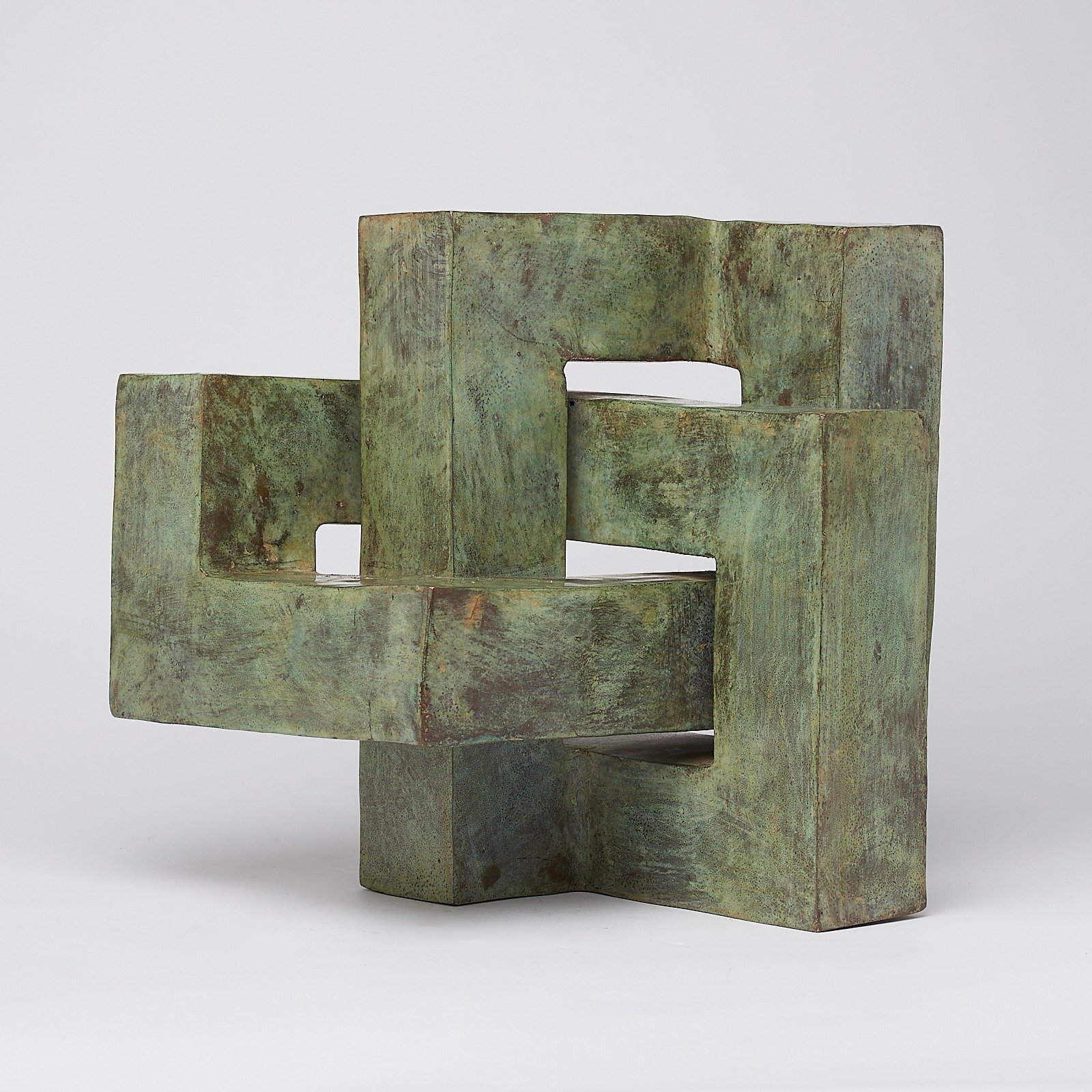
Diossy - Coat rack - Aluminium - Hat,Jacket,coat rack hang


04
days
16
hours
04
minutes
30
seconds
Starting bid
€ 1
No reserve price

Expert
Selected by Elena Napoleone
Holds a bachelor's degree in history of art and architecture, with 12 years of experience in decorative arts.
Estimate € 90 - € 130
No bids placed
Catawiki Buyer Protection
Your payment’s safe with us until you receive your object.View details
Trustpilot 4.4 | 139133 reviews
Rated Excellent on Trustpilot.
Art Deco aluminium hat, jacket and coat rack by János Diósy from Hungary, circa 1920–1930, 29 cm high, 63 cm wide, 10 cm deep, silver with an aged patina in good condition, featuring six integrated hanger positions.
AI-assisted summary
Description from the seller
Excellent art deco hanger from the 1920-30s
With obvious signs of age
Designer and Manufacturer: János Diósy
The Rack of the Elegant World
* Rare circa 1930 Hungarian design
* Attributed to János Diósy
* Distinctive sculptural, flowing curves
* Six integrated/sliding hanger positions
* Original aluminium and black-finished construction
* Concealed or discreet wall-mounting design
* Original aged patina and authentic signs of use
* Exceptional architectural presence
* Highly unusual and increasingly difficult to find
Few utilitarian objects possess the visual presence of this exceptional Hungarian rack. Dating from approximately the 1930s, this striking piece transforms the humble garment rack into a sculptural object. Its most remarkable characteristic is the sophisticated language of its curving lines: elongated aluminium rails are framed by sweeping black structural elements, creating a composition that feels simultaneously functional, aerodynamic and almost architectural.
The rack is particularly associated with the work of János Diósy, a Hungarian designer and craftsman whose early twentieth-century domestic accessories demonstrate an unusual understanding of how everyday objects could become expressions of modern design. Rather than treating a coat rack, hanger or curtain fitting merely as a practical necessity, Diósy approached these objects as carefully considered pieces of interior architecture.
This particular version is especially compelling because of its rare and highly sculptural configuration. The pronounced curves of the black supports contrast beautifully with the linear precision of the aluminium rails. The result is a fascinating tension between straight and curved geometry, horizontal and vertical movement, mass and lightness. Seen from different angles, the rack almost changes character: from one perspective it appears remarkably streamlined; from another, its sweeping contours become the dominant visual feature.
The six integrated hanger positions provide a remarkably practical solution for displaying coats, jackets, dresses, shirts and other garments. Yet the functionality never overwhelms the design. Instead, the clothing becomes part of the composition, allowing the rack to function equally well as a hallway coat rack, wardrobe accessory, dressing-room fixture, boutique display, architectural wall rack or sculptural interior object.
Its aluminium construction is particularly characteristic of the period. During the interwar decades, aluminium increasingly became associated with modernity, technological progress and refined industrial design. Its light visual character allowed designers to create objects that were strong and practical without appearing heavy. Here, the metallic rails provide a restrained, almost futuristic counterpoint to the darker curved framework.
The black structural elements are perhaps the most distinctive aspect of this example. Their generous elliptical openings, rounded transitions and pronounced sweeping contours give the rack an unmistakable personality. These are not simply engineering solutions; they are deliberately visible elements of the design. The curves create rhythm across the entire object and give the rack an almost kinetic quality, as if the structure were designed around the movement of garments and the human body.
This combination of industrial material, sculptural geometry and domestic functionality places the piece comfortably within the broader European modernist tradition. It evokes the spirit of Art Deco, early modernism and interwar functionalism without being reducible to any one movement. There is an especially interesting Hungarian character to the object: practical, inventive and technically minded, yet with an appreciation for decorative form.
The condition has been preserved with an authentic original patina, reflecting its age and history. Rather than being excessively restored, the surface retains the subtle traces and variations that give vintage design its credibility. Minor signs of age should therefore be understood as part of the object’s character and provenance rather than as imperfections to be concealed.
What makes this rack particularly desirable to collectors is its rarity. Comparable early twentieth-century domestic accessories are already difficult to encounter, while examples with such a pronounced sculptural construction and distinctive combination of aluminium and black framework are considerably less common. It is precisely this unusual silhouette that makes the piece stand apart from ordinary vintage coat racks and conventional storage furniture.
For a collector of Hungarian design, European modernism, Art Deco interiors, industrial design, vintage furniture, architectural accessories or rare domestic objects, this is an unusually expressive piece. It can function as a practical garment rack, but its real strength lies in its ability to become a focal point within an interior.
Placed in a sophisticated entrance hall, dressing room, private wardrobe, boutique, gallery or minimalist apartment, the rack immediately establishes a strong visual identity. Its long horizontal lines can emphasise the architecture of a room, while its sculptural curves introduce movement and softness. With garments hanging from the lower rail, it becomes almost a piece of functional sculpture; without them, the construction itself remains visually compelling.
The combination of rarity, period character, original patina, aluminium construction, six hanger positions and exceptionally elegant curved geometry makes this an especially attractive example of early Hungarian modernist domestic design.
Rather than being simply another vintage coat rack, this is a piece that demonstrates an important principle of twentieth-century design: even the most ordinary household object can become extraordinary when proportion, material, engineering and artistic form are brought together with conviction.
A rare and highly decorative Hungarian design object with genuine collector appeal, this unusual Diósy rack would make an impressive addition to a curated interior or a specialised collection of early modernist and Central European design.
Excellent art deco hanger from the 1920-30s
With obvious signs of age
Designer and Manufacturer: János Diósy
The Rack of the Elegant World
* Rare circa 1930 Hungarian design
* Attributed to János Diósy
* Distinctive sculptural, flowing curves
* Six integrated/sliding hanger positions
* Original aluminium and black-finished construction
* Concealed or discreet wall-mounting design
* Original aged patina and authentic signs of use
* Exceptional architectural presence
* Highly unusual and increasingly difficult to find
Few utilitarian objects possess the visual presence of this exceptional Hungarian rack. Dating from approximately the 1930s, this striking piece transforms the humble garment rack into a sculptural object. Its most remarkable characteristic is the sophisticated language of its curving lines: elongated aluminium rails are framed by sweeping black structural elements, creating a composition that feels simultaneously functional, aerodynamic and almost architectural.
The rack is particularly associated with the work of János Diósy, a Hungarian designer and craftsman whose early twentieth-century domestic accessories demonstrate an unusual understanding of how everyday objects could become expressions of modern design. Rather than treating a coat rack, hanger or curtain fitting merely as a practical necessity, Diósy approached these objects as carefully considered pieces of interior architecture.
This particular version is especially compelling because of its rare and highly sculptural configuration. The pronounced curves of the black supports contrast beautifully with the linear precision of the aluminium rails. The result is a fascinating tension between straight and curved geometry, horizontal and vertical movement, mass and lightness. Seen from different angles, the rack almost changes character: from one perspective it appears remarkably streamlined; from another, its sweeping contours become the dominant visual feature.
The six integrated hanger positions provide a remarkably practical solution for displaying coats, jackets, dresses, shirts and other garments. Yet the functionality never overwhelms the design. Instead, the clothing becomes part of the composition, allowing the rack to function equally well as a hallway coat rack, wardrobe accessory, dressing-room fixture, boutique display, architectural wall rack or sculptural interior object.
Its aluminium construction is particularly characteristic of the period. During the interwar decades, aluminium increasingly became associated with modernity, technological progress and refined industrial design. Its light visual character allowed designers to create objects that were strong and practical without appearing heavy. Here, the metallic rails provide a restrained, almost futuristic counterpoint to the darker curved framework.
The black structural elements are perhaps the most distinctive aspect of this example. Their generous elliptical openings, rounded transitions and pronounced sweeping contours give the rack an unmistakable personality. These are not simply engineering solutions; they are deliberately visible elements of the design. The curves create rhythm across the entire object and give the rack an almost kinetic quality, as if the structure were designed around the movement of garments and the human body.
This combination of industrial material, sculptural geometry and domestic functionality places the piece comfortably within the broader European modernist tradition. It evokes the spirit of Art Deco, early modernism and interwar functionalism without being reducible to any one movement. There is an especially interesting Hungarian character to the object: practical, inventive and technically minded, yet with an appreciation for decorative form.
The condition has been preserved with an authentic original patina, reflecting its age and history. Rather than being excessively restored, the surface retains the subtle traces and variations that give vintage design its credibility. Minor signs of age should therefore be understood as part of the object’s character and provenance rather than as imperfections to be concealed.
What makes this rack particularly desirable to collectors is its rarity. Comparable early twentieth-century domestic accessories are already difficult to encounter, while examples with such a pronounced sculptural construction and distinctive combination of aluminium and black framework are considerably less common. It is precisely this unusual silhouette that makes the piece stand apart from ordinary vintage coat racks and conventional storage furniture.
For a collector of Hungarian design, European modernism, Art Deco interiors, industrial design, vintage furniture, architectural accessories or rare domestic objects, this is an unusually expressive piece. It can function as a practical garment rack, but its real strength lies in its ability to become a focal point within an interior.
Placed in a sophisticated entrance hall, dressing room, private wardrobe, boutique, gallery or minimalist apartment, the rack immediately establishes a strong visual identity. Its long horizontal lines can emphasise the architecture of a room, while its sculptural curves introduce movement and softness. With garments hanging from the lower rail, it becomes almost a piece of functional sculpture; without them, the construction itself remains visually compelling.
The combination of rarity, period character, original patina, aluminium construction, six hanger positions and exceptionally elegant curved geometry makes this an especially attractive example of early Hungarian modernist domestic design.
Rather than being simply another vintage coat rack, this is a piece that demonstrates an important principle of twentieth-century design: even the most ordinary household object can become extraordinary when proportion, material, engineering and artistic form are brought together with conviction.
A rare and highly decorative Hungarian design object with genuine collector appeal, this unusual Diósy rack would make an impressive addition to a curated interior or a specialised collection of early modernist and Central European design.
Details
Era
1900-2000
Title additional information
Hat,Jacket,coat rack hang
Number of objects
1
Country of origin
Hungary
Designer/artist/maker
Diossy
Material
Aluminium
Style
Art Deco
Colour
Silver
Condition
Good condition - used with small signs of aging & blemishes
Height
29 cm
Width
63 cm
Depth
10 cm
Estimated period
1920-1930
Sold by