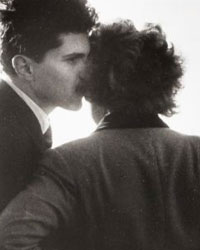
Vladimír Birgus - Climber


05
days
02
hours
16
minutes
43
seconds
Starting bid
€ 1
Reserve price not met

Expert
Selected by Kai Brückner
Over 35 years' experience; former gallery owner and Museum Folkwang curator.
Estimate € 600 - € 800
No bids placed
Catawiki Buyer Protection
Your payment’s safe with us until you receive your object.View details
Trustpilot 4.4 | 139719 reviews
Rated Excellent on Trustpilot.
Description from the seller
Size: 29 x 23
Cutout: 19 x 16 cm
photo from the portfolio Meetings 1983 IN MEMORIAM TO TARAS KUŠČYNSKÍMU, Exchange action 1983
the album was made in only 55 pieces and only for the author of the photo from the given album. Every family protects the albums like the apple of their eye, that's why these photos can't be bought on the market. They are inherited. That's why you have a unique opportunity to own one of these photos.
I am only selling the photo itself.
Vladimír Birgus (born 1954) is one of the most important figures in Czech photography. He is not only an accomplished photographer, but also a highly respected photography historian, curator, professor and author. His work has played a major role in bringing Czech photography and the Czech avant-garde to an international audience.
Birgus studied photography at FAMU in Prague and later became a professor there. He has also been the long-time head of the Institute of Creative Photography at the Silesian University in Opava, where he has had a major influence on several generations of Czech and Central European photographers.
As a photographer, Birgus has exhibited internationally, including solo exhibitions in Amsterdam, Berlin, Bratislava, Prague, Eisenach, Poznań, Białystok and other European cities. His photographs have also been presented at major international institutions, including the Art Institute of Chicago. His work is represented in important museum collections, including the San Francisco Museum of Modern Art, Museum of Fine Arts Houston, Tokyo Photographic Art Museum, Yokohama Museum of Art, Slovak National Gallery in Bratislava and Musée Réattu in Arles. His photographs have been shown in around 80 solo exhibitions. (birgus.com)
However, Birgus’s greatest international importance probably lies in his work as a historian and curator of Czech photography. He has organized major exhibitions devoted to Czech avant-garde photography and to photographers such as František Drtikol, Jaroslav Rössler, Eugen Wiškovský and William Klein. His exhibitions have travelled to major cultural centres including Paris, Barcelona, London, Berlin, Munich, Madrid, Salzburg, Chicago, Moscow and Tokyo. (birgus.com)
One of his most important achievements was the book Czech Photographic Avant-Garde 1918–1948. The publication received several major international distinctions: the Grand Prix at Primavera Fotográfica in Barcelona in 2000, the main prize for the best photography publication from Central and Eastern Europe at the Month of Photography in Bratislava, and the Golden Light Book Award in 2002 for the best history-of-photography book published in the United States that year. It was also a finalist for the Kraszna Krausz Book Award in London. (birgus.com)
Another major achievement was his work on Jaroslav Rössler, one of the key figures of Czech avant-garde photography. Birgus co-curated a major retrospective and catalogue of Rössler’s work, which subsequently travelled to Madrid, Brest, Salzburg and Frankfurt. The publication itself later received the main prize in the photography-book competition at the Month of Photography festival in Bratislava. (birgus.com)
Birgus was also a key figure behind the enormous exhibition and publication Czech Photography of the 20th Century, which presented approximately 1,300 works from public and private collections. The project became one of the most comprehensive surveys of Czech photography ever assembled. (birgus.com)
His bibliography is extensive: he has authored or co-authored around 65 books, including major publications on Czech avant-garde photography, František Drtikol, Jaroslav Rössler, Eugen Wiškovský, Gustav Aulehla and the history of Czech photography. Several of his books have been published internationally in English and German, including by The MIT Press and other major European publishers. (birgus.com)
In recognition of his contribution to Czech photography, Birgus received the “Personality of Czech Photography” award for 2005, together with Jan Mlčoch. He has also served on the jury of the prestigious Hasselblad Award and has lectured on Czech avant-garde photography at institutions such as the National Gallery of Canada in Ottawa. (birgus.com)
In short, Vladimír Birgus occupies a unique position in Czech photography: he is simultaneously an internationally exhibited photographer, an influential educator, one of the leading historians of Czech photography, and a curator responsible for bringing the work of major Czech photographers to museums and audiences around the world.
Setkání 1983 – In Memoriam Taras Kuščynskyj
The photographic album Setkání 1983 – Výměnná akce, created in memory of the Czech photographer Taras Kuščynskyj (1932–1983), is a particularly interesting document of the Czech photographic scene of the late socialist period.
Kuščynskyj died on 27 December 1983 and had been one of the important Czech photographers of his generation. He was a co-founder of the photographic group Setkání, established in 1976. During his career he held 35 exhibitions, including exhibitions abroad in the Netherlands, Austria and Japan. His work was particularly associated with portraits, the female nude and photography in the landscape. (wwg.cz)
The Výměnná akce project is significant because it represents a different way of circulating photographic art outside the conventional exhibition system. Rather than functioning simply as a standard exhibition catalogue, these photographic books and portfolios allowed individual photographers to exchange and distribute original photographic works among themselves.
This type of activity was especially meaningful in the cultural environment of Czechoslovakia under communist rule, when opportunities for independent artistic presentation were limited and the official exhibition system was subject to institutional control. Informal photographic groups, personal networks and exchange projects therefore became important ways of maintaining contact between artists and allowing experimental work to circulate.
The 1983 volume acquired an additional memorial significance following Kuščynskyj’s death. The Czech national digital collection eSbirky records works explicitly identified as belonging to “Výměnná akce 1983. In memoriam Tarasu Kusčynskému”, as well as a work described as part of the “14. kniha 83”. (eSbírky)
For collectors, this makes Setkání 1983 more than simply a photographic album. It is a document of the Czech photographic community and its methods of artistic exchange during the communist period. Its importance lies not only in the individual photographs, but also in the provenance, collective authorship and historical circumstances surrounding its creation.
The connection with Taras Kuščynskyj is particularly important. In the year of his death, he had his final Prague exhibition at Fotochema as part of Interkamera, while his final exhibition during his lifetime took place at the Museum of Ukrainian Culture in Svidník. (wwg.cz)
For this reason, a complete and well-preserved example of Setkání 1983 – Výměnná akce / In Memoriam Taras Kuščynskyj can be regarded as a rare piece of photographic ephemera documenting the underground or semi-independent circulation of photography in 1980s Czechoslovakia. Its value is therefore both artistic and historical.
Size: 29 x 23
Cutout: 19 x 16 cm
photo from the portfolio Meetings 1983 IN MEMORIAM TO TARAS KUŠČYNSKÍMU, Exchange action 1983
the album was made in only 55 pieces and only for the author of the photo from the given album. Every family protects the albums like the apple of their eye, that's why these photos can't be bought on the market. They are inherited. That's why you have a unique opportunity to own one of these photos.
I am only selling the photo itself.
Vladimír Birgus (born 1954) is one of the most important figures in Czech photography. He is not only an accomplished photographer, but also a highly respected photography historian, curator, professor and author. His work has played a major role in bringing Czech photography and the Czech avant-garde to an international audience.
Birgus studied photography at FAMU in Prague and later became a professor there. He has also been the long-time head of the Institute of Creative Photography at the Silesian University in Opava, where he has had a major influence on several generations of Czech and Central European photographers.
As a photographer, Birgus has exhibited internationally, including solo exhibitions in Amsterdam, Berlin, Bratislava, Prague, Eisenach, Poznań, Białystok and other European cities. His photographs have also been presented at major international institutions, including the Art Institute of Chicago. His work is represented in important museum collections, including the San Francisco Museum of Modern Art, Museum of Fine Arts Houston, Tokyo Photographic Art Museum, Yokohama Museum of Art, Slovak National Gallery in Bratislava and Musée Réattu in Arles. His photographs have been shown in around 80 solo exhibitions. (birgus.com)
However, Birgus’s greatest international importance probably lies in his work as a historian and curator of Czech photography. He has organized major exhibitions devoted to Czech avant-garde photography and to photographers such as František Drtikol, Jaroslav Rössler, Eugen Wiškovský and William Klein. His exhibitions have travelled to major cultural centres including Paris, Barcelona, London, Berlin, Munich, Madrid, Salzburg, Chicago, Moscow and Tokyo. (birgus.com)
One of his most important achievements was the book Czech Photographic Avant-Garde 1918–1948. The publication received several major international distinctions: the Grand Prix at Primavera Fotográfica in Barcelona in 2000, the main prize for the best photography publication from Central and Eastern Europe at the Month of Photography in Bratislava, and the Golden Light Book Award in 2002 for the best history-of-photography book published in the United States that year. It was also a finalist for the Kraszna Krausz Book Award in London. (birgus.com)
Another major achievement was his work on Jaroslav Rössler, one of the key figures of Czech avant-garde photography. Birgus co-curated a major retrospective and catalogue of Rössler’s work, which subsequently travelled to Madrid, Brest, Salzburg and Frankfurt. The publication itself later received the main prize in the photography-book competition at the Month of Photography festival in Bratislava. (birgus.com)
Birgus was also a key figure behind the enormous exhibition and publication Czech Photography of the 20th Century, which presented approximately 1,300 works from public and private collections. The project became one of the most comprehensive surveys of Czech photography ever assembled. (birgus.com)
His bibliography is extensive: he has authored or co-authored around 65 books, including major publications on Czech avant-garde photography, František Drtikol, Jaroslav Rössler, Eugen Wiškovský, Gustav Aulehla and the history of Czech photography. Several of his books have been published internationally in English and German, including by The MIT Press and other major European publishers. (birgus.com)
In recognition of his contribution to Czech photography, Birgus received the “Personality of Czech Photography” award for 2005, together with Jan Mlčoch. He has also served on the jury of the prestigious Hasselblad Award and has lectured on Czech avant-garde photography at institutions such as the National Gallery of Canada in Ottawa. (birgus.com)
In short, Vladimír Birgus occupies a unique position in Czech photography: he is simultaneously an internationally exhibited photographer, an influential educator, one of the leading historians of Czech photography, and a curator responsible for bringing the work of major Czech photographers to museums and audiences around the world.
Setkání 1983 – In Memoriam Taras Kuščynskyj
The photographic album Setkání 1983 – Výměnná akce, created in memory of the Czech photographer Taras Kuščynskyj (1932–1983), is a particularly interesting document of the Czech photographic scene of the late socialist period.
Kuščynskyj died on 27 December 1983 and had been one of the important Czech photographers of his generation. He was a co-founder of the photographic group Setkání, established in 1976. During his career he held 35 exhibitions, including exhibitions abroad in the Netherlands, Austria and Japan. His work was particularly associated with portraits, the female nude and photography in the landscape. (wwg.cz)
The Výměnná akce project is significant because it represents a different way of circulating photographic art outside the conventional exhibition system. Rather than functioning simply as a standard exhibition catalogue, these photographic books and portfolios allowed individual photographers to exchange and distribute original photographic works among themselves.
This type of activity was especially meaningful in the cultural environment of Czechoslovakia under communist rule, when opportunities for independent artistic presentation were limited and the official exhibition system was subject to institutional control. Informal photographic groups, personal networks and exchange projects therefore became important ways of maintaining contact between artists and allowing experimental work to circulate.
The 1983 volume acquired an additional memorial significance following Kuščynskyj’s death. The Czech national digital collection eSbirky records works explicitly identified as belonging to “Výměnná akce 1983. In memoriam Tarasu Kusčynskému”, as well as a work described as part of the “14. kniha 83”. (eSbírky)
For collectors, this makes Setkání 1983 more than simply a photographic album. It is a document of the Czech photographic community and its methods of artistic exchange during the communist period. Its importance lies not only in the individual photographs, but also in the provenance, collective authorship and historical circumstances surrounding its creation.
The connection with Taras Kuščynskyj is particularly important. In the year of his death, he had his final Prague exhibition at Fotochema as part of Interkamera, while his final exhibition during his lifetime took place at the Museum of Ukrainian Culture in Svidník. (wwg.cz)
For this reason, a complete and well-preserved example of Setkání 1983 – Výměnná akce / In Memoriam Taras Kuščynskyj can be regarded as a rare piece of photographic ephemera documenting the underground or semi-independent circulation of photography in 1980s Czechoslovakia. Its value is therefore both artistic and historical.
Details
Date of print
1982
Artist
Vladimír Birgus
Sold by
Owner or reseller
Title of artwork
Climber
Condition
Fine
Technique
Gelatin-silver print
Height
19 cm
Width
16 cm
Signature
Signed
Genre
Landscape
Sold by