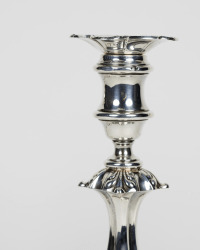
Baroque Silver Chalice – Germany - c. 1690–1720


04
days
14
hours
42
minutes
14
seconds
Current bid
€ 110
Reserve price not met

Expert
Selected by Chiara Scotto Pasanisi dei Foscarini
Holds master’s in art business and decorative arts; exhibited at TEFAF Maastricht.
Estimate € 850 - € 950
 | €110 | |
|---|---|---|
| €100 | |
| €95 | |
Catawiki Buyer Protection
Your payment’s safe with us until you receive your object.View details
Trustpilot 4.4 | 140482 reviews
Rated Excellent on Trustpilot.
A late Baroque South German silver chalice dating to c.1690–1720, weighing approx. 124 g with 12–13 loth fineness, featuring a plain-walled cup with a beaded rim, a short stem with a vegetal knop, and a high-relief acanthus-decorated foot, professionally restored including a rim repair while preserving the patina.
AI-assisted summary
Description from the seller
Small silver chalice / goblet from the late Baroque period, attributable to South German silver, stylistically closest to the Augsburg / Nuremberg silversmithing tradition, circa 1690–1720.
Plain-walled cup with a slightly flaring rim, finished with a beaded border. Short stem with a symmetrically ornamented vegetal knop. Circular foot richly decorated with high-relief, symmetrical acanthus leaves. Hammered body with applied and soldered structural elements, consistent with late 17th–early 18th century South German silversmithing practice.
On the inner rim of the foot, traces of an original hallmark (“ghost mark”) are visible, now rubbed and no longer legible. The placement corresponds to a documented and authentic marking position used in South German silver of this period.
The object has been professionally restored, including a discreet rim repair, with the original patina carefully preserved.
Material: silver
Fineness: consistent with historical South German silver standards (approximately 12–13 loth, c. 750–813‰)
Weight: approx. 124 g
Dimensions:
– Height: 101 mm
– Rim diameter: 76.9 mm
– Foot diameter: 60.1 mm
A well-balanced and authentic example of late Baroque South German silver.
Small silver chalice / goblet from the late Baroque period, attributable to South German silver, stylistically closest to the Augsburg / Nuremberg silversmithing tradition, circa 1690–1720.
Plain-walled cup with a slightly flaring rim, finished with a beaded border. Short stem with a symmetrically ornamented vegetal knop. Circular foot richly decorated with high-relief, symmetrical acanthus leaves. Hammered body with applied and soldered structural elements, consistent with late 17th–early 18th century South German silversmithing practice.
On the inner rim of the foot, traces of an original hallmark (“ghost mark”) are visible, now rubbed and no longer legible. The placement corresponds to a documented and authentic marking position used in South German silver of this period.
The object has been professionally restored, including a discreet rim repair, with the original patina carefully preserved.
Material: silver
Fineness: consistent with historical South German silver standards (approximately 12–13 loth, c. 750–813‰)
Weight: approx. 124 g
Dimensions:
– Height: 101 mm
– Rim diameter: 76.9 mm
– Foot diameter: 60.1 mm
A well-balanced and authentic example of late Baroque South German silver.
Details
Distillery/brand
Baroque Silver Chalice – Germany
Volume on label
c. 1690–1720
Alcohol %
12/13 Loth silver