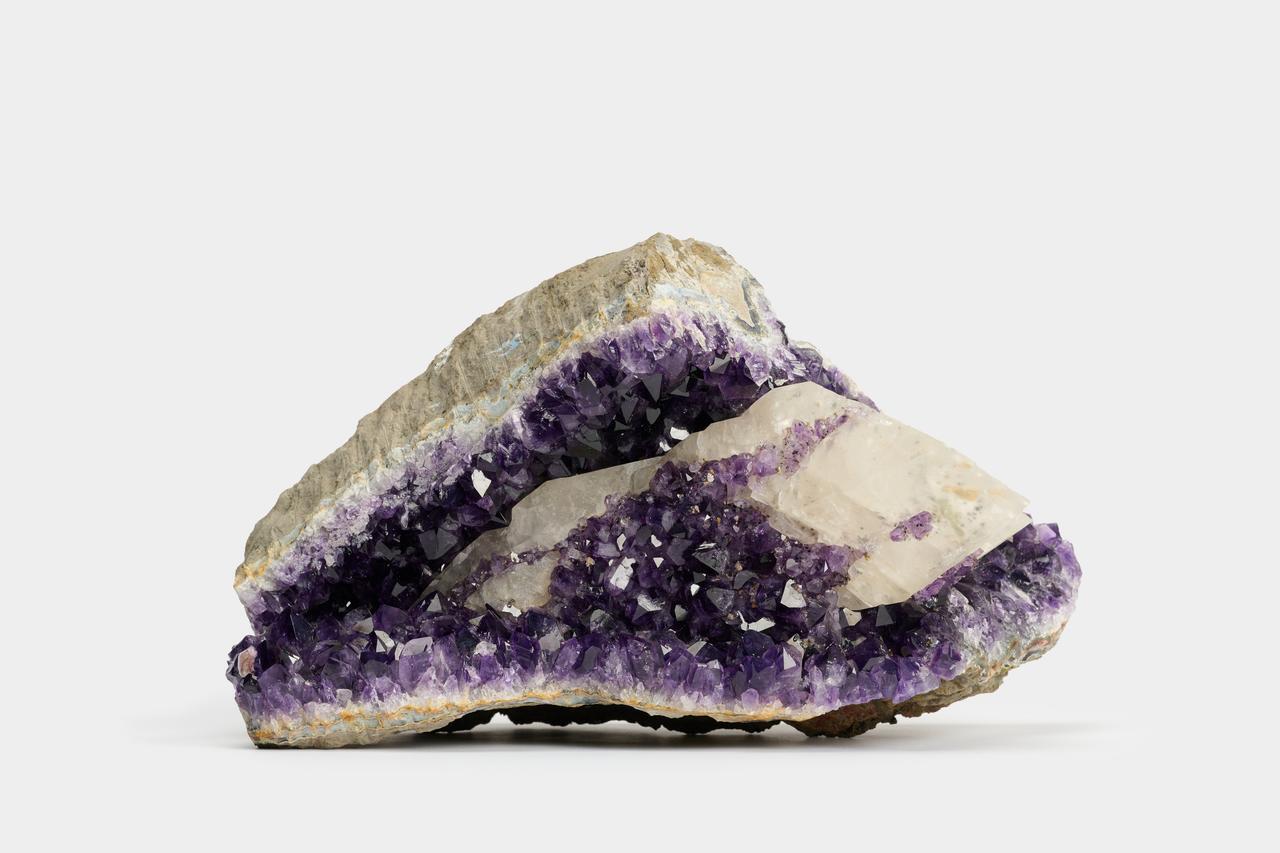
Admire meteorite Pallasitic - 2.32 g - (1)


05
days
21
hours
10
minutes
20
seconds

No bids placed
Catawiki Buyer Protection
Your payment’s safe with us until you receive your object.View details
Trustpilot 4.4 | 139719 reviews
Rated Excellent on Trustpilot.
Admire meteorite, a pallasitic meteorite from the USA, origin Mark Lyon, weight 2.32 g, presented as a beautiful partial slab.
AI-assisted summary
Description from the seller
2.32g. Admire pallasite partial slab.\n\nDiscovered: 1881, USA.\nTKW: 180 kg\nOrigin: Mark Lyon\nShipping: FedEx, 2-3 days in Europe.\n\nAdmire pallasites are easily identified by large polycrystalline areas that have been fractured into extremely fierce fragments - the result of an impact in this particular asteroid. It is rare for such a wedge-shaped crystal distribution to be as attractive as in the specimen now offered. Although meteorites are among the rarest materials on Earth - the total number of meteorites in the world is less than the world's annual gold production - pallasites are even rarer, accounting for less than 0.2% of all known meteorites. Pallasites formed at the core-mantle boundary of an asteroid when some olivine from the mantle crystallized near the liquid metallic core. The asteroid's breakup caused its interior to be released, and some of it landed on Earth. Some pallasites, including the one in this offering, contain diamond-quality olivine or peridot (the birthstone for August). The first two masses of Admire pallasites were discovered in 1881 while working a field in Lyon County, Kansas. More than a century later, enterprising meteorite hunters returned to the site and, after more work (excavating the ground with a metal detector), obtained additional Admire samples.
2.32g. Admire pallasite partial slab.\n\nDiscovered: 1881, USA.\nTKW: 180 kg\nOrigin: Mark Lyon\nShipping: FedEx, 2-3 days in Europe.\n\nAdmire pallasites are easily identified by large polycrystalline areas that have been fractured into extremely fierce fragments - the result of an impact in this particular asteroid. It is rare for such a wedge-shaped crystal distribution to be as attractive as in the specimen now offered. Although meteorites are among the rarest materials on Earth - the total number of meteorites in the world is less than the world's annual gold production - pallasites are even rarer, accounting for less than 0.2% of all known meteorites. Pallasites formed at the core-mantle boundary of an asteroid when some olivine from the mantle crystallized near the liquid metallic core. The asteroid's breakup caused its interior to be released, and some of it landed on Earth. Some pallasites, including the one in this offering, contain diamond-quality olivine or peridot (the birthstone for August). The first two masses of Admire pallasites were discovered in 1881 while working a field in Lyon County, Kansas. More than a century later, enterprising meteorite hunters returned to the site and, after more work (excavating the ground with a metal detector), obtained additional Admire samples.
Details
Number of objects
1
Name of meteorite
Admire meteorite
Type of meteorite
Pallasitic
Supplement
Beautiful part slice
Weight
2.32 g
Country of origin
U.S.
Sold by