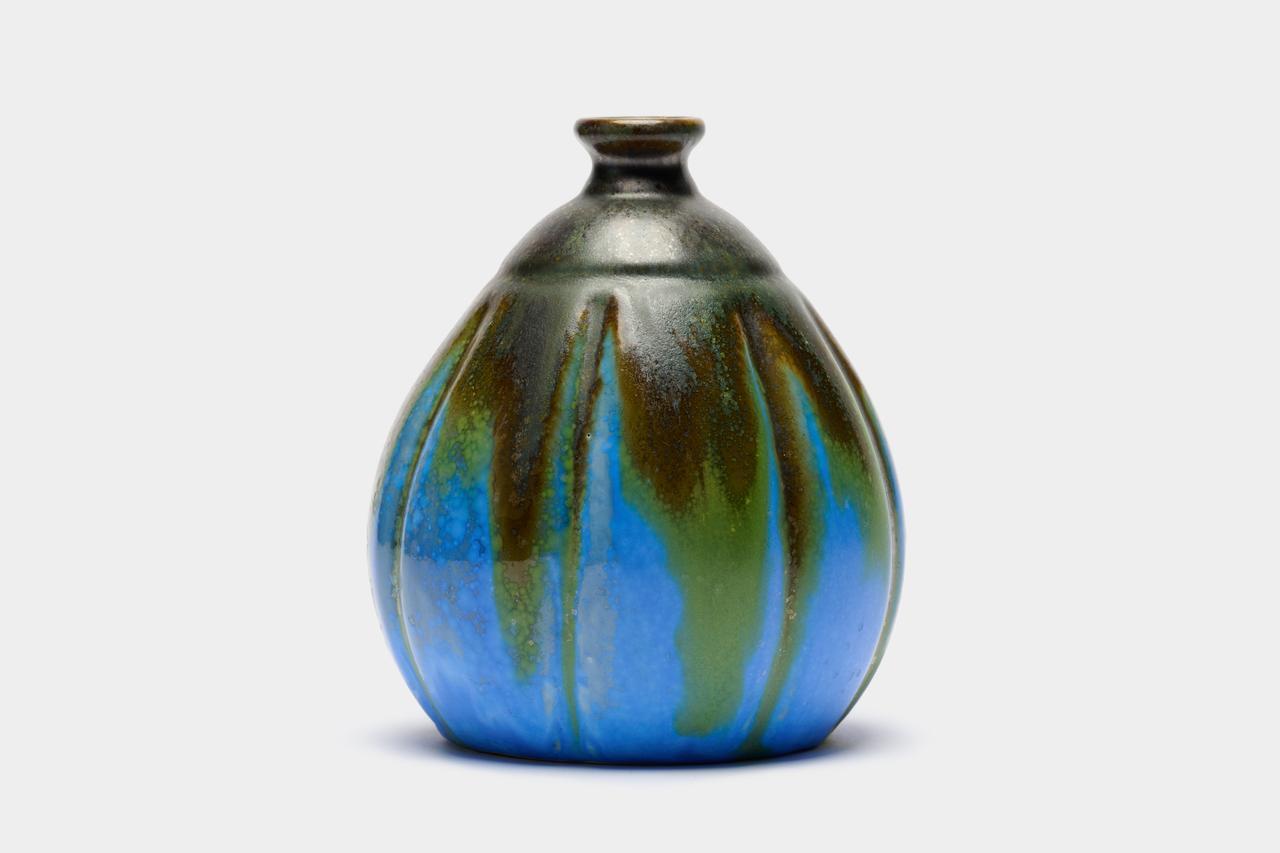
Zsolnay - Vase - Porcelain - Zsolnay Vase original


Starting bid
€ 1
Add to your favourites to get an alert when the auction starts.

Catawiki Buyer Protection
Your payment’s safe with us until you receive your object.View details
Trustpilot 4.4 | 140482 reviews
Rated Excellent on Trustpilot.
Description from the seller
With old Zsolnay stamp
Original Zsolnay Pécs Hand-Painted Porcelain Vase – 16.5 cm
* Original Zsolnay Pécs porcelain/ceramic decorative vase
* Height: 16.5 cm
* Hand-painted floral decoration with pink and magenta blossoms
* Elegant white crackle-glaze ground with delicate gilded rim
* Marked on the base with the characteristic Zsolnay Hungary 1868 Pécs Hand-Painted emblem
* The underside mark is an important authentication and provenance feature
* Compact collector’s size, suitable for a refined interior, display cabinet or porcelain collection
* A particularly attractive example of Hungarian decorative porcelain craftsmanship
A refined example of Zsolnay craftsmanship
This elegant 16.5 cm Zsolnay vase represents the refined decorative tradition for which the historic Zsolnay manufactory of Pécs, Hungary, became internationally recognised. Its restrained ivory-white body provides an exceptionally sophisticated background for the finely arranged botanical decoration, composed of delicate pink, rose and deeper magenta blossoms, slender stems, curling tendrils and stylised green and brown leaves.
Rather than relying on a heavily ornamented silhouette, the vase achieves its visual character through proportion, surface treatment and carefully positioned decoration. The gently rounded body rises into a slender, elegantly waisted neck before opening into a softly flared mouth. A narrow gold line follows the rim, adding a discreet element of luxury without overpowering the floral composition.
The glossy surface is enhanced by a subtle crackle effect, producing an intricate network of fine lines beneath the glaze. This gives the otherwise luminous white ground additional depth and visual texture. In changing light, the surface alternates between a clean porcelain-like brilliance and a softer, almost ivory appearance, making the piece particularly effective as an interior object.
The floral ornament is the principal artistic feature. The blossoms have been individually rendered rather than mechanically uniform, with variations in petal form, colour intensity and contour that contribute to the impression of hand decoration. The combination of botanical forms, fine stems, curling elements and muted foliage gives the composition a distinctly decorative character associated with Hungarian porcelain and ceramic arts.
The Zsolnay identity
The name Zsolnay is inseparable from the cultural and industrial history of Pécs. The manufactory developed from the Zsolnay family enterprise and became one of Hungary’s most important ceramic producers. Its reputation was built upon technically ambitious materials, experimental surface treatments, sophisticated decoration and a strong relationship between artistic design and manufacturing. The factory’s international reputation expanded substantially during the late nineteenth century, particularly under Vilmos Zsolnay.
The present vase belongs to a later decorative tradition rather than being an 1868 object. This distinction is important when interpreting the mark: 1868 on the base refers to the foundation/history of the Zsolnay enterprise, not necessarily the production year of this particular vase. The characteristic wording and emblem continued to be used on later Zsolnay production. Reference material identifies the “ZSOLNAY HUNGARY 1868 PÉCS HAND-PAINTED” configuration as a later Zsolnay mark, including examples attributed to approximately the 1970s–1980s. (theoldstuff.com)
The important underside mark
One of the strongest features of this vase for a collector is the manufacturer’s mark visible on the underside.
The green emblem is constructed around the recognisable Zsolnay shield containing the stylised architectural motif associated with the factory. Above it appears the arched inscription “ZSOLNAY HUNGARY”, while the surrounding elements contain “18 68”, “PÉCS” and “HAND-PAINTED.”
The five-tower or five-spire emblem is an especially recognisable component of Zsolnay’s visual identity. Museum documentation describes examples of this mark as a shield enclosing the five-tower symbol, with “ZSOLNAY HUNGARY” above and “1868 PÉCS HAND-PAINTED” incorporated into the surrounding ribbon and arch. (collections.imm.hu)
The wording HAND-PAINTED is particularly relevant to this vase because the visible decoration is consistent with an individually painted floral composition rather than a simple undecorated industrial surface. The mark therefore provides an important connection between the object and the Zsolnay manufacturing tradition.
It is also worth stressing that 1868 should not be interpreted as the date of manufacture. The number commemorates the establishment of the Zsolnay enterprise and forms part of the manufacturer’s trademark design. Comparable later Zsolnay pieces are documented with the same 1868 reference. (theoldstuff.com)
The presence of the factory name, geographical designation PÉCS, historical 1868 reference and HAND-PAINTED wording makes the underside especially valuable as a collector-facing detail. For a Catawiki presentation, showing a clear photograph of this mark is strongly recommended because it allows prospective bidders to inspect the manufacturer’s identification directly.
Decorative character
The vase has an unusually versatile aesthetic. Its floral decoration has enough colour and detail to appeal to traditional Hungarian porcelain collectors, while the relatively restrained white body and elegant silhouette allow it to sit comfortably within a contemporary interior.
The pink blossoms introduce a controlled accent of colour. The green foliage provides contrast against the white ground, while the brown and dark botanical outlines give the composition definition. Small curling stems extend beyond the principal flowers, preventing the decoration from appearing static and creating a sense of movement around the body.
The gold-edged mouth provides the final finishing detail. Rather than covering the entire object in gilding, the decoration uses gold selectively, allowing the craftsmanship of the painted surface and the characteristic Zsolnay glaze to remain the focus.
At only 16.5 cm high, the vase is also particularly easy to display. It can function as an individual decorative object on a console, bookshelf, side table or marble surface, or become part of a larger Hungarian ceramics arrangement. Its scale makes it suitable for both dedicated collectors and buyers looking for a distinctive vintage accent without requiring substantial display space.
Collectability and interior appeal
Zsolnay objects occupy an important position within Hungarian decorative arts and remain highly recognisable internationally. Collectors are attracted not only by the manufacturer’s name, but also by the breadth of techniques, forms, glazes and decorative approaches associated with Pécs production.
This particular example is appealing because several characteristics come together in one compact object: a sculptural silhouette, glossy white ground, crackle effect, hand-painted botanical ornament, pink floral palette, restrained gilding and an identifiable factory mark.
The piece also demonstrates how Hungarian decorative porcelain can bridge historical collecting and contemporary interior design. Against a neutral background, the white body becomes almost architectural, while the floral motif introduces an organic element. In a modern setting, it can therefore be presented as a small collectible design object rather than simply as a traditional decorative vase.
For collectors of Hungarian ceramics, Zsolnay porcelain, European porcelain, hand-painted objects and twentieth-century decorative arts, the vase offers an attractive opportunity to acquire a clearly marked Pécs-made piece with a strong visual identity.
Condition and presentation
The vase should be assessed according to the photographs supplied with the auction. The characteristic fine crackle pattern visible across the glaze should not automatically be interpreted as damage; in this context it forms part of the object’s surface character. As with any vintage ceramic, bidders should examine the photographic record carefully for any possible chips, hairlines, restoration, rubbing or losses, particularly around the rim, gilded areas and decorated surface.
The close-up photograph of the underside is especially useful because it documents the factory identification and gives the prospective buyer an opportunity to examine the base independently of the main decorative photographs.
For an auction presentation aimed at collectors, the combination of a full frontal image, a secondary angle, a slightly elevated view and a dedicated photograph of the underside creates a convincing visual record of the object.
A distinctive Hungarian collectible
Ultimately, this vase is appealing because it combines the unmistakable identity of Zsolnay with a highly decorative yet surprisingly contemporary appearance. The compact 16.5 cm format, elegant neck, softly flared opening, luminous white crackle surface, gilded edge and richly coloured botanical painting create a balanced object that works equally well as a collector’s piece or as a sophisticated interior accent.
The Pécs origin and identifiable Zsolnay mark provide the historical foundation, while the floral decoration supplies the visual character. For an international auction audience, it offers a concise introduction to the long and influential tradition of Hungarian ceramic artistry associated with the Zsolnay name.
A particularly important detail for collectors is the base: the ZSOLNAY HUNGARY / 1868 / PÉCS / HAND-PAINTED configuration directly identifies the piece with the Zsolnay manufacturing tradition and should be considered an integral part of its presentation and provenance. Comparable museum-documented Zsolnay objects carrying this configuration demonstrate that the mark was used on later production and should therefore not be mistaken for an indication that the vase itself dates from 1868. (collections.imm.hu)
With its combination of Hungarian provenance, established manufacturer, hand-painted botanical decoration, crackle-glazed white ground, gilded detail, graceful proportions and clearly visible factory identification, this 16.5 cm vase is an attractive addition to a collection of Zsolnay, European ceramics, Hungarian decorative arts or twentieth-century design.
Object: Zsolnay vase
Manufacturer: Zsolnay, Pécs, Hungary
Height: 16.5 cm
Decoration: Hand-painted floral and botanical motif
Ground: White/ivory crackle-effect glazed surface
Details: Gilded rim, pink and magenta flowers, green and brown foliage
Mark: Zsolnay Hungary 1868 Pécs Hand-Painted, green factory emblem
Type: Decorative ceramic/porcelain vase
Style: Hungarian decorative arts, floral ceramic, vintage Zsolnay
Period: Later Zsolnay production; the “1868” on the mark refers to the company’s historical foundation rather than necessarily the object’s production date. (theoldstuff.com)
With old Zsolnay stamp
Original Zsolnay Pécs Hand-Painted Porcelain Vase – 16.5 cm
* Original Zsolnay Pécs porcelain/ceramic decorative vase
* Height: 16.5 cm
* Hand-painted floral decoration with pink and magenta blossoms
* Elegant white crackle-glaze ground with delicate gilded rim
* Marked on the base with the characteristic Zsolnay Hungary 1868 Pécs Hand-Painted emblem
* The underside mark is an important authentication and provenance feature
* Compact collector’s size, suitable for a refined interior, display cabinet or porcelain collection
* A particularly attractive example of Hungarian decorative porcelain craftsmanship
A refined example of Zsolnay craftsmanship
This elegant 16.5 cm Zsolnay vase represents the refined decorative tradition for which the historic Zsolnay manufactory of Pécs, Hungary, became internationally recognised. Its restrained ivory-white body provides an exceptionally sophisticated background for the finely arranged botanical decoration, composed of delicate pink, rose and deeper magenta blossoms, slender stems, curling tendrils and stylised green and brown leaves.
Rather than relying on a heavily ornamented silhouette, the vase achieves its visual character through proportion, surface treatment and carefully positioned decoration. The gently rounded body rises into a slender, elegantly waisted neck before opening into a softly flared mouth. A narrow gold line follows the rim, adding a discreet element of luxury without overpowering the floral composition.
The glossy surface is enhanced by a subtle crackle effect, producing an intricate network of fine lines beneath the glaze. This gives the otherwise luminous white ground additional depth and visual texture. In changing light, the surface alternates between a clean porcelain-like brilliance and a softer, almost ivory appearance, making the piece particularly effective as an interior object.
The floral ornament is the principal artistic feature. The blossoms have been individually rendered rather than mechanically uniform, with variations in petal form, colour intensity and contour that contribute to the impression of hand decoration. The combination of botanical forms, fine stems, curling elements and muted foliage gives the composition a distinctly decorative character associated with Hungarian porcelain and ceramic arts.
The Zsolnay identity
The name Zsolnay is inseparable from the cultural and industrial history of Pécs. The manufactory developed from the Zsolnay family enterprise and became one of Hungary’s most important ceramic producers. Its reputation was built upon technically ambitious materials, experimental surface treatments, sophisticated decoration and a strong relationship between artistic design and manufacturing. The factory’s international reputation expanded substantially during the late nineteenth century, particularly under Vilmos Zsolnay.
The present vase belongs to a later decorative tradition rather than being an 1868 object. This distinction is important when interpreting the mark: 1868 on the base refers to the foundation/history of the Zsolnay enterprise, not necessarily the production year of this particular vase. The characteristic wording and emblem continued to be used on later Zsolnay production. Reference material identifies the “ZSOLNAY HUNGARY 1868 PÉCS HAND-PAINTED” configuration as a later Zsolnay mark, including examples attributed to approximately the 1970s–1980s. (theoldstuff.com)
The important underside mark
One of the strongest features of this vase for a collector is the manufacturer’s mark visible on the underside.
The green emblem is constructed around the recognisable Zsolnay shield containing the stylised architectural motif associated with the factory. Above it appears the arched inscription “ZSOLNAY HUNGARY”, while the surrounding elements contain “18 68”, “PÉCS” and “HAND-PAINTED.”
The five-tower or five-spire emblem is an especially recognisable component of Zsolnay’s visual identity. Museum documentation describes examples of this mark as a shield enclosing the five-tower symbol, with “ZSOLNAY HUNGARY” above and “1868 PÉCS HAND-PAINTED” incorporated into the surrounding ribbon and arch. (collections.imm.hu)
The wording HAND-PAINTED is particularly relevant to this vase because the visible decoration is consistent with an individually painted floral composition rather than a simple undecorated industrial surface. The mark therefore provides an important connection between the object and the Zsolnay manufacturing tradition.
It is also worth stressing that 1868 should not be interpreted as the date of manufacture. The number commemorates the establishment of the Zsolnay enterprise and forms part of the manufacturer’s trademark design. Comparable later Zsolnay pieces are documented with the same 1868 reference. (theoldstuff.com)
The presence of the factory name, geographical designation PÉCS, historical 1868 reference and HAND-PAINTED wording makes the underside especially valuable as a collector-facing detail. For a Catawiki presentation, showing a clear photograph of this mark is strongly recommended because it allows prospective bidders to inspect the manufacturer’s identification directly.
Decorative character
The vase has an unusually versatile aesthetic. Its floral decoration has enough colour and detail to appeal to traditional Hungarian porcelain collectors, while the relatively restrained white body and elegant silhouette allow it to sit comfortably within a contemporary interior.
The pink blossoms introduce a controlled accent of colour. The green foliage provides contrast against the white ground, while the brown and dark botanical outlines give the composition definition. Small curling stems extend beyond the principal flowers, preventing the decoration from appearing static and creating a sense of movement around the body.
The gold-edged mouth provides the final finishing detail. Rather than covering the entire object in gilding, the decoration uses gold selectively, allowing the craftsmanship of the painted surface and the characteristic Zsolnay glaze to remain the focus.
At only 16.5 cm high, the vase is also particularly easy to display. It can function as an individual decorative object on a console, bookshelf, side table or marble surface, or become part of a larger Hungarian ceramics arrangement. Its scale makes it suitable for both dedicated collectors and buyers looking for a distinctive vintage accent without requiring substantial display space.
Collectability and interior appeal
Zsolnay objects occupy an important position within Hungarian decorative arts and remain highly recognisable internationally. Collectors are attracted not only by the manufacturer’s name, but also by the breadth of techniques, forms, glazes and decorative approaches associated with Pécs production.
This particular example is appealing because several characteristics come together in one compact object: a sculptural silhouette, glossy white ground, crackle effect, hand-painted botanical ornament, pink floral palette, restrained gilding and an identifiable factory mark.
The piece also demonstrates how Hungarian decorative porcelain can bridge historical collecting and contemporary interior design. Against a neutral background, the white body becomes almost architectural, while the floral motif introduces an organic element. In a modern setting, it can therefore be presented as a small collectible design object rather than simply as a traditional decorative vase.
For collectors of Hungarian ceramics, Zsolnay porcelain, European porcelain, hand-painted objects and twentieth-century decorative arts, the vase offers an attractive opportunity to acquire a clearly marked Pécs-made piece with a strong visual identity.
Condition and presentation
The vase should be assessed according to the photographs supplied with the auction. The characteristic fine crackle pattern visible across the glaze should not automatically be interpreted as damage; in this context it forms part of the object’s surface character. As with any vintage ceramic, bidders should examine the photographic record carefully for any possible chips, hairlines, restoration, rubbing or losses, particularly around the rim, gilded areas and decorated surface.
The close-up photograph of the underside is especially useful because it documents the factory identification and gives the prospective buyer an opportunity to examine the base independently of the main decorative photographs.
For an auction presentation aimed at collectors, the combination of a full frontal image, a secondary angle, a slightly elevated view and a dedicated photograph of the underside creates a convincing visual record of the object.
A distinctive Hungarian collectible
Ultimately, this vase is appealing because it combines the unmistakable identity of Zsolnay with a highly decorative yet surprisingly contemporary appearance. The compact 16.5 cm format, elegant neck, softly flared opening, luminous white crackle surface, gilded edge and richly coloured botanical painting create a balanced object that works equally well as a collector’s piece or as a sophisticated interior accent.
The Pécs origin and identifiable Zsolnay mark provide the historical foundation, while the floral decoration supplies the visual character. For an international auction audience, it offers a concise introduction to the long and influential tradition of Hungarian ceramic artistry associated with the Zsolnay name.
A particularly important detail for collectors is the base: the ZSOLNAY HUNGARY / 1868 / PÉCS / HAND-PAINTED configuration directly identifies the piece with the Zsolnay manufacturing tradition and should be considered an integral part of its presentation and provenance. Comparable museum-documented Zsolnay objects carrying this configuration demonstrate that the mark was used on later production and should therefore not be mistaken for an indication that the vase itself dates from 1868. (collections.imm.hu)
With its combination of Hungarian provenance, established manufacturer, hand-painted botanical decoration, crackle-glazed white ground, gilded detail, graceful proportions and clearly visible factory identification, this 16.5 cm vase is an attractive addition to a collection of Zsolnay, European ceramics, Hungarian decorative arts or twentieth-century design.
Object: Zsolnay vase
Manufacturer: Zsolnay, Pécs, Hungary
Height: 16.5 cm
Decoration: Hand-painted floral and botanical motif
Ground: White/ivory crackle-effect glazed surface
Details: Gilded rim, pink and magenta flowers, green and brown foliage
Mark: Zsolnay Hungary 1868 Pécs Hand-Painted, green factory emblem
Type: Decorative ceramic/porcelain vase
Style: Hungarian decorative arts, floral ceramic, vintage Zsolnay
Period: Later Zsolnay production; the “1868” on the mark refers to the company’s historical foundation rather than necessarily the object’s production date. (theoldstuff.com)
Details
Era
1900-2000
Title additional information
Zsolnay Vase original
Number of objects
1
Country of origin
Hungary
Material
Porcelain
Style
Modern
Manufacturer/brand
Zsolnay
Condition
Good condition - used with small signs of aging & blemishes
Height
165 mm
Width
80 mm
Depth
80 mm
Estimated period
1950-1960
Sold by