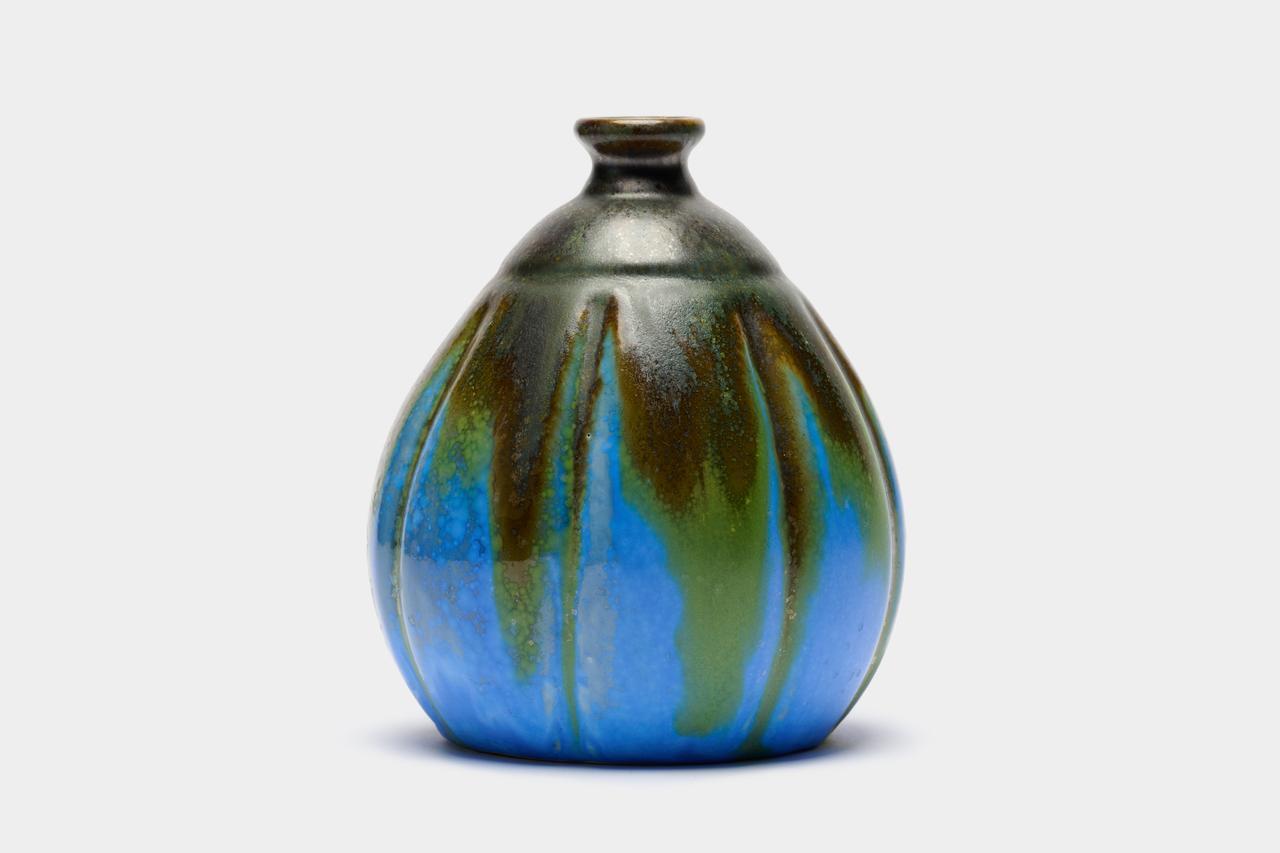
Onnaing - Jardinière - Ceramic - No reserve price!


Starting bid
€ 1
Add to your favourites to get an alert when the auction starts.

Catawiki Buyer Protection
Your payment’s safe with us until you receive your object.View details
Trustpilot 4.4 | 140482 reviews
Rated Excellent on Trustpilot.
Description from the seller
No reserve price!
Pair of Small Antique Cache-Ppots in Barbotine – Faïencerie d'Onnaing, Art Nouveau (c. 1900).
Exceptional and rare pair of small square vessels (cache-pots) in fine faience of the barbotine type (French maiolica), produced by the prestigious Faïencerie d'Onnaing (northern France) during the Art Nouveau period, around 1900.
These pieces stand out for their organic square shape supported on four short feet, featuring a highly detailed naturalistic relief work. Each exterior face displays a textured leaf in emerald green and turquoise blue tones over a contrasting background in honey and brown glazed tones. The interior surprises with a glaze in a vivid magenta/pink shade, very characteristic of the more vibrant productions of the era.
Originally conceived to hold small cacti or succulents, these specimens often survive in isolation, and it is unusual to find them still as a pair and with colors so well preserved. An excellent addition for collectors of French revivalist ceramics or lovers of fin-de-siècle botanical aesthetics.
Both in very good condition as can be seen in the photos.
Seller's Story
Antiques are my great passion; all the items I have on auction were found at antique fairs and antique shops mainly from the Lisbon area, but also from the rest of Portugal, a country with a centuries-old history and many fabulous pieces and objects from this long journey, which I present here for auction. Only pieces of good quality, distinctly original, and obviously beautiful. Guarantee of quality and great care in the shipping of the items. Thank you.
Translated by Google TranslateNo reserve price!
Pair of Small Antique Cache-Ppots in Barbotine – Faïencerie d'Onnaing, Art Nouveau (c. 1900).
Exceptional and rare pair of small square vessels (cache-pots) in fine faience of the barbotine type (French maiolica), produced by the prestigious Faïencerie d'Onnaing (northern France) during the Art Nouveau period, around 1900.
These pieces stand out for their organic square shape supported on four short feet, featuring a highly detailed naturalistic relief work. Each exterior face displays a textured leaf in emerald green and turquoise blue tones over a contrasting background in honey and brown glazed tones. The interior surprises with a glaze in a vivid magenta/pink shade, very characteristic of the more vibrant productions of the era.
Originally conceived to hold small cacti or succulents, these specimens often survive in isolation, and it is unusual to find them still as a pair and with colors so well preserved. An excellent addition for collectors of French revivalist ceramics or lovers of fin-de-siècle botanical aesthetics.
Both in very good condition as can be seen in the photos.
Seller's Story
Antiques are my great passion; all the items I have on auction were found at antique fairs and antique shops mainly from the Lisbon area, but also from the rest of Portugal, a country with a centuries-old history and many fabulous pieces and objects from this long journey, which I present here for auction. Only pieces of good quality, distinctly original, and obviously beautiful. Guarantee of quality and great care in the shipping of the items. Thank you.
Translated by Google TranslateDetails
Era
1900-2000
Title additional information
No reserve price!
Number of objects
1
Country of origin
France
Manufacturer/brand
Onnaing
Material
Ceramic
Condition
Good condition - used with small signs of ageing
Height
6 cm
Width
5 cm
Depth
5 cm
Estimated period
1900-1910
Sold by