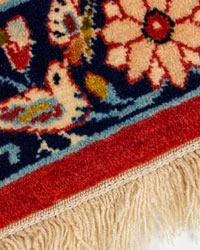
Original Anatolian Rug - Rug - 150 cm - 102 cm


05
days
16
hours
30
minutes
01
second
Current bid
€ 3
No reserve price

Expert
Selected by Richard Ebbers
Certified appraiser at Federation TMV with 30 years' professional antiques experience.
Estimate € 380 - € 450
 | €3 |
|---|
Catawiki Buyer Protection
Your payment’s safe with us until you receive your object.View details
Trustpilot 4.4 | 140652 reviews
Rated Excellent on Trustpilot.
Original Anatolian carpet, hand-knotted in Turkey in the 21st century, wool-on-wool, multicoloured, 150 by 102 cm, weight 5 kg, in very good condition.
AI-assisted summary
Description from the seller
Anatolian carpets – like the one in your picture – are a fascinating part of Turkish cultural history and belong to the oldest and most exquisitely crafted carpet traditions in the world.
What is an Anatolian rug?
Anatolia (today central and eastern Anatolia in Turkey) has been a significant center of rug making for centuries. Rugs from this region are known for:
Hand-knotted quality
Natural materials such as wool, cotton, or sometimes silk
Plant-dyed wool, which yields rich, durable colors
Traditional patterns and symbolism – often with religious, protective, or spiritual connotations
Regional styles within Anatolia:
Hereke: Especially fine, often with silk; originally for the Ottoman court.
Konya: Geometric, clear patterns; strong colors.
Bergama: Rustic style, large geometric shapes.
Yörük (Nomads): Freer, often improvised patterns, lively and unique.
Ladik and Milas: Known for their prayer rugs with mihrab motifs.
Typical motifs and meanings:
Elibelinde (female figure): Symbol of fertility
Koçboynuzu (ram’s horn): Strength, masculinity
Hayat Ağacı (Tree of Life): Connection between heaven and earth
Nazarlık (blue eye): Protection against the evil eye
Regarding the rug in your picture:
The rug shows classic features of a Kazak- or Karachoph-style, often associated with the South Caucasus or Northeast Anatolia, but also woven in Anatolia. The bold, octagonal medallions and the deep red tone are typical. The pattern looks very archaic and powerful – a true piece of folk art.
Name of the rug: Anatolian Rugs
Manufacture: Hand-knotted
Country of origin: Turkey
Model: Classic
Condition: Very good Perfect
Age: 10-15
Thickness: 8 mm
Anatolian carpets – like the one in your picture – are a fascinating part of Turkish cultural history and belong to the oldest and most exquisitely crafted carpet traditions in the world.
What is an Anatolian rug?
Anatolia (today central and eastern Anatolia in Turkey) has been a significant center of rug making for centuries. Rugs from this region are known for:
Hand-knotted quality
Natural materials such as wool, cotton, or sometimes silk
Plant-dyed wool, which yields rich, durable colors
Traditional patterns and symbolism – often with religious, protective, or spiritual connotations
Regional styles within Anatolia:
Hereke: Especially fine, often with silk; originally for the Ottoman court.
Konya: Geometric, clear patterns; strong colors.
Bergama: Rustic style, large geometric shapes.
Yörük (Nomads): Freer, often improvised patterns, lively and unique.
Ladik and Milas: Known for their prayer rugs with mihrab motifs.
Typical motifs and meanings:
Elibelinde (female figure): Symbol of fertility
Koçboynuzu (ram’s horn): Strength, masculinity
Hayat Ağacı (Tree of Life): Connection between heaven and earth
Nazarlık (blue eye): Protection against the evil eye
Regarding the rug in your picture:
The rug shows classic features of a Kazak- or Karachoph-style, often associated with the South Caucasus or Northeast Anatolia, but also woven in Anatolia. The bold, octagonal medallions and the deep red tone are typical. The pattern looks very archaic and powerful – a true piece of folk art.
Name of the rug: Anatolian Rugs
Manufacture: Hand-knotted
Country of origin: Turkey
Model: Classic
Condition: Very good Perfect
Age: 10-15
Thickness: 8 mm
Details
Era
After 2000
Number of objects
1
Model
Original Anatolian Rug
Colour
Multicolour
Length
150 cm
Width
102 cm
Material
Wool on wool
Country of origin
Türkiye
Condition
In very good condition
Professionally cleaned
Yes
Manufacturing period
21st century
Weight
5 kg