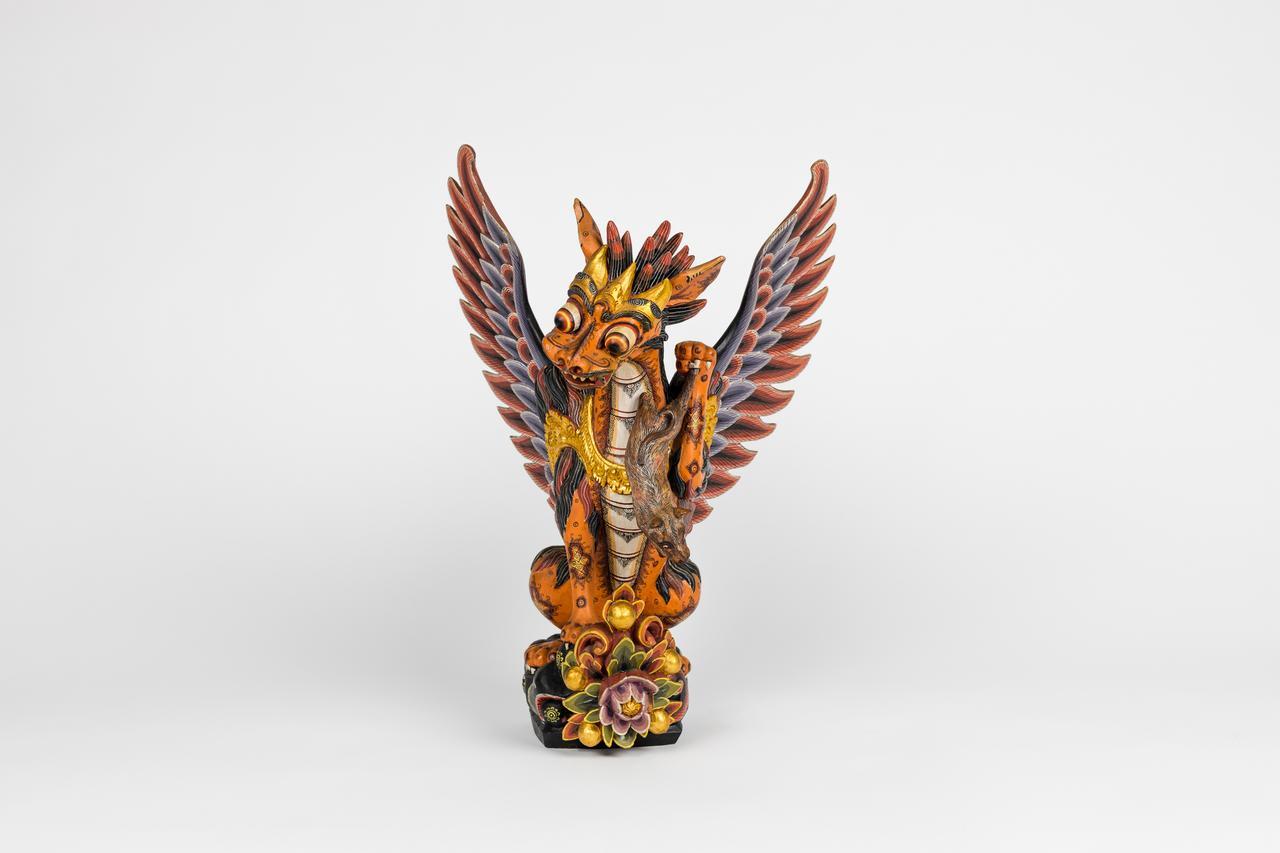
Container - Wood, Bone - Betel or tobacco jar


04
days
15
hours
06
minutes
23
seconds

No bids placed
Catawiki Buyer Protection
Your payment’s safe with us until you receive your object.View details
Trustpilot 4.4 | 141188 reviews
Rated Excellent on Trustpilot.
Indonesian carved bone and dark hardwood betel or tobacco jar, dating to 1970–1980, with dimensions 13 cm high by 7 cm wide by 4 cm deep, weighing 186 g, in excellent condition, sold without a stand and associated with the name Srimshaw tempat kapur.
AI-assisted summary
Description from the seller
Timor, Indonesia – Carved Bone and Wood Betel Lime / Tobacco / Scrimshaw / Medicinal Container, ca. 1930s–1940s
A highly unusual and visually striking Timorese carved container in bone and dark hardwood and attributable to the cultural sphere of West Timor / Atoni tradition.
The object combines a softly rounded dark wooden body with a carved pale bone sleeve, finely incised with a stylised lizard or crocodile motif framed by simple vegetal ornament. Such imagery is closely associated with the artistic world of Timor, where even small utilitarian objects were often enriched with symbolic animal (lizard) decoration. The style resembles works from Papua New Guinea, what is also a possible origin.
The piece is most plausibly related to the betel-chewing complex and may have served as a tempat kapur / kalat – a small container for lime used in the preparation of betel quid (sirih / siri). In Timor, the culture of betel chewing and its associated objects occupies a particularly important place, both socially and ceremonially. These modest utensils often represent Timorese art at its most direct, intimate and unaffected: handmade from bone, horn, wood, bamboo, coconut shell or gourd, and deeply embedded in daily life.
At the same time, this example is not entirely straightforward in form, which makes it especially interesting. The object may be incomplete, or it may have been reworked at some point, perhaps altering its original function or presentation. Its elongated base and upright silhouette give it, intriguingly, something of the appearance of a small holy-water vessel, which may even hint at a colonial or mission-period context, when local forms and imported religious associations could intersect in unexpected ways.
A further possibility is that it may have served as a small medicinal or tobacco container, rather than exclusively for betel lime. The exact original function therefore remains open, which adds to the ethnographic appeal of the object. It was probably attached to a wood architecture and we a not sure if it ever had a lid.
Particularly noteworthy is the black residue and dark accretion inside the cavity, clearly visible at the opening. This should be regarded as part of the object’s history of use and age. It may relate to its former contents, long-term storage, organic build-up, or later reuse. The interior encrustation has not been cleaned out, preserving the authentic character of the piece.
Condition
Good antique / vintage ethnographic condition overall, with expected wear from age and handling.
There is visible surface wear, minor irregularity to the carving, and dark interior residue / encrustation inside the cavity. Please note that the piece may be incomplete or possibly reworked, which should be considered part of its historical character and charm.
A rare, evocative and somewhat enigmatic Timorese ethnographic object, appealing both for its sculptural quality and for the questions it raises about use, adaptation and cultural exchange.
Timor, Indonesia – Carved Bone and Wood Betel Lime / Tobacco / Scrimshaw / Medicinal Container, ca. 1930s–1940s
A highly unusual and visually striking Timorese carved container in bone and dark hardwood and attributable to the cultural sphere of West Timor / Atoni tradition.
The object combines a softly rounded dark wooden body with a carved pale bone sleeve, finely incised with a stylised lizard or crocodile motif framed by simple vegetal ornament. Such imagery is closely associated with the artistic world of Timor, where even small utilitarian objects were often enriched with symbolic animal (lizard) decoration. The style resembles works from Papua New Guinea, what is also a possible origin.
The piece is most plausibly related to the betel-chewing complex and may have served as a tempat kapur / kalat – a small container for lime used in the preparation of betel quid (sirih / siri). In Timor, the culture of betel chewing and its associated objects occupies a particularly important place, both socially and ceremonially. These modest utensils often represent Timorese art at its most direct, intimate and unaffected: handmade from bone, horn, wood, bamboo, coconut shell or gourd, and deeply embedded in daily life.
At the same time, this example is not entirely straightforward in form, which makes it especially interesting. The object may be incomplete, or it may have been reworked at some point, perhaps altering its original function or presentation. Its elongated base and upright silhouette give it, intriguingly, something of the appearance of a small holy-water vessel, which may even hint at a colonial or mission-period context, when local forms and imported religious associations could intersect in unexpected ways.
A further possibility is that it may have served as a small medicinal or tobacco container, rather than exclusively for betel lime. The exact original function therefore remains open, which adds to the ethnographic appeal of the object. It was probably attached to a wood architecture and we a not sure if it ever had a lid.
Particularly noteworthy is the black residue and dark accretion inside the cavity, clearly visible at the opening. This should be regarded as part of the object’s history of use and age. It may relate to its former contents, long-term storage, organic build-up, or later reuse. The interior encrustation has not been cleaned out, preserving the authentic character of the piece.
Condition
Good antique / vintage ethnographic condition overall, with expected wear from age and handling.
There is visible surface wear, minor irregularity to the carving, and dark interior residue / encrustation inside the cavity. Please note that the piece may be incomplete or possibly reworked, which should be considered part of its historical character and charm.
A rare, evocative and somewhat enigmatic Timorese ethnographic object, appealing both for its sculptural quality and for the questions it raises about use, adaptation and cultural exchange.
Details
Era
1900-2000
Weight
186 g
Title additional information
Betel or tobacco jar
Number of objects
1
Country of origin
Indonesia
Material
Bone, Wood
Indigenous object name
Srimshaw tempat kapur
Sold with stand
No
Colour
Brown, White
Condition
Excellent condition: barely used with minimal signs of wear
Height
13 cm
Width
7 cm
Depth
4 cm
Estimated period
1970-1980
Sold by