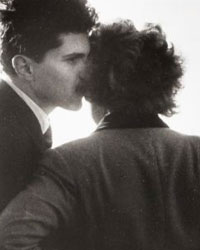
Jean Ribiere (1922 - 1989) - Carnaval à Perpignan - 1954


02
days
23
hours
07
minutes
51
seconds
Starting bid
€ 1
Reserve price not met

Expert
Selected by Kai Brückner
Over 35 years' experience; former gallery owner and Museum Folkwang curator.
Estimate € 300 - € 400
No bids placed
Catawiki Buyer Protection
Your payment’s safe with us until you receive your object.View details
Trustpilot 4.4 | 142857 reviews
Rated Excellent on Trustpilot.
The gelatin silver print Carnaval à Perpignan – 1954 by Jean Ribiere, dated 1954, 22×17 cm, stamped by the artist, in original condition.
AI-assisted summary
Description from the seller
Jean Ribiere (1922 - 1989)
Carnaval Perpignan - 1954
Silver gelatin print
22 x 17
Author's stamp
Jean Ribière is a French photographer and photojournalist still quite little known to the general public, but highly respected in the professional field.
Career
Born in Niort in 1922, he began very early in the press at the newspaper L’Indépendant des Pyrénées-Orientales as early as 1940.
In 1944, he partnered with his wife, journalist Micheline Vialle, to found their own agency, Ribière Presse Photos, distributing their reports in numerous French and international media (L’Express, Paris Match, BBC, etc.).
Photographic work
His body of work covers several major axes:
• Occupied and liberated France (1940s)
• Daily life and the French regions (1950s–70s)
• Traditions, trades, rural world
• Sport (rugby, cycling, automobile) and judicial chronicles
He fits into a humanist tradition close to figures like Robert Doisneau or Henri Cartier-Bresson, with an attentive eye for ordinary people and society.
Seller's Story
THE TAYLOR GALLERY WORKSHOP
The Atelier / Galerie Taylor, located at 7, on the eponymous street in the 10th arrondissement in Paris, is a friendly place dedicated to photography. It was created thanks to image enthusiasts, José Nicolas, photographer and manager of the place with the support of Jean Vinégla.
Located a stone's throw from Place de la République, between rue du Château-d'eau and rue René-Boulanger, the place is dynamic, atypical and warm, resolutely turned towards sharing and mutual discovery of images at the 'international.
The Atelier / Galerie Taylor is familiarly inclined to exhibit film photography while remaining open to the wide range of contemporary imaging techniques.
It presents well-known and emerging photographers, with the aim of always surprising and arousing the curiosity of collectors and visitors.
Since its opening in September 2019, the Atelier / Galerie Taylor has carved out a good reputation, going from being a confidential place to a showroom recognized by professionals and collectors, both for the choice of its programming and for the quality of the prints on display.
Translated by Google TranslateJean Ribiere (1922 - 1989)
Carnaval Perpignan - 1954
Silver gelatin print
22 x 17
Author's stamp
Jean Ribière is a French photographer and photojournalist still quite little known to the general public, but highly respected in the professional field.
Career
Born in Niort in 1922, he began very early in the press at the newspaper L’Indépendant des Pyrénées-Orientales as early as 1940.
In 1944, he partnered with his wife, journalist Micheline Vialle, to found their own agency, Ribière Presse Photos, distributing their reports in numerous French and international media (L’Express, Paris Match, BBC, etc.).
Photographic work
His body of work covers several major axes:
• Occupied and liberated France (1940s)
• Daily life and the French regions (1950s–70s)
• Traditions, trades, rural world
• Sport (rugby, cycling, automobile) and judicial chronicles
He fits into a humanist tradition close to figures like Robert Doisneau or Henri Cartier-Bresson, with an attentive eye for ordinary people and society.
Seller's Story
THE TAYLOR GALLERY WORKSHOP
The Atelier / Galerie Taylor, located at 7, on the eponymous street in the 10th arrondissement in Paris, is a friendly place dedicated to photography. It was created thanks to image enthusiasts, José Nicolas, photographer and manager of the place with the support of Jean Vinégla.
Located a stone's throw from Place de la République, between rue du Château-d'eau and rue René-Boulanger, the place is dynamic, atypical and warm, resolutely turned towards sharing and mutual discovery of images at the 'international.
The Atelier / Galerie Taylor is familiarly inclined to exhibit film photography while remaining open to the wide range of contemporary imaging techniques.
It presents well-known and emerging photographers, with the aim of always surprising and arousing the curiosity of collectors and visitors.
Since its opening in September 2019, the Atelier / Galerie Taylor has carved out a good reputation, going from being a confidential place to a showroom recognized by professionals and collectors, both for the choice of its programming and for the quality of the prints on display.
Translated by Google TranslateDetails
Date of print
1954
Artist
Jean Ribiere (1922 - 1989)
Sold by
Gallery
Title of artwork
Carnaval à Perpignan - 1954
Condition
Original State
Technique
Gelatin-silver print
Height
22 cm
Width
17 cm
Signature
Stamped
Genre
Documentary photography
Sold by