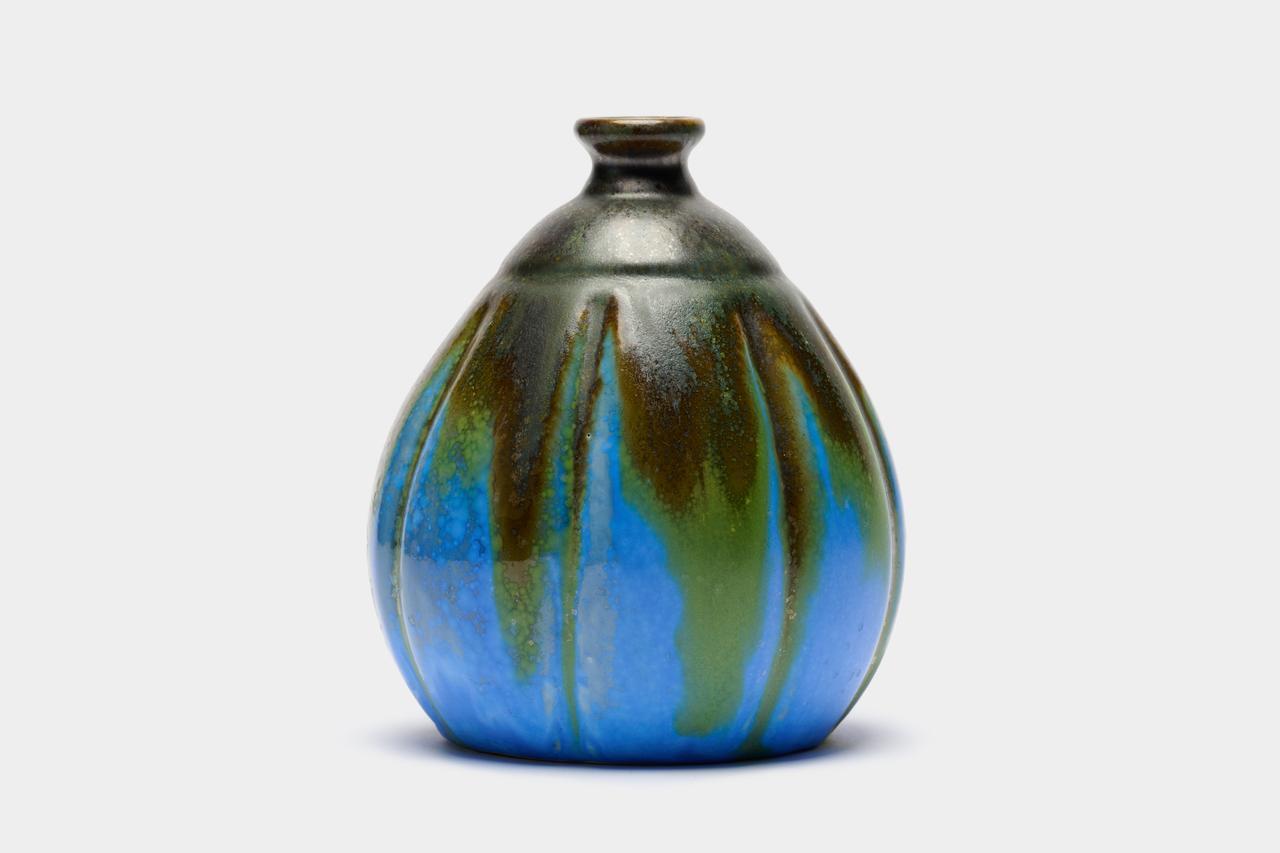
Cantagalli - Rare et superbe Pied de Lampe aux Faunes , Cantagalli Giuseppe - Table lamp - Ceramics, Majolica


03
days
03
hours
24
minutes
28
seconds
Current bid
€ 7
No reserve price

Expert
Selected by Florentin Brunz Gaborieau
Holds a master’s in Art History, specialising in Second French Empire and Dutch Golden Age.
Estimate € 150 - € 200
 | €7 | |
|---|---|---|
| €4 | |
| €1 |
Catawiki Buyer Protection
Your payment’s safe with us until you receive your object.View details
Trustpilot 4.4 | 142120 reviews
Rated Excellent on Trustpilot.
Rare and superb Cantagalli Majolica lamp base with fauns, Italian, 37.5 cm high, 23 cm wide, 15 cm deep, in excellent condition with minimal signs of wear, not in working order.
AI-assisted summary
Description from the seller
Rare and superb Lamp Base with Fauns and Structural Immobilier
Renaissance Style
It is in superb condition with no flaws or breaks
------- Manifattura Figli di Giuseppe Cantagalli was a family business. Ulisse's brother, Romeo, joined him in 1878, and together they supervised all aspects of the operation, from raw material sourcing to the oversight of skilled artisans who brought their creations to life. Above all, Ulisse's wife, Margaret Tod, a Scottish woman he met through his business, played a vital role in managing international sales for the workshop and developing relations with discerning collectors, particularly in Great Britain. This transatlantic partnership proved crucial to the success of the manufactory, allowing it to establish a solid presence in the English market.
The workshop itself was a true hub of activity, employing more than 120 artisans by 1895. A dedicated design school was created there, training young painters in the complex techniques required to achieve the level of detail and refinement that characterized Cantagalli's work. The layout of the manufacturing facility reflected this commitment to artisanal know-how: organized around a central kiln, it enabled efficient production while ensuring rigorous quality control. The attention to detail went far beyond mere reproduction: Ulisse sought to capture not only appearance but also the very essence of Renaissance ceramics, giving his reproductions a timeless elegance and remarkable artistic depth.
Cantagalli's success did not rest solely on reproducing existing models; it drew inspiration from a deep understanding of the techniques used by 16th-century master ceramicists. Ulisse studied the works of renowned Florentine potters such as Giovanni Battista della Robbia with meticulous care and drew inspiration from other ceramic production centers, including Gubbio, Deruta, and Urbino. He did more than imitate Italian styles; he also incorporated influences from the Islamic world, notably the finely worked Iznik glazed pottery (modern-day Turkey), and made these techniques his own.
The workshop produced a remarkable variety of decorative motifs, drawing heavily on Renaissance narratives, mythological scenes, and classical allegories. Ulisse's sketchbook, rich with detailed drawings and color studies, offers a precious glimpse into the creative process. He employed a unique method of transferring motifs: drawing directly onto acetate sheets using pastels and tempera, ensuring great precision and the faithful rendering of nuances from the original work. This meticulous approach allowed for reproductions with remarkable fidelity to Renaissance models, often surpassing them in clarity and finesse.
The Manifattura Figli di Giuseppe Cantagalli enjoyed international renown at the end of the 19th century and the beginning of the 20th. Its pieces were exhibited at prestigious fairs, notably in Paris and London, and acquired by eminent collectors from around the world, such as Frederick Stibbert and Lord Carmichael. Ulisse's legacy extends beyond the production of his exceptional ceramics; he played a crucial role in the preservation and promotion of Italian artistic heritage, demonstrating that it could be appreciated by a broader audience.
Ulisse Cantagalli passed away in Egypt in 1901, leaving behind a thriving business and a remarkable oeuvre. The Manifattura Figli di Giuseppe Cantagalli continued its activity under the leadership of his wife, Margaret, until 1934, establishing itself as one of Italy's most prestigious ceramic workshops. Today, their creations are highly sought after by collectors and art enthusiasts, bearing witness to the splendor of Renaissance art and the enduring force of renewal.
Rare and superb Lamp Base with Fauns and Structural Immobilier
Renaissance Style
It is in superb condition with no flaws or breaks
------- Manifattura Figli di Giuseppe Cantagalli was a family business. Ulisse's brother, Romeo, joined him in 1878, and together they supervised all aspects of the operation, from raw material sourcing to the oversight of skilled artisans who brought their creations to life. Above all, Ulisse's wife, Margaret Tod, a Scottish woman he met through his business, played a vital role in managing international sales for the workshop and developing relations with discerning collectors, particularly in Great Britain. This transatlantic partnership proved crucial to the success of the manufactory, allowing it to establish a solid presence in the English market.
The workshop itself was a true hub of activity, employing more than 120 artisans by 1895. A dedicated design school was created there, training young painters in the complex techniques required to achieve the level of detail and refinement that characterized Cantagalli's work. The layout of the manufacturing facility reflected this commitment to artisanal know-how: organized around a central kiln, it enabled efficient production while ensuring rigorous quality control. The attention to detail went far beyond mere reproduction: Ulisse sought to capture not only appearance but also the very essence of Renaissance ceramics, giving his reproductions a timeless elegance and remarkable artistic depth.
Cantagalli's success did not rest solely on reproducing existing models; it drew inspiration from a deep understanding of the techniques used by 16th-century master ceramicists. Ulisse studied the works of renowned Florentine potters such as Giovanni Battista della Robbia with meticulous care and drew inspiration from other ceramic production centers, including Gubbio, Deruta, and Urbino. He did more than imitate Italian styles; he also incorporated influences from the Islamic world, notably the finely worked Iznik glazed pottery (modern-day Turkey), and made these techniques his own.
The workshop produced a remarkable variety of decorative motifs, drawing heavily on Renaissance narratives, mythological scenes, and classical allegories. Ulisse's sketchbook, rich with detailed drawings and color studies, offers a precious glimpse into the creative process. He employed a unique method of transferring motifs: drawing directly onto acetate sheets using pastels and tempera, ensuring great precision and the faithful rendering of nuances from the original work. This meticulous approach allowed for reproductions with remarkable fidelity to Renaissance models, often surpassing them in clarity and finesse.
The Manifattura Figli di Giuseppe Cantagalli enjoyed international renown at the end of the 19th century and the beginning of the 20th. Its pieces were exhibited at prestigious fairs, notably in Paris and London, and acquired by eminent collectors from around the world, such as Frederick Stibbert and Lord Carmichael. Ulisse's legacy extends beyond the production of his exceptional ceramics; he played a crucial role in the preservation and promotion of Italian artistic heritage, demonstrating that it could be appreciated by a broader audience.
Ulisse Cantagalli passed away in Egypt in 1901, leaving behind a thriving business and a remarkable oeuvre. The Manifattura Figli di Giuseppe Cantagalli continued its activity under the leadership of his wife, Margaret, until 1934, establishing itself as one of Italy's most prestigious ceramic workshops. Today, their creations are highly sought after by collectors and art enthusiasts, bearing witness to the splendor of Renaissance art and the enduring force of renewal.
Details
Era
1900-2000
Material
Ceramics, Majolica
Manufacturer/brand
Cantagalli
Designer/artist/maker
Rare et superbe Pied de Lampe aux Faunes , Cantagalli Giuseppe
Country of origin
Italy
Condition
Excellent condition: barely used with minimal signs of wear
In working order
No
Height
37.5 cm
Width
23 cm
Depth
15 cm
Estimated period
1920-1930
Sold by