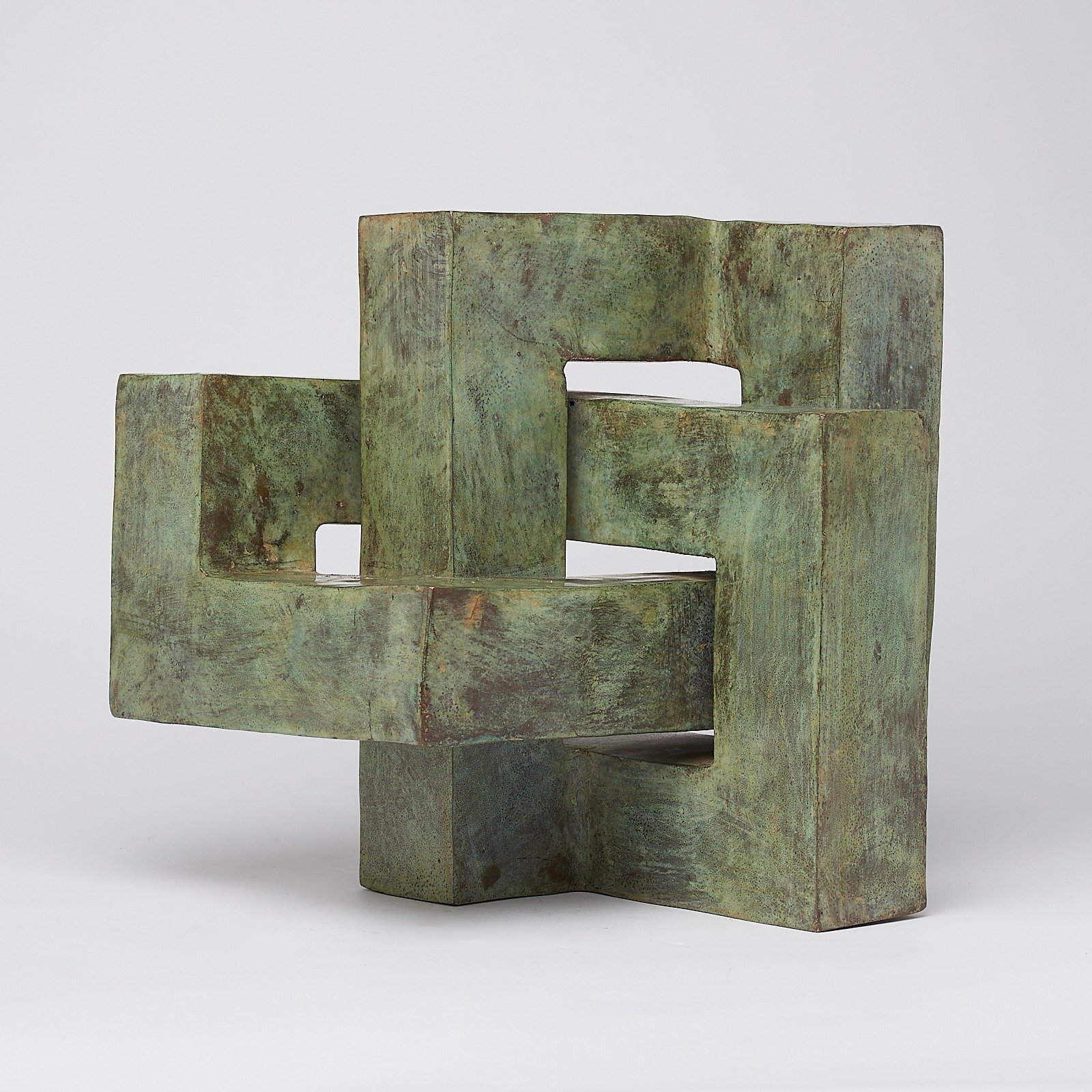
Vessel (2) - Terracotta - 1950-1960 - Large Jars - 33 cm


Starting bid
€ 1
Add to your favourites to get an alert when the auction starts.

Catawiki Buyer Protection
Your payment’s safe with us until you receive your object.View details
Trustpilot 4.4 | 142038 reviews
Rated Excellent on Trustpilot.
Description from the seller
A pair of glazed terracotta jars, of mid-20th-century French rustic tradition, each standing 33 cm tall.
Bulbous, ovoid-profiled bodies, hand-turned, with short necks and wide mouths with reinforced lips. Two strap handles applied to either side of the neck, typical of storage and transport jars used in rural French kitchens and cellars. The terracotta-toned clay, reddy brown, remains visible in the lower third, while the rest of the piece receives a bright glaze that protects and colors the surface.
The decoration is rendered with hand-applied enamel in two registers: a frieze of festooned arches in ochre yellow and dark green that encircles the piece’s shoulder, and below it, a motif of stylized leaves or feathers traced in yellow on a red background, with loose, spontaneous strokes, characteristic of popular pottery more than of a luxury workshop. A fine groove at the base completes the composition.
This type of tinaja — often called "jarre" or "pot à confit" in southern France — was produced in regional potteries (areas like Languedoc or Provence are most closely associated with this decoration) for domestic use: preserving oil, water, or salted foods. The combination of double handles and the arched enamel decoration is a highly recognizable decorative feature of the mid-20th century, when these pieces began to be made also for more ornamental purposes for garden and terrace markets, without losing the traditional decorative repertoire.
Insured shipping and careful packaging.
Seller's Story
Vintage Shop SL is a prominent antique store that since 2010 has been committed to customer satisfaction and sustainability. This shop is not only a cultural treasure that preserves the history and heritage of our societies, but also strives to operate in a sustainable and environmentally responsible manner.
At Vintage Shop SL, we believe that customer service is essential to our success. Our highly trained team is dedicated to providing friendly, knowledgeable, and personalized service. We take pride in helping our customers find the perfect vintage pieces that fit their individual tastes and needs, ensuring their satisfaction and fostering lasting relationships.
But that's not all. At Vintage Shop SL, we also care about the sustainability of the business and its impact on the natural environment. We are committed to reducing our carbon footprint and promoting responsible business practices.
On the one hand, we promote the circular economy and reuse by offering vintage items in excellent condition. By acquiring antiques at our shop, customers contribute to the conservation of natural resources by avoiding the production of new items and reducing the carbon emissions associated with manufacturing and transportation.
Translated by Google TranslateA pair of glazed terracotta jars, of mid-20th-century French rustic tradition, each standing 33 cm tall.
Bulbous, ovoid-profiled bodies, hand-turned, with short necks and wide mouths with reinforced lips. Two strap handles applied to either side of the neck, typical of storage and transport jars used in rural French kitchens and cellars. The terracotta-toned clay, reddy brown, remains visible in the lower third, while the rest of the piece receives a bright glaze that protects and colors the surface.
The decoration is rendered with hand-applied enamel in two registers: a frieze of festooned arches in ochre yellow and dark green that encircles the piece’s shoulder, and below it, a motif of stylized leaves or feathers traced in yellow on a red background, with loose, spontaneous strokes, characteristic of popular pottery more than of a luxury workshop. A fine groove at the base completes the composition.
This type of tinaja — often called "jarre" or "pot à confit" in southern France — was produced in regional potteries (areas like Languedoc or Provence are most closely associated with this decoration) for domestic use: preserving oil, water, or salted foods. The combination of double handles and the arched enamel decoration is a highly recognizable decorative feature of the mid-20th century, when these pieces began to be made also for more ornamental purposes for garden and terrace markets, without losing the traditional decorative repertoire.
Insured shipping and careful packaging.
Seller's Story
Vintage Shop SL is a prominent antique store that since 2010 has been committed to customer satisfaction and sustainability. This shop is not only a cultural treasure that preserves the history and heritage of our societies, but also strives to operate in a sustainable and environmentally responsible manner.
At Vintage Shop SL, we believe that customer service is essential to our success. Our highly trained team is dedicated to providing friendly, knowledgeable, and personalized service. We take pride in helping our customers find the perfect vintage pieces that fit their individual tastes and needs, ensuring their satisfaction and fostering lasting relationships.
But that's not all. At Vintage Shop SL, we also care about the sustainability of the business and its impact on the natural environment. We are committed to reducing our carbon footprint and promoting responsible business practices.
On the one hand, we promote the circular economy and reuse by offering vintage items in excellent condition. By acquiring antiques at our shop, customers contribute to the conservation of natural resources by avoiding the production of new items and reducing the carbon emissions associated with manufacturing and transportation.
Translated by Google TranslateDetails
Era
1900-2000
Title additional information
Large Jars - 33 cm
Number of objects
2
Material
Terracotta
Country of origin
France
Height
33 cm
Width
32 cm
Depth
30 cm
Condition
Excellent condition: barely used with minimal signs of wear
Estimated period
1950-1960
Sold by