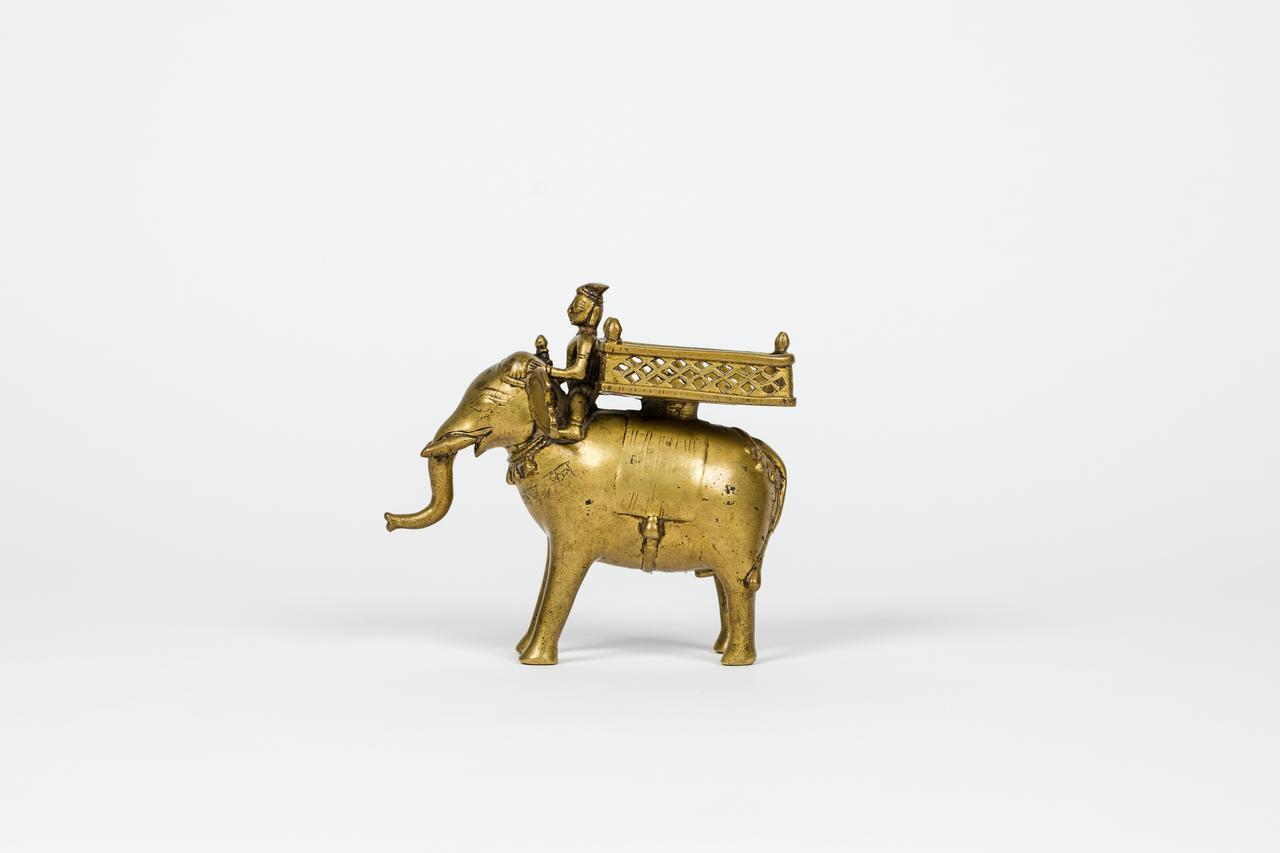
Antique Reliquary - Goddess Lakshmi in a votive bronze casket (Gāṭhagī or Ghaṭagī), western India, Gujarat, 19th or 20th - 1850-1900


08
days
09
hours
22
minutes
50
seconds
Current bid
€ 3
Reserve price not met

Expert
Selected by Surya Rutten
Has over 25 years' experience in Asian art and owned an art gallery.
Estimate € 430 - € 480
 | €3 | |
|---|---|---|
 | €2 | |
| €1 |
Catawiki Buyer Protection
Your payment’s safe with us until you receive your object.View details
Trustpilot 4.4 | 143216 reviews
Rated Excellent on Trustpilot.
Dea Lakṣmī in a bronze votive reliquary from Gujarat, India, dating to the 19th or 20th century, attributed to the Mughal Empire (1526–1857).
AI-assisted summary
Description from the seller
Goddess Lakṣmī in a votive chest (Gāṭhagī or Ghaṭagī), western India, Gujarat, 19th or 20th century
Small ritual object of Jain tradition intended for private devotion, composed of a double metal brass canopy engraved with floral and geometric motifs, opening like a casket.
Inside, kept as a votive image, a refined hand-painted miniature on paper depicting the goddess Lakṣmī seated on a lotus flower and flanked by two elephants. The goddess’s face and part of the pictorial ornament are enriched with two‑dimensional inlays: small pearls, mirrors, and gems in colored glass, elements typical of the popular devotional tradition of western India.
N.B.
For administrative reasons, Italian buyers are requested to provide their tax code, essential for the proper issuance of electronic invoices.
For administrative reasons related to current Italian regulations, at the time of purchase foreign customers are asked to provide their place and date of birth via a message to Catawiki.
Seller's Story
Ethnologica was born from the love and passion for the ancient culture of Oriental, Islamic and Indian art. Refined works of art make up a constantly evolving collection capable of satisfying the needs of admirers, enthusiasts and collectors.
Ethnologica has also contributed as a lender to sector cultural exhibitions alongside prestigious public and private cultural associations and foundations.
Translated by Google TranslateGoddess Lakṣmī in a votive chest (Gāṭhagī or Ghaṭagī), western India, Gujarat, 19th or 20th century
Small ritual object of Jain tradition intended for private devotion, composed of a double metal brass canopy engraved with floral and geometric motifs, opening like a casket.
Inside, kept as a votive image, a refined hand-painted miniature on paper depicting the goddess Lakṣmī seated on a lotus flower and flanked by two elephants. The goddess’s face and part of the pictorial ornament are enriched with two‑dimensional inlays: small pearls, mirrors, and gems in colored glass, elements typical of the popular devotional tradition of western India.
N.B.
For administrative reasons, Italian buyers are requested to provide their tax code, essential for the proper issuance of electronic invoices.
For administrative reasons related to current Italian regulations, at the time of purchase foreign customers are asked to provide their place and date of birth via a message to Catawiki.
Seller's Story
Ethnologica was born from the love and passion for the ancient culture of Oriental, Islamic and Indian art. Refined works of art make up a constantly evolving collection capable of satisfying the needs of admirers, enthusiasts and collectors.
Ethnologica has also contributed as a lender to sector cultural exhibitions alongside prestigious public and private cultural associations and foundations.
Translated by Google TranslateDetails
Era
1400-1900
Number of objects
1
Material
Goddess Lakshmi in a votive bronze casket (Gāṭhagī or Ghaṭagī), western India, Gujarat, 19th or 20th
Country of origin
India
Height
11 cm
Dynastic style/period
Mughal Empire (1526-1857)
Width
11 cm
Depth
4.5 cm
Condition
Good condition - used with small signs of aging & blemishes
Attribution
Original
Style
Antique
Sold with stand
No
Estimated period
1850-1900
Sold by