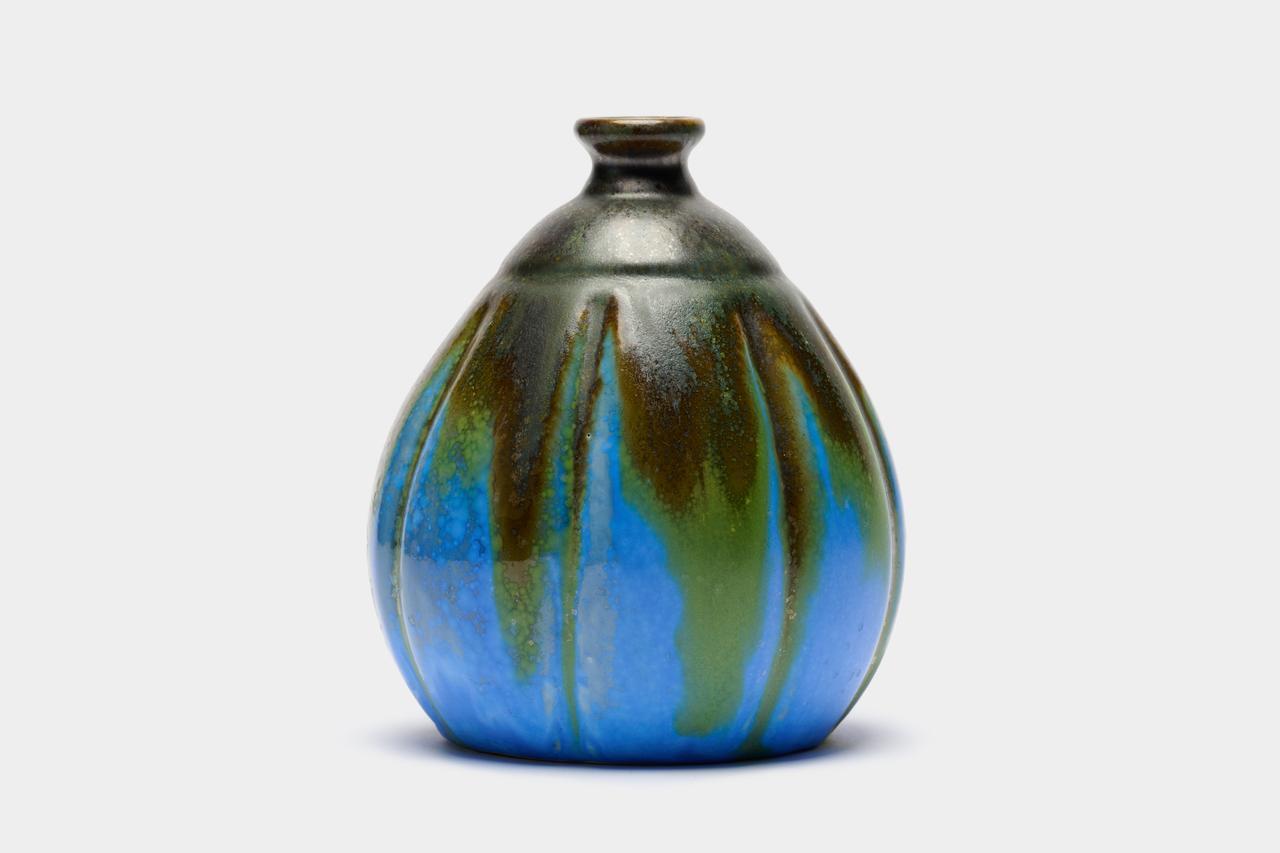
La Bisbal d'Empordà - Eusebi Díaz Costa - Pitcher - Terracotta


01
day
15
hours
11
minutes
50
seconds

No bids placed
Catawiki Buyer Protection
Your payment’s safe with us until you receive your object.View details
Trustpilot 4.4 | 142824 reviews
Rated Excellent on Trustpilot.
Vitrified terracotta ceramic botijo with a central handle that bifurcates toward the body, a small spout for pouring, and a wide mouth, decorated with loose floral motifs and fine gold lines, attributed to Catalan ceramist Eusebi Díaz Costa of La Bisbal d'Empordà, Spain, dating from 1950–1960, measuring about 25 cm high and 24 cm wide, in like‑new condition.
AI-assisted summary
Description from the seller
Renowned Catalan ceramic artist Eusebi Díaz Costa (1908-1964), native of La Bisbal d'Empordà (Gerona).
Details of the piece
Typical structure: It features a central handle that forks toward the body, a "spout" or small tube for drinking in a stream, and a wider mouth for filling it. Size: approximately 25 cm high, approximately 24 cm wide.
Finish and style: The surface presents a glossy ceramic glaze with loose floral motifs, highlighted with fine lines of gold leaf and metallic tones, an unmistakable aesthetic hallmark of Díaz Costa's production in his golden era.
Use: Although traditional porous clay botijos are used to cool water by evaporation, these glazed and decorated versions were mainly produced for ornamental or decorative purposes or to serve wine.
Renowned Catalan ceramic artist Eusebi Díaz Costa (1908-1964), native of La Bisbal d'Empordà (Gerona).
Details of the piece
Typical structure: It features a central handle that forks toward the body, a "spout" or small tube for drinking in a stream, and a wider mouth for filling it. Size: approximately 25 cm high, approximately 24 cm wide.
Finish and style: The surface presents a glossy ceramic glaze with loose floral motifs, highlighted with fine lines of gold leaf and metallic tones, an unmistakable aesthetic hallmark of Díaz Costa's production in his golden era.
Use: Although traditional porous clay botijos are used to cool water by evaporation, these glazed and decorated versions were mainly produced for ornamental or decorative purposes or to serve wine.
Details
Era
1900-2000
Ceramics type
Terracotta
Specific region of origin
d'Empordà, Cataluña
Number of objects
1
Material
Ceramic, Glaze, Gold, Terracotta
Manufacturer/brand
La Bisbal d'Empordà
Country of origin
Spain
Designer/artist/maker
Eusebi Díaz Costa
Style
Mid-century modern
Colour
Gold, Multicolour, White
Condition
As new - unused
Height
25 cm
Width
24 cm
Estimated period
1950-1960
Sold by