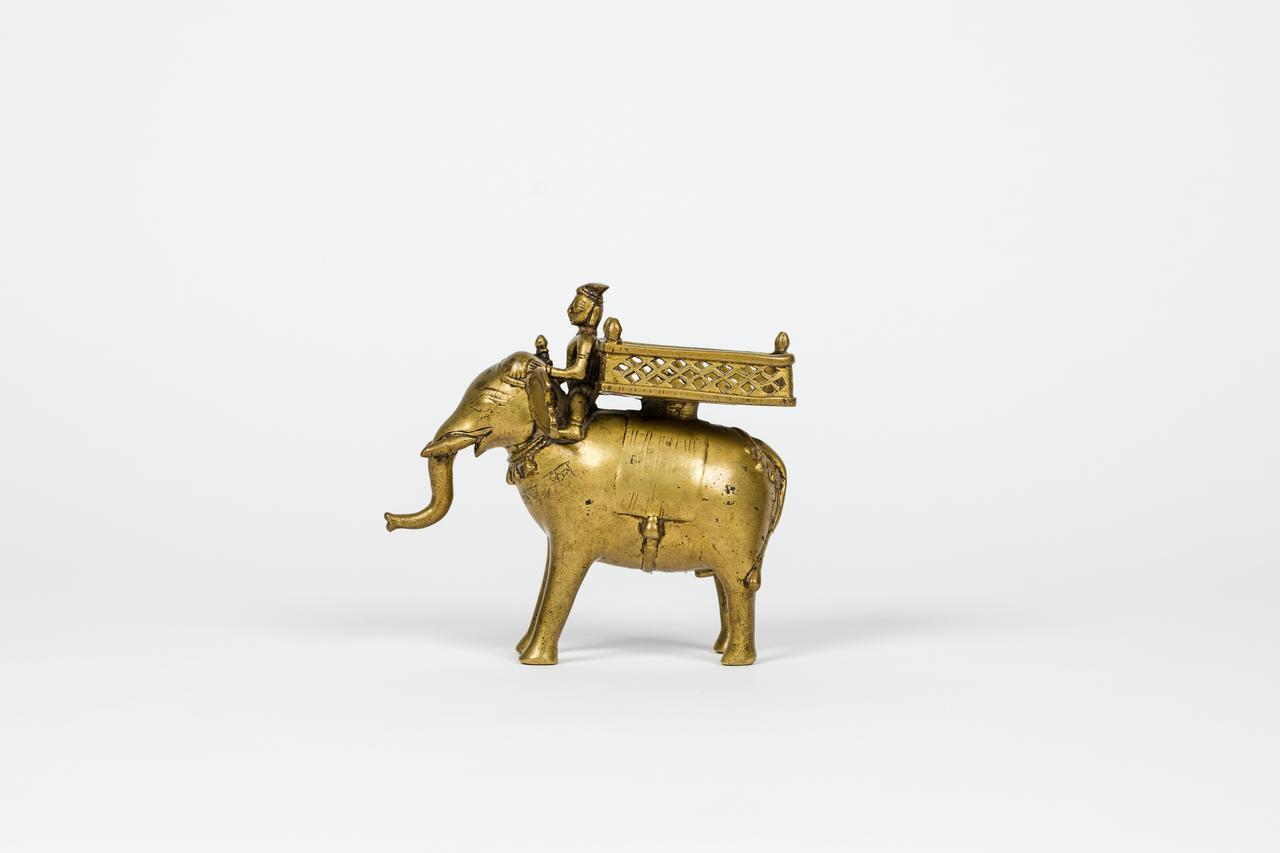
Garuda - South India - 9 cm - Bronze - India - 19th century


04
days
07
hours
06
minutes
10
seconds
Current bid
€ 2
No reserve price

Expert
Selected by Surya Rutten
Has over 25 years' experience in Asian art and owned an art gallery.
Estimate € 150 - € 200
 | €2 | |
|---|---|---|
 | €1 |
Catawiki Buyer Protection
Your payment’s safe with us until you receive your object.View details
Trustpilot 4.4 | 142358 reviews
Rated Excellent on Trustpilot.
Bronze statuette of Garuda from South India, 9 cm high and 4 cm wide, dating to the 19th century, attributed as Original, in good condition.
AI-assisted summary
Description from the seller
Bronze statuette of a devotee or Garuda, South India
This statuette, 9 cm tall and 4 cm wide, is cast in bronze using the lost-wax technique, a traditional method of sacred Indian statuary. It depicts a divine figure or a divine attendant standing, hands joined before the chest in an offering or devotion gesture, the anjali mudrā, wearing a cone-shaped headdress with a bulbous summit, kirita-mukuta, characteristic of the iconography of deities and their attendants in South Indian Hinduism. On either side of the shoulders unfold two wide, wing-like or flame-like elements, while the body, dressed in a finely pleated dhoti with incised folds, rests on stout, cast legs, itself resting on a small rectangular base with protruding feet.
This configuration, hands joined and wings spread, corresponds to the iconographic type of Garuda, the divine bird and Vishnu’s mount, very frequently represented in winged anthropomorphic form in South Indian bronze sculpture, kneeling or standing facing the main sanctum in a posture of perpetual devotion to his master. Such figurines accompanied processional images, utsava-murti, or adorned small domestic shrines and the mandapa pillars in Vishnu-temples of Tamil Nadu, Karnataka, or Andhra Pradesh.
Functionally, this statuette thus belonged either to temple votive furniture, where it stood before the main deity during processions and daily rituals, or to domestic use, within a small family altar intended for daily worship, puja, performed by Hindu devotees in the intimacy of the home.
Beautiful old patina.
Bronze statuette of a devotee or Garuda, South India
This statuette, 9 cm tall and 4 cm wide, is cast in bronze using the lost-wax technique, a traditional method of sacred Indian statuary. It depicts a divine figure or a divine attendant standing, hands joined before the chest in an offering or devotion gesture, the anjali mudrā, wearing a cone-shaped headdress with a bulbous summit, kirita-mukuta, characteristic of the iconography of deities and their attendants in South Indian Hinduism. On either side of the shoulders unfold two wide, wing-like or flame-like elements, while the body, dressed in a finely pleated dhoti with incised folds, rests on stout, cast legs, itself resting on a small rectangular base with protruding feet.
This configuration, hands joined and wings spread, corresponds to the iconographic type of Garuda, the divine bird and Vishnu’s mount, very frequently represented in winged anthropomorphic form in South Indian bronze sculpture, kneeling or standing facing the main sanctum in a posture of perpetual devotion to his master. Such figurines accompanied processional images, utsava-murti, or adorned small domestic shrines and the mandapa pillars in Vishnu-temples of Tamil Nadu, Karnataka, or Andhra Pradesh.
Functionally, this statuette thus belonged either to temple votive furniture, where it stood before the main deity during processions and daily rituals, or to domestic use, within a small family altar intended for daily worship, puja, performed by Hindu devotees in the intimacy of the home.
Beautiful old patina.
Details
Dynastic Style/Period
19th century
Country of Origin
India
Attribution
Original
Material
Bronze
Height
9 cm
Width
4 cm
Title of artwork
Garuda - South India - 9 cm
Depth
4 cm
Condition
Good condition
Sold by