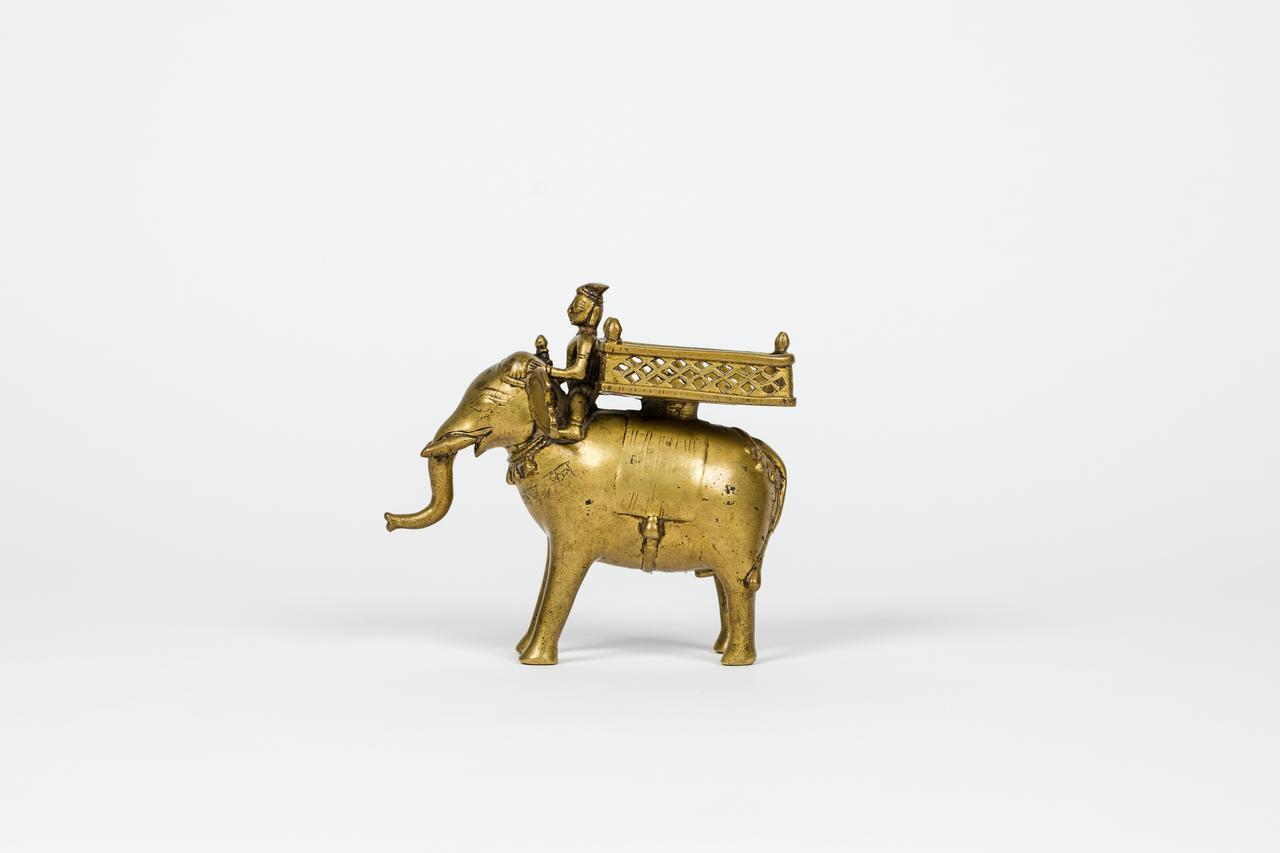
Khandoba - 46 cm - Wood - India - 19th century


04
days
16
hours
32
minutes
38
seconds
Current bid
€ 1
Reserve price not met

Expert
Selected by Surya Rutten
Has over 25 years' experience in Asian art and owned an art gallery.
Estimate € 300 - € 400
 | €1 |
|---|
Catawiki Buyer Protection
Your payment’s safe with us until you receive your object.View details
Trustpilot 4.4 | 142824 reviews
Rated Excellent on Trustpilot.
Indian wooden sculpture titled “Khandoba - 46 cm”, dating to the first half of the 19th century, with dimensions 46 cm high by 14 cm wide by 6 cm deep, from a private collection and in good condition, supplied with a custom-made metal display stand and tracked shipping.
AI-assisted summary
Description from the seller
Wooden carved element probably originating from a Hindu temple processional chariot in southern India (Tamil Nadu).
Khandoba datable to the early 19th century, perhaps older.
The white-worn surface may derive from ritual lime, accumulated dust, oils, outdoor exposure, old coatings.
Many authentic elements of temple carts show this very soft erosion.
The nose does not seem to be snapped off cleanly but rather worn or eroded by time,
A relatively thin wooden board is clearly visible, on which the figure was carved in relief.
The numerous holes and openings are compatible with fixings and with the long exposure of the wood to wood-boring insects. Moreover the wear is coherent between the front and back.
Also the upper part, with the two separated flaps and the fixing holes, is interesting, and the composition is designed to be viewed from the front and from below, exactly as it would have made sense on a large processional cart.
Carefully observe all the photos, they are an integral part of the description.
Height about 46 cm, will be accompanied by a custom-made metal display stand and shipped with proper packaging and a tracking number.
Wooden carved element probably originating from a Hindu temple processional chariot in southern India (Tamil Nadu).
Khandoba datable to the early 19th century, perhaps older.
The white-worn surface may derive from ritual lime, accumulated dust, oils, outdoor exposure, old coatings.
Many authentic elements of temple carts show this very soft erosion.
The nose does not seem to be snapped off cleanly but rather worn or eroded by time,
A relatively thin wooden board is clearly visible, on which the figure was carved in relief.
The numerous holes and openings are compatible with fixings and with the long exposure of the wood to wood-boring insects. Moreover the wear is coherent between the front and back.
Also the upper part, with the two separated flaps and the fixing holes, is interesting, and the composition is designed to be viewed from the front and from below, exactly as it would have made sense on a large processional cart.
Carefully observe all the photos, they are an integral part of the description.
Height about 46 cm, will be accompanied by a custom-made metal display stand and shipped with proper packaging and a tracking number.
Details
Dynastic Style/Period
19th century
Number of objects
1
Country of Origin
India
Material
Wood
Height
46 cm
Width
14 cm
Title of artwork
Khandoba - 46 cm
Depth
6 cm
Condition
Good condition
Provenance
Private collection