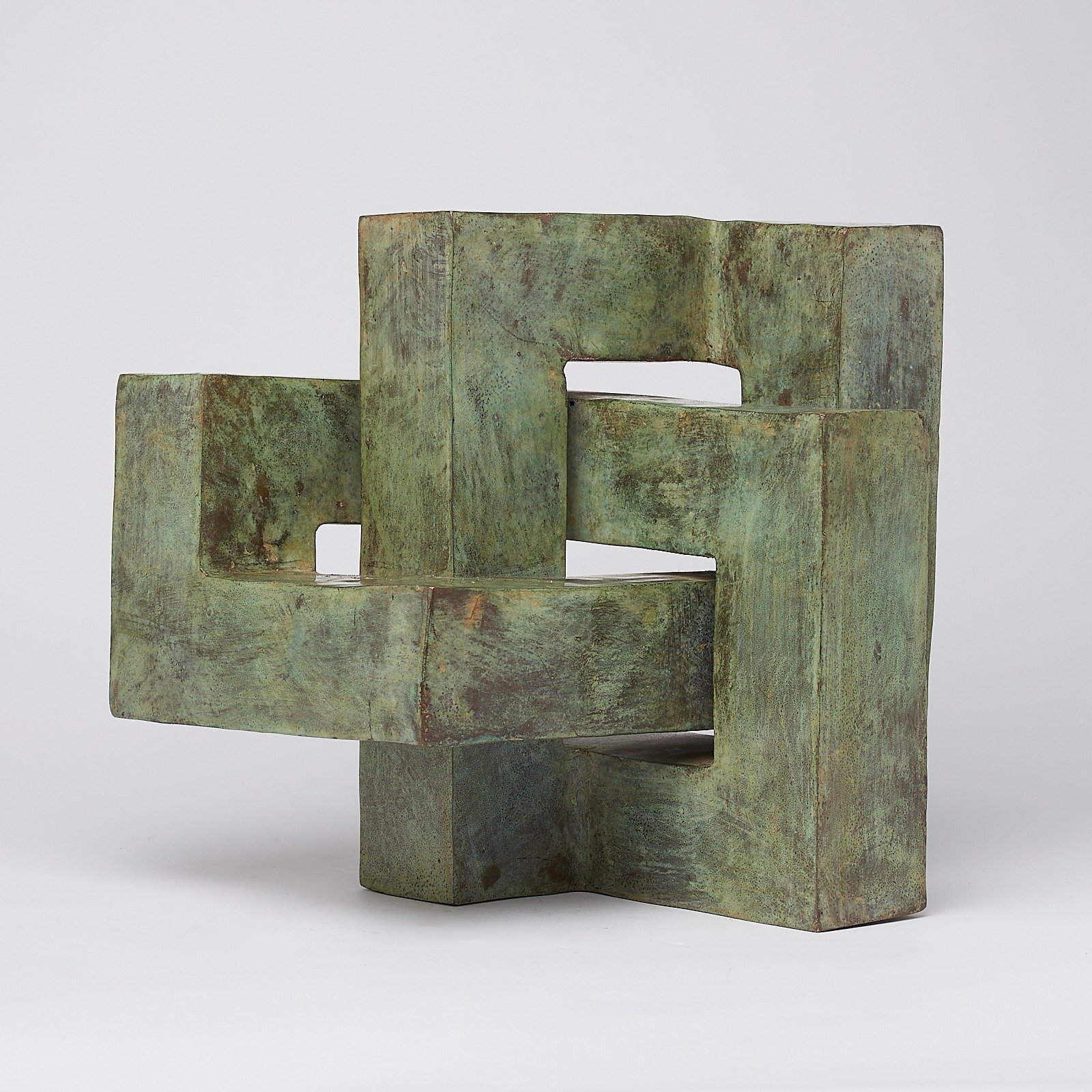
ALTRO - N.N. - Coffee table - PIOPPO - MULTILAYER - Florentine craftsmanship


04
days
01
hour
47
minutes
16
seconds
Starting bid
€ 1
No reserve price

Expert
Selected by Elena Napoleone
Holds a bachelor's degree in history of art and architecture, with 12 years of experience in decorative arts.
Estimate € 130 - € 190
No bids placed
Catawiki Buyer Protection
Your payment’s safe with us until you receive your object.View details
Trustpilot 4.4 | 142376 reviews
Rated Excellent on Trustpilot.
A mid‑20th‑century Italian coffee table in Barocchetto Fiorentino style, made of poplar multilayer wood (PIOPPO - MULTISTRATO) and dating to 1950–1960.
AI-assisted summary
Description from the seller
A specimen of a refined living-room (or smoking) small table in full Baroque Florentine style, datable to the second half of the 20th century (circa the 1950s/60s). The piece represents a sumptuous testament to the renowned Tuscan artistic craftsmanship (Firenze-Cascina area), which in the postwar period managed to reinterpret with extraordinary philological rigor and technical mastery the decorative splendors of Rococo and the Italian and European eighteenth century.
Characterized by a sinuous, light, and elegant silhouette, this small table was destined for the salons of the era’s bourgeoisie as a floating side table for drawing-room conversations or smoking areas, combining the functionality of a versatile furniture element with the visual prestige of a luxurious antique-style finish.
The piece rests on four distinctive Cabriole legs (double S-shaped curves), a key element of the transition from Baroque to Rococo, terminating in an elegant, slight slipper foot. The body and legs are made of solid wood of a soft species (typically poplar or linden), ideal for following the curves and undulating lines of the perimeter fasci.
The reverse side of the table reveals the ingenious transition between artisan cabinetry and modern technical solutions of the twentieth century: the central top is made of poplar plywood/multi-plywood, an excellent technical choice to guarantee absolute dimensional stability over time and to avoid cracks or warping typical of solid thin boards. The legs are secured to the corner fascias (reinforced by diagonal pegs known as “angel wings”) via threaded metal rods and vintage ball-nuts. This structural system allowed safe, modular transport, preserving the integrity of the furniture during the period’s international exports.
The most extraordinary aspect of the object lies in the complex pictorial and metalworking finish applied to the surface, carried out entirely by hand according to the rules of the ancient Florentine art workshops:
1. The Gessoing (Priming): The wood and the plywood are preliminarily isolated and leveled through multiple applications of Bologna plaster of very fine grain, bound with hot rabbit glue. The surface is then finely smoothed to obtain a base as smooth as ivory, ready to receive the finish.
2. The “Mecca” Gilding: In the gilded parts one witnesses a superb to-the-field gilding with imitation gold leaf (an alloy of brass and zinc). To noble the metal and confer depth, warmth, and the luster of antique yellow gold, over the leaf was applied the “Mecca,” a secret alcohol-based varnish formulated with natural resins (shellac, shellac varnish for the yellow, and dragon’s blood for the warm reddish tones). Under the gilding the characteristic Armenian Boloi color can be seen in worn spots.
3. Varnishing and Central Ornament: The top and profiles feature a splendid and matte application in “Florentine Sage Green” (achieved with green earth pigments and white lime/white titanium), brushed to preserve the tactile vibrancy of the artisan work. At the center of the top stands a majestic decorative medallion in stencil with acanthus scrolls and Renaissance-inspired arabesques, bordered by a geometric perimetral Greek key. The decoration is enriched by a very fine dark outline filleting drawn with a brush to simulate the three-dimensional effect of engraving.
4. Patination (Antiquing): To temper the freshness of the colors and confer the charm of a high-antiquity piece, the entire furniture was subjected to a patination process based on Judean pitch and umber earths. The dark varnish, seeping into the micro-fissures of the plaster, created a magnificent crackle effect on the green background and artificially reproduced the deposits of dust and oxidation in the recesses of the carvings and curves.
A specimen of a refined living-room (or smoking) small table in full Baroque Florentine style, datable to the second half of the 20th century (circa the 1950s/60s). The piece represents a sumptuous testament to the renowned Tuscan artistic craftsmanship (Firenze-Cascina area), which in the postwar period managed to reinterpret with extraordinary philological rigor and technical mastery the decorative splendors of Rococo and the Italian and European eighteenth century.
Characterized by a sinuous, light, and elegant silhouette, this small table was destined for the salons of the era’s bourgeoisie as a floating side table for drawing-room conversations or smoking areas, combining the functionality of a versatile furniture element with the visual prestige of a luxurious antique-style finish.
The piece rests on four distinctive Cabriole legs (double S-shaped curves), a key element of the transition from Baroque to Rococo, terminating in an elegant, slight slipper foot. The body and legs are made of solid wood of a soft species (typically poplar or linden), ideal for following the curves and undulating lines of the perimeter fasci.
The reverse side of the table reveals the ingenious transition between artisan cabinetry and modern technical solutions of the twentieth century: the central top is made of poplar plywood/multi-plywood, an excellent technical choice to guarantee absolute dimensional stability over time and to avoid cracks or warping typical of solid thin boards. The legs are secured to the corner fascias (reinforced by diagonal pegs known as “angel wings”) via threaded metal rods and vintage ball-nuts. This structural system allowed safe, modular transport, preserving the integrity of the furniture during the period’s international exports.
The most extraordinary aspect of the object lies in the complex pictorial and metalworking finish applied to the surface, carried out entirely by hand according to the rules of the ancient Florentine art workshops:
1. The Gessoing (Priming): The wood and the plywood are preliminarily isolated and leveled through multiple applications of Bologna plaster of very fine grain, bound with hot rabbit glue. The surface is then finely smoothed to obtain a base as smooth as ivory, ready to receive the finish.
2. The “Mecca” Gilding: In the gilded parts one witnesses a superb to-the-field gilding with imitation gold leaf (an alloy of brass and zinc). To noble the metal and confer depth, warmth, and the luster of antique yellow gold, over the leaf was applied the “Mecca,” a secret alcohol-based varnish formulated with natural resins (shellac, shellac varnish for the yellow, and dragon’s blood for the warm reddish tones). Under the gilding the characteristic Armenian Boloi color can be seen in worn spots.
3. Varnishing and Central Ornament: The top and profiles feature a splendid and matte application in “Florentine Sage Green” (achieved with green earth pigments and white lime/white titanium), brushed to preserve the tactile vibrancy of the artisan work. At the center of the top stands a majestic decorative medallion in stencil with acanthus scrolls and Renaissance-inspired arabesques, bordered by a geometric perimetral Greek key. The decoration is enriched by a very fine dark outline filleting drawn with a brush to simulate the three-dimensional effect of engraving.
4. Patination (Antiquing): To temper the freshness of the colors and confer the charm of a high-antiquity piece, the entire furniture was subjected to a patination process based on Judean pitch and umber earths. The dark varnish, seeping into the micro-fissures of the plaster, created a magnificent crackle effect on the green background and artificially reproduced the deposits of dust and oxidation in the recesses of the carvings and curves.
Details
Specific region of origin
TOSCANA
Style subtype
Italian design
Weight
5 kg
Era
1900-2000
Title additional information
Florentine craftsmanship
Number of objects
1
Country of origin
Italy
Manufacturer/brand
ALTRO
Designer/artist/maker
N.N.
Material
PIOPPO - MULTILAYER
Style
Vintage
Colour
Gold, Green
Condition
Fair condition - heavily used & with possibly minor parts missing
Height
51 cm
Width
43 cm
Depth
32 cm
Estimated period
1950-1960
Sold by