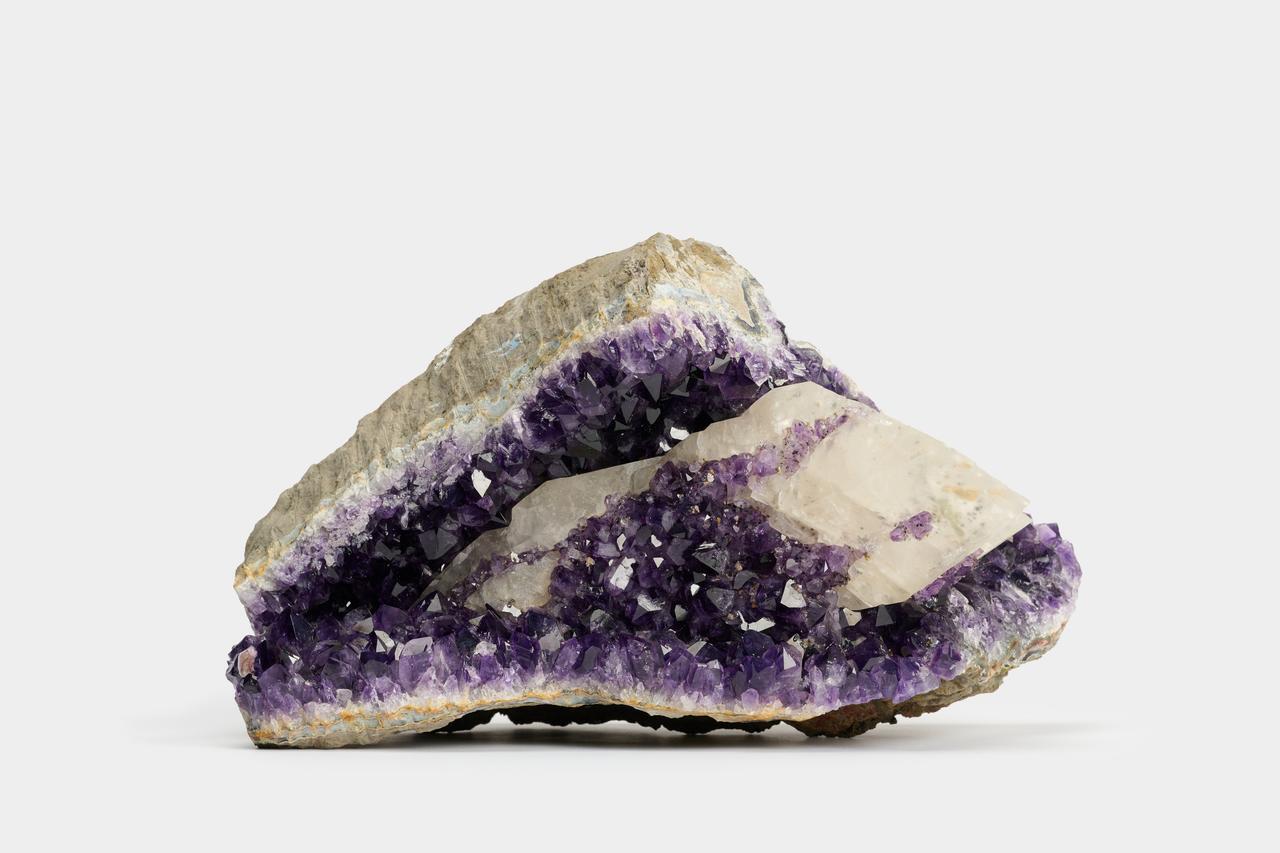
Pallasite Gyarub Zangbo - Height: 11 cm - Width: 8.7 cm - 86 g


00
days
18
hours
17
minutes
15
seconds
Current bid
€ 416
Reserve price not met

Expert
Selected by Francesco Moser
Over 20 years collecting meteorites; former museum curator and experienced restorer.
Estimate € 1,050 - € 1,200
 | €416 | |
|---|---|---|
 | €48 | |
 | €43 | |
Catawiki Buyer Protection
Your payment’s safe with us until you receive your object.View details
Trustpilot 4.4 | 142824 reviews
Rated Excellent on Trustpilot.
Description from the seller
Very rare pallasite called Gyarub Zangbo is a anomalous pallasite (stony-iron) meteorite discovered in October 2020 on the Qinghai-Tibet Plateau in Tibet, China. With a total known weight of just ~17.6 kg, it is composed of dark brown olivine crystals embedded in a metal (kamacite and taenite) matrix.
Some preliminary interpretations in the meteoritical community have suggested possible links to carbonaceous-chondrite-like reservoirs, based on its isotopic offset from typical inner Solar System materials. However, this remains hypothesis-level interpretation, and no peer-reviewed study has yet confirmed a direct carbonaceous parent body association.
Pallasites are stony-iron meteorites composed of two phases in intimate contact: crystals of the mineral olivine embedded in a matrix of iron-nickel metal. The metal shows the interlocking kamacite-taenite crystallography called the Widmanstatten pattern, which forms only during extraordinarily slow cooling inside the core of a differentiated asteroid over millions of years. The olivine occupies void spaces between the metal grains, glowing amber, gold, or green when light passes through a polished slice.
Very rare pallasite called Gyarub Zangbo is a anomalous pallasite (stony-iron) meteorite discovered in October 2020 on the Qinghai-Tibet Plateau in Tibet, China. With a total known weight of just ~17.6 kg, it is composed of dark brown olivine crystals embedded in a metal (kamacite and taenite) matrix.
Some preliminary interpretations in the meteoritical community have suggested possible links to carbonaceous-chondrite-like reservoirs, based on its isotopic offset from typical inner Solar System materials. However, this remains hypothesis-level interpretation, and no peer-reviewed study has yet confirmed a direct carbonaceous parent body association.
Pallasites are stony-iron meteorites composed of two phases in intimate contact: crystals of the mineral olivine embedded in a matrix of iron-nickel metal. The metal shows the interlocking kamacite-taenite crystallography called the Widmanstatten pattern, which forms only during extraordinarily slow cooling inside the core of a differentiated asteroid over millions of years. The olivine occupies void spaces between the metal grains, glowing amber, gold, or green when light passes through a polished slice.
Details
Name of meteorite
Pallasite
Type of meteorite
Gyarub Zangbo
Weight
86 g
Origin (region/city)
Qinghai-Tibet Plateau
Country of origin
China
Height
11 cm
Width
8.7 cm
Sold by