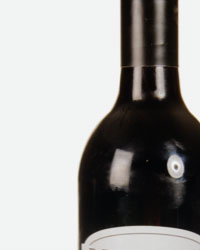
1959 V. Budafok Hungary V. Budafok - Tokaj - 1 Jennie (0.5L)


05
days
11
hours
38
minutes
26
seconds

 | €4 | |
|---|---|---|
| €1 |
Catawiki Buyer Protection
Your payment’s safe with us until you receive your object.View details
Trustpilot 4.4 | 142734 reviews
Rated Excellent on Trustpilot.
1959 Tokaji Aszú from V. Budafok, Hungary, in a 0.5 L Jennie bottle, with a fully intact metal capsule and a stained yet readable label.
AI-assisted summary
Description from the seller
1959 Tokaji Aszú, bottled and exported during the Communist era by the Hungarian state monopoly Monimpex / Budafok (C.V.A.S. - Budapesti Borforgalmi V. Budafok).
Tasting Notes
Given the bottle's venerable age and its deep, highly evolved color, the wine has developed a concentration and tertiary profile of rare intensity:
Appearance: Very dark amber, dense mahogany, or burnt caramel with greenish/golden reflections on the rim; fluid and viscous.
Nose: Extremely complex and deep aromatic profile. Intense notes of dried figs, dates, candied orange peel, raisins, walnut, caramel, chestnut honey, saffron, pipe tobacco, and a distinct oxidized, earthy edge emerge.
Palate: Dense and viscous on the palate. The striking natural acidity typical of Tokaj's Furmint grapes balances the residual sweetness and oxidation, delivering a structure that remains lively and complex, leading into an extremely long finish reminiscent of dried fruits, dark cocoa, and ancient spices.
Producer History / Historical Context
The Monimpex Era: During Hungary's Communist period (from the end of World War II through the early 1990s), the production and commercialization of wines from the famed Tokaj region were centralized by the state.
Budafok and Monimpex: The state enterprise Monimpex Budapest held an absolute monopoly over the export of Hungarian wines. Wines produced in the Tokaj region were frequently sent to the massive underground cellars of Budafok (a historic winemaking district in Budapest) for aging, blending, and final bottling prior to overseas shipment.
Legacy: Although the industrial management of that era tended to standardize production, great vintages such as 1959 (regarded as exceptional across Europe for botrytized sweet wines) retain an extraordinary aging capacity and priceless historical charm.
1959 Tokaji Aszú, bottled and exported during the Communist era by the Hungarian state monopoly Monimpex / Budafok (C.V.A.S. - Budapesti Borforgalmi V. Budafok).
Tasting Notes
Given the bottle's venerable age and its deep, highly evolved color, the wine has developed a concentration and tertiary profile of rare intensity:
Appearance: Very dark amber, dense mahogany, or burnt caramel with greenish/golden reflections on the rim; fluid and viscous.
Nose: Extremely complex and deep aromatic profile. Intense notes of dried figs, dates, candied orange peel, raisins, walnut, caramel, chestnut honey, saffron, pipe tobacco, and a distinct oxidized, earthy edge emerge.
Palate: Dense and viscous on the palate. The striking natural acidity typical of Tokaj's Furmint grapes balances the residual sweetness and oxidation, delivering a structure that remains lively and complex, leading into an extremely long finish reminiscent of dried fruits, dark cocoa, and ancient spices.
Producer History / Historical Context
The Monimpex Era: During Hungary's Communist period (from the end of World War II through the early 1990s), the production and commercialization of wines from the famed Tokaj region were centralized by the state.
Budafok and Monimpex: The state enterprise Monimpex Budapest held an absolute monopoly over the export of Hungarian wines. Wines produced in the Tokaj region were frequently sent to the massive underground cellars of Budafok (a historic winemaking district in Budapest) for aging, blending, and final bottling prior to overseas shipment.
Legacy: Although the industrial management of that era tended to standardize production, great vintages such as 1959 (regarded as exceptional across Europe for botrytized sweet wines) retain an extraordinary aging capacity and priceless historical charm.
Details
Vintage
1959
Producer, Name of wine
V. Budafok Hungary V. Budafok
Number of bottles
1
Bottle size
Jennie (0.5L)
Country
Hungary
Region
Tokaj
Fill level
Burgundy/Champagne/Flute bottle type, 5 cm fill level
Capsule/cork condition
Fully intact metal capsule
Label condition
Stained/written/torn or loose readable label