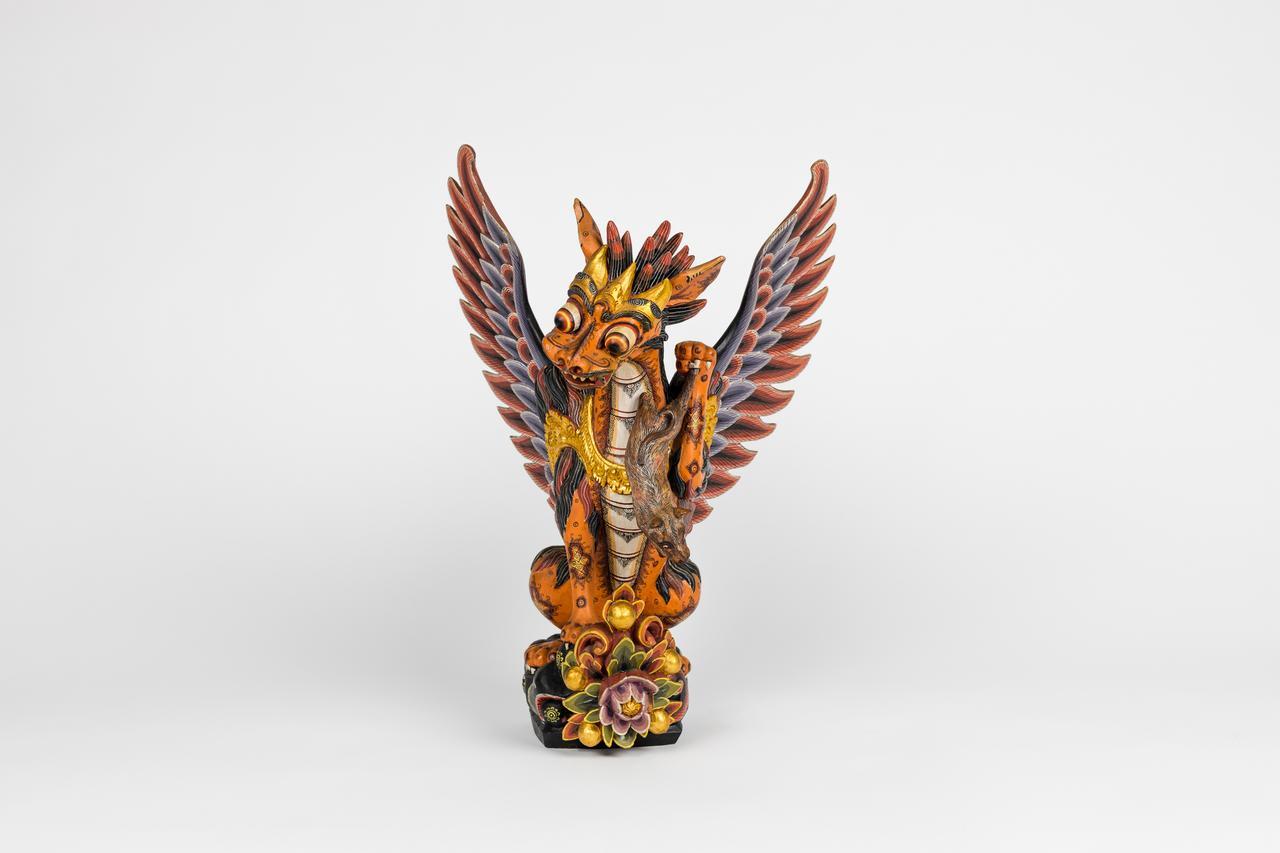
Thai Yaksha temple guardian with sword – Bronze – Thailand – 21 cm – 856 g - Thailand (No reserve price)


02
days
16
hours
48
minutes
20
seconds

No bids placed
Catawiki Buyer Protection
Your payment’s safe with us until you receive your object.View details
Trustpilot 4.4 | 142857 reviews
Rated Excellent on Trustpilot.
Bronze Thai Yaksha temple guardian figure with a sword, about 21 cm high, 10 cm wide and 8 cm deep, weighing 856 g, originating from Thailand, in good condition, authentic/original, dating to the late 20th century, from a private collection.
AI-assisted summary
Description from the seller
For sale is this expressive bronze figure of a Thai Yaksha (Yak) from an inherited collection of Asian art and decorative objects.
The figure depicts a sturdily portrayed temple guardian in traditional Thai styling. Especially characteristic are the markedly expressive face with large eyes and pronounced mouth, the ears protruding sideways, as well as the tall,尖尖 crown.
The guardian wears an elaborately ornamented armor or traditional clothing. Chest, shoulders, arms and legwear are covered with numerous geometric and floral patterns. The back is also detailed.
With both hands the Yaksha holds a long sword vertically in front of his body. The weapon nearly reaches the base and emphasizes the martial character of the depiction. Yaksha figures are known from Buddhist and Hindu art of Southeast Asia and are particularly often depicted in Thailand as powerful guardian figures.
The figure stands on a multi-tiered rectangular pedestal and has a dark brown to almost black patina. Through rubbing, lighter metallic tones appear at various spots.
Dimensions & weight:
Height: approx. 21 cm
Width: approx. 10 cm
Depth: approx. 8 cm
Weight: approx. 856 g
Material: Bronze
Representation: Yaksha/Yak temple guardian with sword
Origin/Style: Thailand / Southeast Asian
The bronze is in used condition with age- and wear-related traces. Visible are patina, rubbing, discolorations, deposits, minor scratches as well as casting and surface irregularities. In some places there are greenish oxidation traces as well as lighter abrading spots. On one arm there is also a noticeably reddish-brown discoloration. The underside shows clear deposits or adhering material.
A precise dating has not been made.
The figure is therefore not offered as antique.
The photos are part of the condition description.
For sale is this expressive bronze figure of a Thai Yaksha (Yak) from an inherited collection of Asian art and decorative objects.
The figure depicts a sturdily portrayed temple guardian in traditional Thai styling. Especially characteristic are the markedly expressive face with large eyes and pronounced mouth, the ears protruding sideways, as well as the tall,尖尖 crown.
The guardian wears an elaborately ornamented armor or traditional clothing. Chest, shoulders, arms and legwear are covered with numerous geometric and floral patterns. The back is also detailed.
With both hands the Yaksha holds a long sword vertically in front of his body. The weapon nearly reaches the base and emphasizes the martial character of the depiction. Yaksha figures are known from Buddhist and Hindu art of Southeast Asia and are particularly often depicted in Thailand as powerful guardian figures.
The figure stands on a multi-tiered rectangular pedestal and has a dark brown to almost black patina. Through rubbing, lighter metallic tones appear at various spots.
Dimensions & weight:
Height: approx. 21 cm
Width: approx. 10 cm
Depth: approx. 8 cm
Weight: approx. 856 g
Material: Bronze
Representation: Yaksha/Yak temple guardian with sword
Origin/Style: Thailand / Southeast Asian
The bronze is in used condition with age- and wear-related traces. Visible are patina, rubbing, discolorations, deposits, minor scratches as well as casting and surface irregularities. In some places there are greenish oxidation traces as well as lighter abrading spots. On one arm there is also a noticeably reddish-brown discoloration. The underside shows clear deposits or adhering material.
A precise dating has not been made.
The figure is therefore not offered as antique.
The photos are part of the condition description.
Details
Country of Origin
Thailand
Period
Late 20th century
Material
Bronze
Condition
Good condition
Title of artwork
Thai Yaksha temple guardian with sword – Bronze – Thailand – 21 cm – 856 g
Height
21 cm
Width
10 cm
Depth
8 cm
Weight
856 g
Provenance
Private collection
Authenticity
Original/official
Sold by