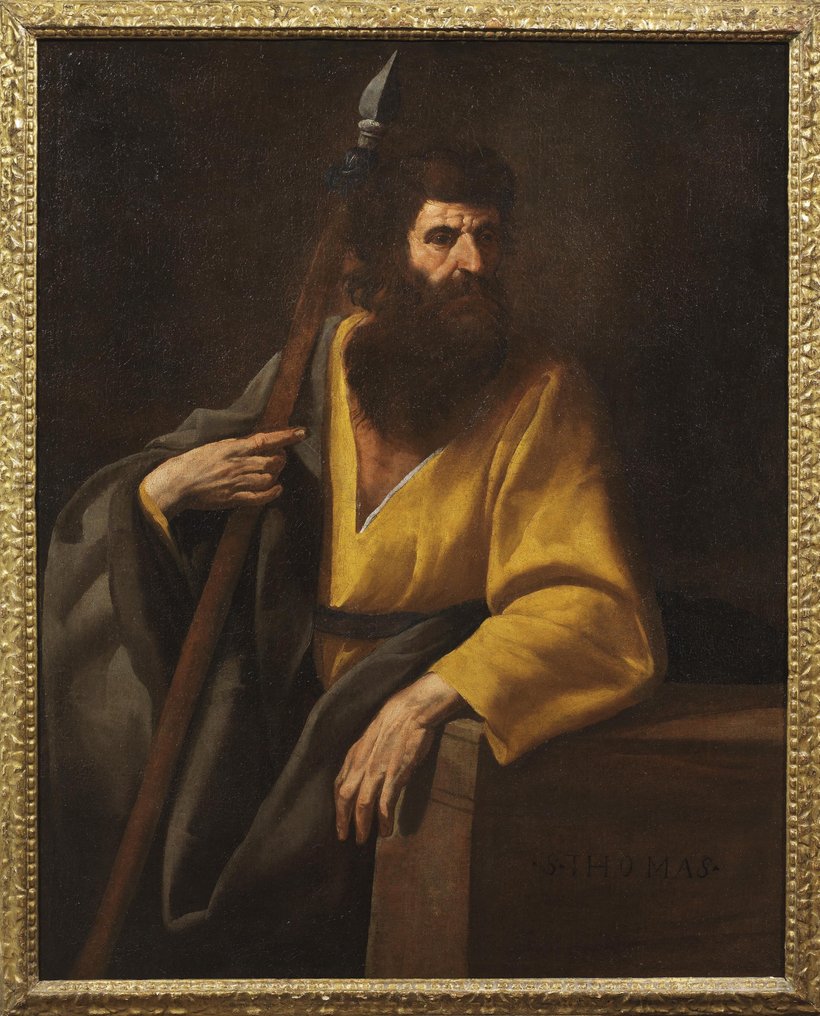
Scuola di Jusepe de Ribera (XVII) - San Tommaso


09
days
08
hours
21
minutes
20
seconds
Current bid
€ 1
Reserve price not met

Expert
Selected by Caterina Maffeis
Master in early Renaissance Italian painting with internship at Sotheby’s and 15 years' experience.
Estimate € 4,500 - € 5,500
 | €1 |
|---|
Catawiki Buyer Protection
Your payment’s safe with us until you receive your object.View details
Trustpilot 4.4 | 143727 reviews
Rated Excellent on Trustpilot.
Description from the seller
School of Josepe de Ribera
Oil on canvas, 128 x 100 cm
Frame 138 x 110 cm
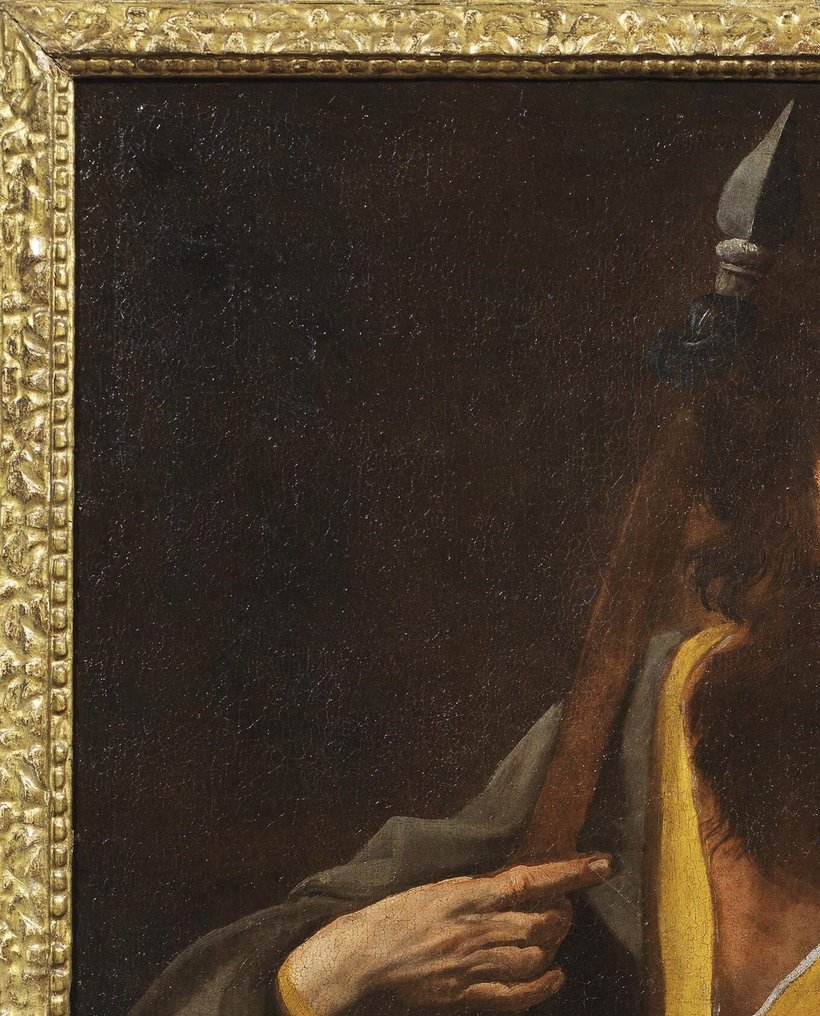
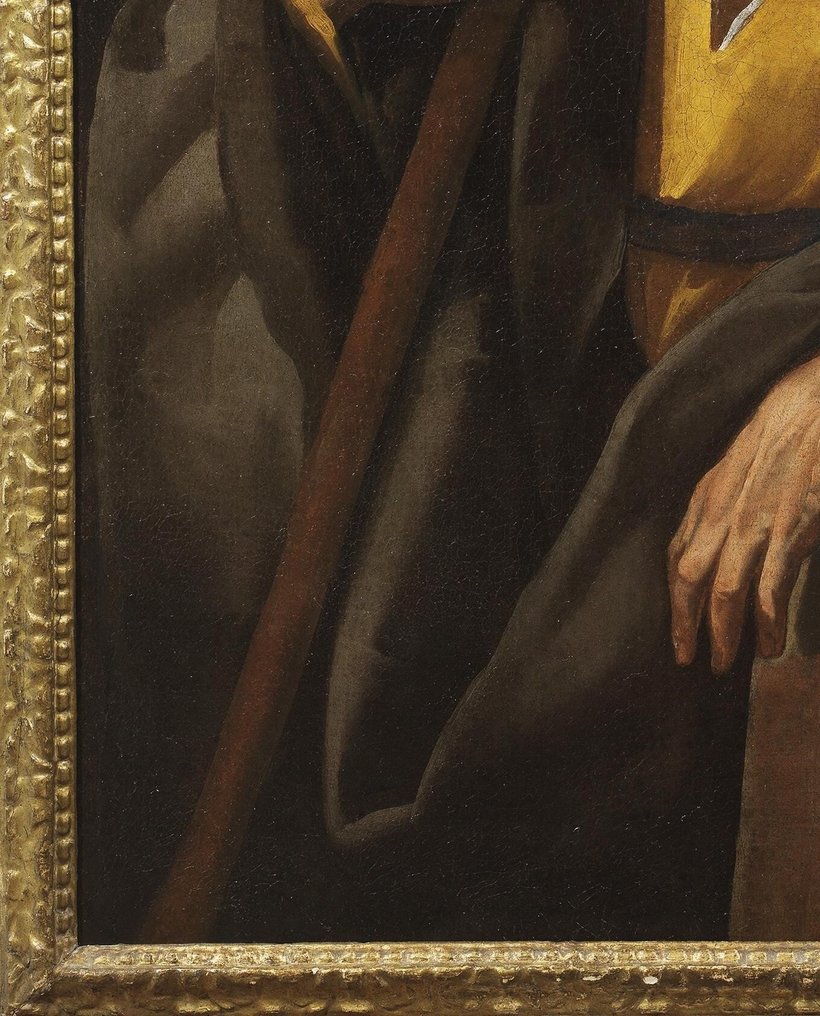
The monumental figure of Saint Thomas asserts itself in space with solemn naturalness, resting on a step bearing the saint's name. The intense yellow of the robe, juxtaposed with the gray cloak with its soft drapery, creates an effective chromatic balance and contributes to the volumetric rendering of the figure. The face, framed by brown beard and hair, is characterized by a robust and individualized physiognomy, distant from idealizations. The hands, treated with careful observation from life, reinforce the naturalistic stance: the left hand abandoned along the hip, the right holding the instrument of martyrdom. The absence of a halo underscores the intention to present the saint as a concrete, earthly man, in keeping with the principles of Caravaggisti naturalism.
The use of white lead, the loose brushwork, and the strong physiognomic characterization bring the work into the circle of Josepe de Ribera, one of the major interpreters of Caravaggism. The painting thus bears witness to an intense and dramatic reading of sacrality, grounded in expressive truth and in the centrality of the human figure.
Details
Sold with frame
Yes
Artist
Scuola di Jusepe de Ribera (XVII)
Title of artwork
San Tommaso
Technique
Oil painting
Signature
Not signed
Country of origin
Italy
Condition
Excellent condition
Height
138 cm
Width
110 cm
Depiction/theme
Religion
Style
Caravaggisti
Period
17th century
