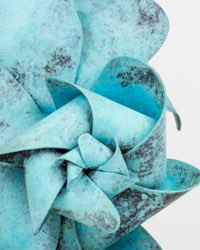
Mario Borrelli - Sublime


00
days
18
hours
05
minutes
56
seconds
Current bid
€ 600
Reserve price not met

Expert
Selected by Maurizio Buquicchio
Holds a master's degree in film and visual arts; experienced curator, writer, and researcher.
Gallery Estimate € 2,000 - € 2,400
 | €600 | |
|---|---|---|
| €550 | |
| €500 | |
Catawiki Buyer Protection
Your payment’s safe with us until you receive your object.View details
Trustpilot 4.4 | 144940 reviews
Rated Excellent on Trustpilot.
Description from the seller
Spedita with the highest professionalism.
The Grace of Eros by Mario Borrelli
“Now, you will agree that preferring the soft to what is hard is a demonstration of the nature of Eros.” Plato, Symposium, 195d-e
The young painter Mario Borrelli, whom criticism calls the last of the Romantics, places the body at the center of his artistic experience. In continuity with classical thought, which made man the measure of all things, the painter recounts himself in his first solo exhibition through a series of figurative canvases, where the human being, the human body, is the measure of all things. A genre today undervalued for fashion, but with deep roots and dwelling in every soul even if in a concealed way, as archetypes teach. The representation of the nude has ancient origins; one could say that the body was born before the face, before the landscape, before still life, even before writing; think of the Venus of Willendorf kept in Vienna and all prehistoric Venuses. The erotic body that Mario Borrelli tells through his works is not a “bare,” “perfect,” “undressed” body. To better understand this perspective it is necessary to dwell on a brief and happy insight by Kenneth Clark, the British art historian of the 1950s. Clark introduces a distinction that would gain much traction in the English language. Being naked, naked, means being without clothes, and at the same time suggests that sense of embarrassment that almost all of us in this condition experience. The word nude, nudity, on the contrary, does not imply this sense of unease and is used in art. It is a re-shaped body, therefore harmonious, thriving and confident. It is as if nudity were a form of clothing. But of what kind? Our painter-tailor dresses the bodies of Eros, evoking the life-desire through sacred epiphanies of the flesh, so the nude slips away from the contingent to lift itself to an idea, to a confluence of sacred love and profane love. Freedberg writes that images operate in a way that excites desire; and it is through the eyes that the gaze on Mario Borrelli’s paintings carries other senses toward the mystical contemplation of the image. It is the flesh that becomes sacred, a terrestrial prayer that elevates the spirit revitalized by the images, excited by the Dionysian impulse; it is an insurrection and revolution of instinct, which in turn transfigures into feeling. Therefore the mysticism of the flesh that derives from the painter’s erotic narrative is powerful, moving, and pushes one to investigate what lies hidden, what is concealed, almost ashamed for convenience, convention, or moralizing fiction. One must never forget, the artist seems to suggest, that the seduction of forms is as sacred as the bodies moved by Eros are sacred. Nude bodies, veiled, partly covered, erotically bind the viewer through a particular detail: a hand, a drapery, a lock of hair, etc. A transfiguration occurs: Eros becomes a mystery and the sacred matrix emerges in all its brazen power, and it is here that one can glimpse the ultimate truth of existence. Nude bodies, veiled, partly covered, erotically bind the viewer through a particular detail: a hand, a drapery, a lock of hair, etc. A transfiguration occurs: Eros becomes a mystery and the sacred matrix emerges in all its brazen power, and it is here that one can glimpse the ultimate truth of existence. The vitalism explodes, perhaps the beauty of truth takes on various forms, the transparency of Eros asserts itself, unashamed to show itself because it is the measure of all things. In the nudity represented by Mario Borrelli one can glimpse veritas, that which the Latins, not by chance, made coincide with good nudity free of flagitium; it is the naked truth of Klimt, the naked and pure truth that does not fear to reveal itself. The naturalistic images tell their story in a metastoric space-non-space, beyond precise spatio-temporal connotations and within boundaries that could be defined as heroic: the relationship between spaces and figures is, for the painter, an evocative necessity and does not limit the immersive suggestion; on the contrary, it amplifies it in a non-place that produces estrangement. The vitalism explodes, perhaps the beauty of truth takes on various forms, the transparency of Eros asserts itself, unashamed to show itself because it is the measure of all things. In the nudity represented by Mario Borrelli one can glimpse veritas, that which the Latins, not by chance, made coincide with the good nudity free of flagitium; it is the naked truth of Klimt, the naked and pure truth that does not fear to reveal itself. The naturalistic images tell their story in a metastoric space-non-space, beyond precise spatio-temporal connotations and within boundaries that could be defined as heroic: the relationship between spaces and figures is, for the painter, an evocative need and does not limit the immersion; indeed it amplifies it in a non-place that produces estrangement. Finally, the artist, favoring female nudity with soft shapes, not for the vanity of gender, but because within those softnesses resides the victorious eros, emphasizes an erotic triumph, which translates into the tangible form of that creative force that eternally fights against Thanatos, his antagonist, bearer of destruction. Finally, the artist, favoring female nudity with soft shapes, not for the vanity of gender, but because within those softnesses resides the victorious eros, emphasizes an erotic triumph, which translates into the tangible form of that creative force that eternally fights against Thanatos. But the tension between Eros and Thanatos is told with indescribable tenderness. And it is perhaps, in that ecstasy where the figures are crystallized, the spiritual place where the artist unexpectedly manages to speak of himself, of his art and his painting as prayer and poetry.
By Daniela Marra
Details
Sold with frame
No
Sold by
Direct from the artist
Edition
Original
Artist
Mario Borrelli
Title of artwork
Sublime
Technique
Oil painting
Signature
Hand signed
Country of origin
Italy
Year
2026
Condition
Good condition
Height
90 cm
Width
85 cm
Depiction/theme
Nude
Period
2020+
Sold by