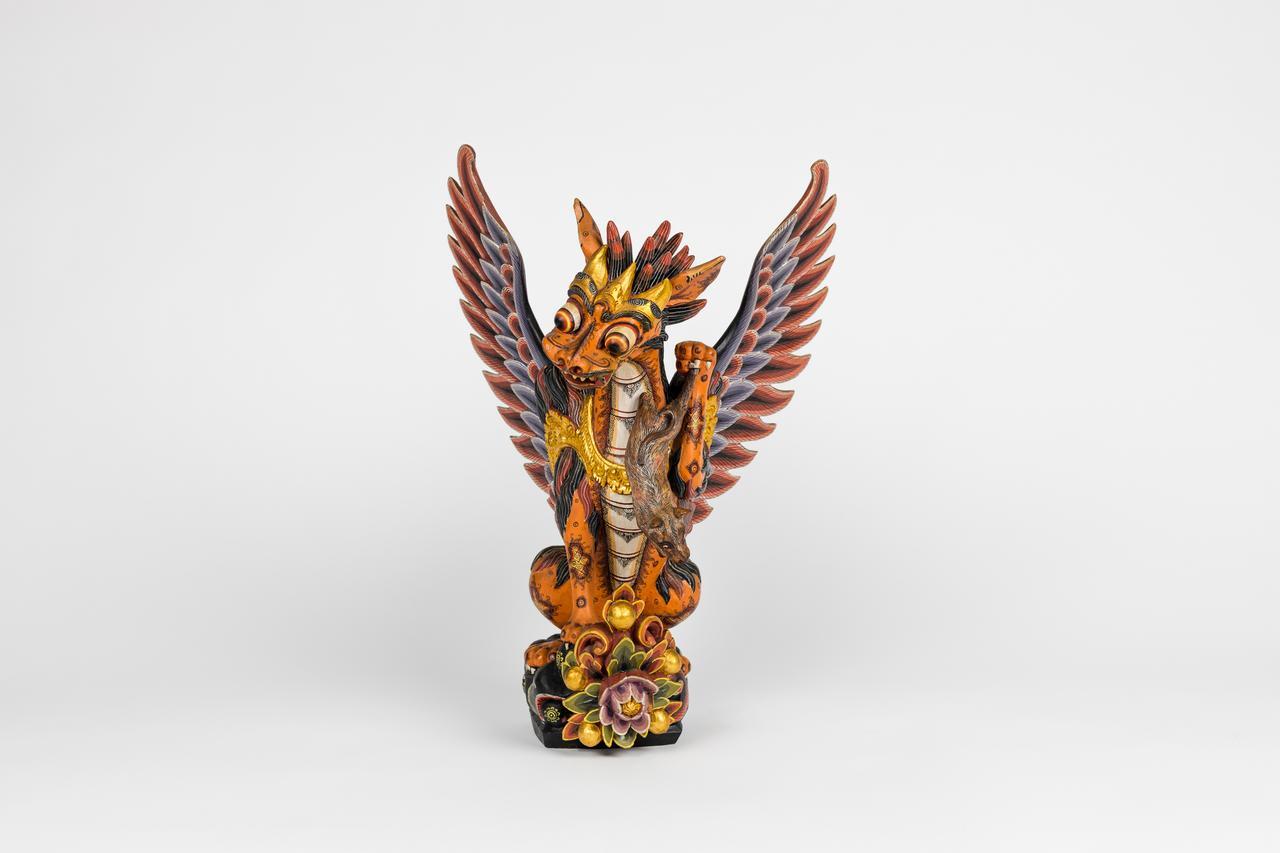
Juroong - Dayak Benoaq - Indonesia (No reserve price)


01
day
01
hour
14
minutes
22
seconds

 | €15 | |
|---|---|---|
| €10 | |
| €7 | |
Catawiki Buyer Protection
Your payment’s safe with us until you receive your object.View details
Trustpilot 4.4 | 144426 reviews
Rated Excellent on Trustpilot.
Five Juroong amulets of Dayak Benoaq origin from Kalimantan Selatan, Indonesia, carved in wood, dating to the late 20th century, sold with a stand, from a private collection, original/official and in good condition.
AI-assisted summary
Description from the seller
Interesting collection of five Juroong coming from the Dayak Benuaq ethnicity in South Kalimantan, Barito River, these juroong are part of the type of amulets used for the Belian ceremony (shamanic ceremony). These figurative amulets from southeastern Borneo not only represent various aspects of the creation myth, but also depict the postures and expressions of the balian [priest] closely connected to his profession, particularly the exorcism of evil spirits from patients, hence the creation of these shapes at the edge of hallucinatory and contortion of the body. To you buyers the study of the meaning of each single Juroong. Coming from a private collection of an Italian anthropologist who lived in close contact with the Dayak. Indicative measurements range from 15/16 cm for the tallest to 10 cm for the smallest. The photos are an integral part of the description.
Interesting collection of five Juroong coming from the Dayak Benuaq ethnicity in South Kalimantan, Barito River, these juroong are part of the type of amulets used for the Belian ceremony (shamanic ceremony). These figurative amulets from southeastern Borneo not only represent various aspects of the creation myth, but also depict the postures and expressions of the balian [priest] closely connected to his profession, particularly the exorcism of evil spirits from patients, hence the creation of these shapes at the edge of hallucinatory and contortion of the body. To you buyers the study of the meaning of each single Juroong. Coming from a private collection of an Italian anthropologist who lived in close contact with the Dayak. Indicative measurements range from 15/16 cm for the tallest to 10 cm for the smallest. The photos are an integral part of the description.
Details
Indigenous object name
Juroong
Number of objects
5
Ethnic group/ culture
Dayak Benoaq
Country of Origin
Indonesia
Period
Late 20th century
Material
Wood
Sold with stand
Yes
Condition
Good condition
Height
18 cm
Width
3 cm
Provenance
Private collection
Authenticity
Original/official