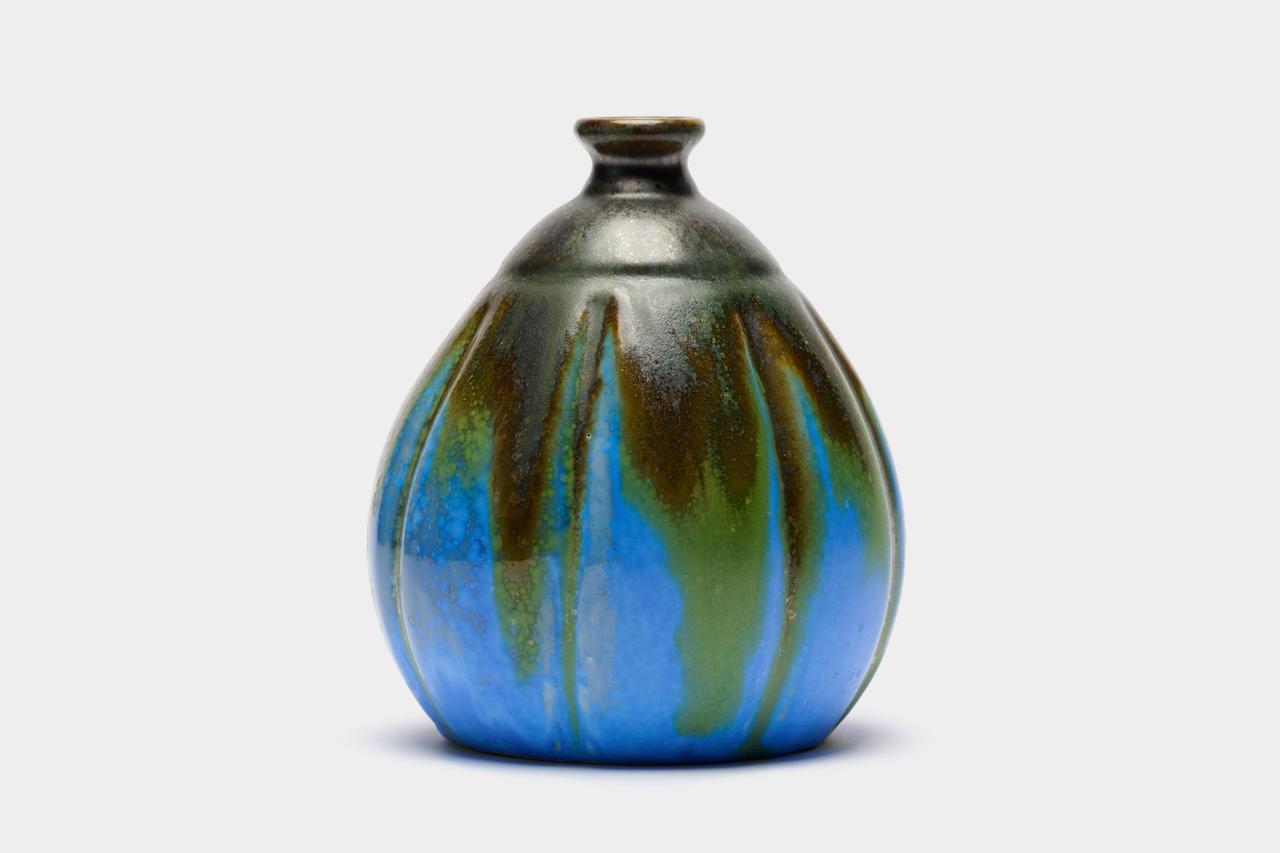
Maiolica di Castelli Maestro ceramista Giovanni Simonetti ''Grande Misura'' - Vase - Ceramic


04
days
10
hours
15
minutes
31
seconds
Starting bid
€ 1
No reserve price

Expert
Selected by Florentin Brunz Gaborieau
Holds a master’s in Art History, specialising in Second French Empire and Dutch Golden Age.
Estimate € 150 - € 200
No bids placed
Catawiki Buyer Protection
Your payment’s safe with us until you receive your object.View details
Trustpilot 4.4 | 144581 reviews
Rated Excellent on Trustpilot.
This Italian ceramic maiolica by master ceramicist Giovanni Simonetti, titled “Grande Misura”, dates from 1970–1980 and is in like-new, unused condition, measuring 19 × 37 × 19 cm.
AI-assisted summary
Description from the seller
Five centuries of Castelli’s ceramic art tradition are reflected in the artisanal workshop SIMONETTI, founded and directed by master ceramist Giovanni Simonetti, who in 1967 took over an old workshop and began his activity using traditional methods such as the foot-powered wheel and the “breath-fired” kiln.
The ceramic art of Castelli, in Abruzzo, has ancient origins, but became famous in the sixteenth century.
It was the high quality of the maiolicas, the lively decorations, but also the affordability of the products, thanks to innovative production systems, that made Castelli one of the most appreciated centers for this art, especially in the seventeenth century.
Although Castelli is a small town in the province of Teramo, its role in the history of Italian maiolica is of primary importance, particularly in the period from the XVI to the XVIII century.
Ciro the Younger meets Lisandro, work by Francesco Grue, Acerbo Collection of the Civic Museums of Loreto Aprutino
The sixteenth-century church of San Donato in Castelli constitutes, together with the contemporaneous pharmaceutic ware named Orsini-Colonna, the ideal starting point for a later production that enjoyed immense fame in Italy and abroad; so much so that one of the most important collections of Castelli ceramics is today kept at the Hermitage Museum in Saint Petersburg.
The Grue family was the one that stood out the most among the workshops, becoming master and model to follow, with Carlo Antonio Grue as its most notable representative, together with his son Aurelio Anselmo. In the decorations, initially only five colors were used, with all the various shades, with the red absent, which was introduced at the end of the eighteenth century by Gesualdo Fuina of Loreto Aprutino.
The museum was established in Castelli in 1984 to promote the culture and art of maiolica, and to safeguard local history and traditions. The museum building is housed in the ancient convent of the Observant Minor Friars of the XVI century; the convent housed the friars until 1866, after suppression it became a store, and in 1905 it housed the first headquarters of the State Institute of Art “Francesco Antonio Grue,” eventually becoming a museum. Divided into two floors, on the ground floor one can observe the Renaissance cloister surrounded by a cycle of frescoes from 1712, baroque-inspired, with 21 lunettes depicting episodes from the life of Mary, mother of Jesus; each lunette is interspersed with medallions depicting the faces of saints and blesseds who dedicated their lives to religious work. The route runs through rooms where an ideal workshop of the XVI-XVII centuries has been reconstructed to convey the manual work involved in creating each single piece by the Grue and Gentili families; it is possible to see old vats for decanting clay, crushing and making the malleable clay, then the various forming techniques, glazing and decoration of the object, and finally the reproduction of the ancient kiln for firing the artifact, called the “forno a respiro.”
Deliveries of products are entrusted only to top couriers such as UPS, DHL and BRT, with guaranteed delivery and insurance. The price lists are publicly available online.
NOTE**
Objects up for auction on Catawiki are subject to binding conditions for every bid. If a bidder does not make payment within three days from the auction’s end (or immediately via “Buy Now”), Catawiki may take action on their account. Specifically, it may suspend the ability to bid and purchase until due payments are settled. Additionally, non-payment may result in the cancellation of the sale; in some cases, the buyer may still have to pay the Buyers Protection fee. Until the Buyer Account is suspended.
Please note that if a buyer wins more than one lot, they will be required to pay the shipping for each lot separately to ensure the integrity of the material sent.
Seller's Story
Designers and textile-loving artisans present their creations: artworks, jewelry, furnishings, vintage clothing, experiments and other forms of textile expression. They also briefly share something about themselves and their work. A harmonious overview that brings color to a timeless moment.
Translated by Google TranslateFive centuries of Castelli’s ceramic art tradition are reflected in the artisanal workshop SIMONETTI, founded and directed by master ceramist Giovanni Simonetti, who in 1967 took over an old workshop and began his activity using traditional methods such as the foot-powered wheel and the “breath-fired” kiln.
The ceramic art of Castelli, in Abruzzo, has ancient origins, but became famous in the sixteenth century.
It was the high quality of the maiolicas, the lively decorations, but also the affordability of the products, thanks to innovative production systems, that made Castelli one of the most appreciated centers for this art, especially in the seventeenth century.
Although Castelli is a small town in the province of Teramo, its role in the history of Italian maiolica is of primary importance, particularly in the period from the XVI to the XVIII century.
Ciro the Younger meets Lisandro, work by Francesco Grue, Acerbo Collection of the Civic Museums of Loreto Aprutino
The sixteenth-century church of San Donato in Castelli constitutes, together with the contemporaneous pharmaceutic ware named Orsini-Colonna, the ideal starting point for a later production that enjoyed immense fame in Italy and abroad; so much so that one of the most important collections of Castelli ceramics is today kept at the Hermitage Museum in Saint Petersburg.
The Grue family was the one that stood out the most among the workshops, becoming master and model to follow, with Carlo Antonio Grue as its most notable representative, together with his son Aurelio Anselmo. In the decorations, initially only five colors were used, with all the various shades, with the red absent, which was introduced at the end of the eighteenth century by Gesualdo Fuina of Loreto Aprutino.
The museum was established in Castelli in 1984 to promote the culture and art of maiolica, and to safeguard local history and traditions. The museum building is housed in the ancient convent of the Observant Minor Friars of the XVI century; the convent housed the friars until 1866, after suppression it became a store, and in 1905 it housed the first headquarters of the State Institute of Art “Francesco Antonio Grue,” eventually becoming a museum. Divided into two floors, on the ground floor one can observe the Renaissance cloister surrounded by a cycle of frescoes from 1712, baroque-inspired, with 21 lunettes depicting episodes from the life of Mary, mother of Jesus; each lunette is interspersed with medallions depicting the faces of saints and blesseds who dedicated their lives to religious work. The route runs through rooms where an ideal workshop of the XVI-XVII centuries has been reconstructed to convey the manual work involved in creating each single piece by the Grue and Gentili families; it is possible to see old vats for decanting clay, crushing and making the malleable clay, then the various forming techniques, glazing and decoration of the object, and finally the reproduction of the ancient kiln for firing the artifact, called the “forno a respiro.”
Deliveries of products are entrusted only to top couriers such as UPS, DHL and BRT, with guaranteed delivery and insurance. The price lists are publicly available online.
NOTE**
Objects up for auction on Catawiki are subject to binding conditions for every bid. If a bidder does not make payment within three days from the auction’s end (or immediately via “Buy Now”), Catawiki may take action on their account. Specifically, it may suspend the ability to bid and purchase until due payments are settled. Additionally, non-payment may result in the cancellation of the sale; in some cases, the buyer may still have to pay the Buyers Protection fee. Until the Buyer Account is suspended.
Please note that if a buyer wins more than one lot, they will be required to pay the shipping for each lot separately to ensure the integrity of the material sent.
Seller's Story
Designers and textile-loving artisans present their creations: artworks, jewelry, furnishings, vintage clothing, experiments and other forms of textile expression. They also briefly share something about themselves and their work. A harmonious overview that brings color to a timeless moment.
Translated by Google TranslateDetails
Era
1900-2000
Weight
3.37 kg
Country of origin
Italy
Material
Ceramic
Manufacturer/brand
Maiolica di Castelli Maestro ceramista Giovanni Simonetti ''Grande Misura''
Condition
As new - unused
Height
37 cm
Width
19 cm
Depth
19 cm
Diameter
64 cm
Estimated period
1970-1980
Sold by