Rare bronze votive statuette of the god Kubera / Jambhala (Lord of Wealth) holding some - Heavy lost-wax cast bronze, hollow base structure, with a beautiful patina from excavation and - India - the 18th century

02
days
19
hours
23
minutes
20
seconds
Current bid
€ 270
Reserve price met

Surya Rutten
Expert
Selected by Surya Rutten

Has over 25 years' experience in Asian art and owned an art gallery.

Estimate  € 300 - € 400
GB
€270
NL
€250
NL
€240

Catawiki Buyer Protection

Your payment’s safe with us until you receive your object.View details

Trustpilot 4.4 | 144426 reviews

Rated Excellent on Trustpilot.
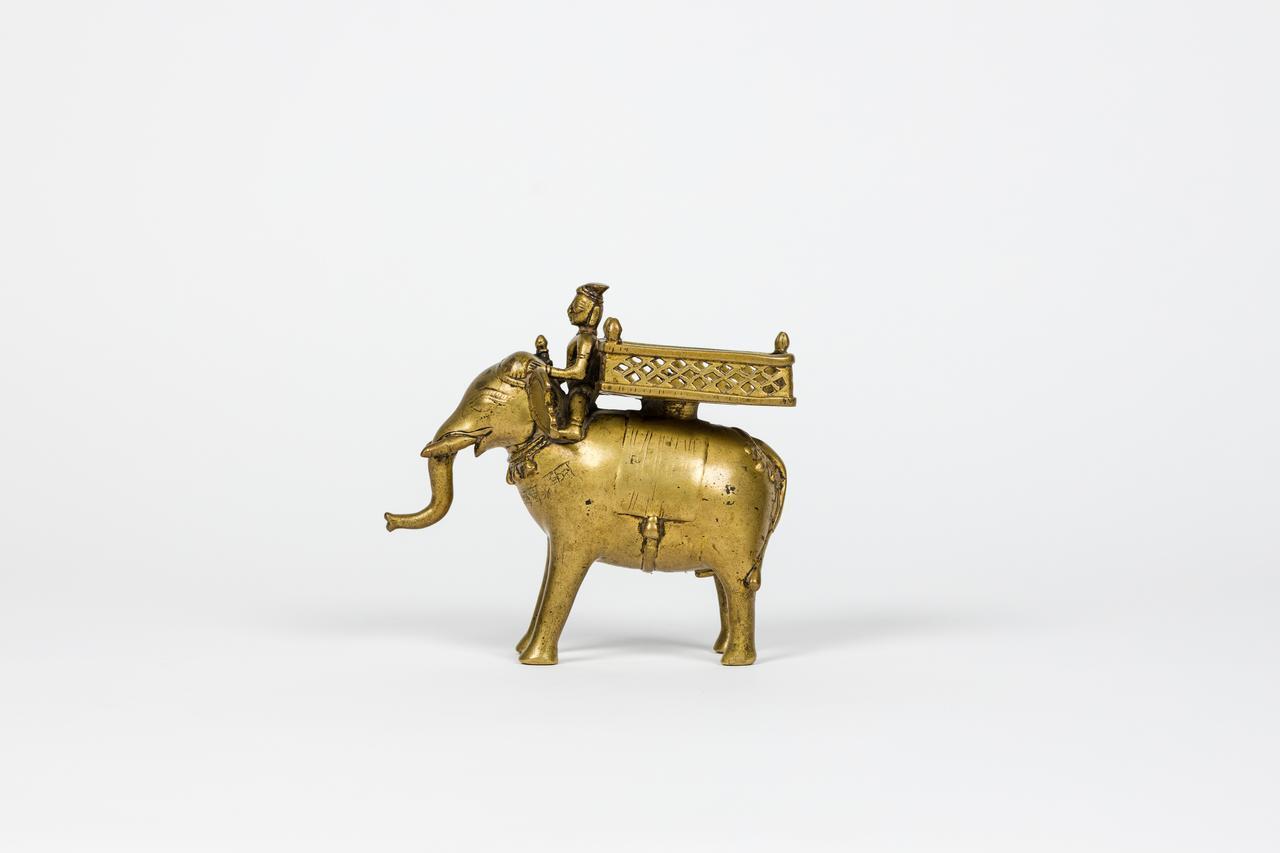
This rare cast-bronze votive statuette depicts Kubera, or Jambhala, holding offerings and dates to 18th-century India.

AI-assisted summary

Description from the seller

[Sacred Art / India] Rare bronze votive statuette of the god Kubera / Jambhala (Lord of Wealth) holding offerings – South India, 18th century

Remarkable and expressive small ritual statue in lost-wax cast bronze representing the god of wealth and abundance, Kubera (or its Buddhist equivalent Jambhala).
Subject & Iconography:
The divine figure is depicted standing on a square stepped architectural pedestal finely chiseled with friezes and lotus motifs (padmapitha).

It is characterized by its opulent corpulence (rounded belly symbolizing prosperity), traditional adornments, heavy bracelets and a pearl belt.
He holds in his outstretched hands spheres of offerings or fruits (modaka / jewels).

Technique & Material: Heavy bronze cast by lost-wax process, hollow core structure, with a beautiful patina of excavation and use, brown-green nuanced by ancient oxidations.

Origin / Style: India (South India, Deccan or Tamil Nadu style).

Period: 18th century

Dimensions & Weight:
Height: 8 cm
Base dimensions: 3.5 cm × 3.2 cm
Weight: 127 g

Overall condition: Fine state of authenticity and preservation for an ancient devotional piece.

Patina & Wear: Superb natural patina of age with signs of use and light ritual concretions. Presence of a small collection label under the base.

Details

Dynastic Style/Period
the 18th century
Country of Origin
India
Attribution
Original
Material
Heavy lost-wax cast bronze, hollow base structure, with a beautiful patina from excavation and
Height
8 cm
Width
3.5 cm
Title of artwork
Rare bronze votive statuette of the god Kubera / Jambhala (Lord of Wealth) holding some
Depth
3.2 cm
Condition
Good condition
Provenance
Private collection
BelgiumVerified
2248
Objects sold
99.45%
protop

Similar objects

  • ​
    ​
    ​
  • ​
    ​
    ​
  • ​
    ​
    ​
  • ​
    ​
    ​
  • ​
    ​
    ​
  • ​
    ​
    ​
  • ​
    ​
    ​
  • ​
    ​
    ​
  • ​
    ​
    ​
  • ​
    ​
    ​

For you in

Indian & Islamic Art

  • ​
    ​
    ​
  • ​
    ​
    ​
  • ​
    ​
    ​
  • ​
    ​
    ​
  • ​
    ​
    ​
  • ​
    ​
    ​
  • ​
    ​
    ​
  • ​
    ​
    ​
  • ​
    ​
    ​
  • ​
    ​
    ​