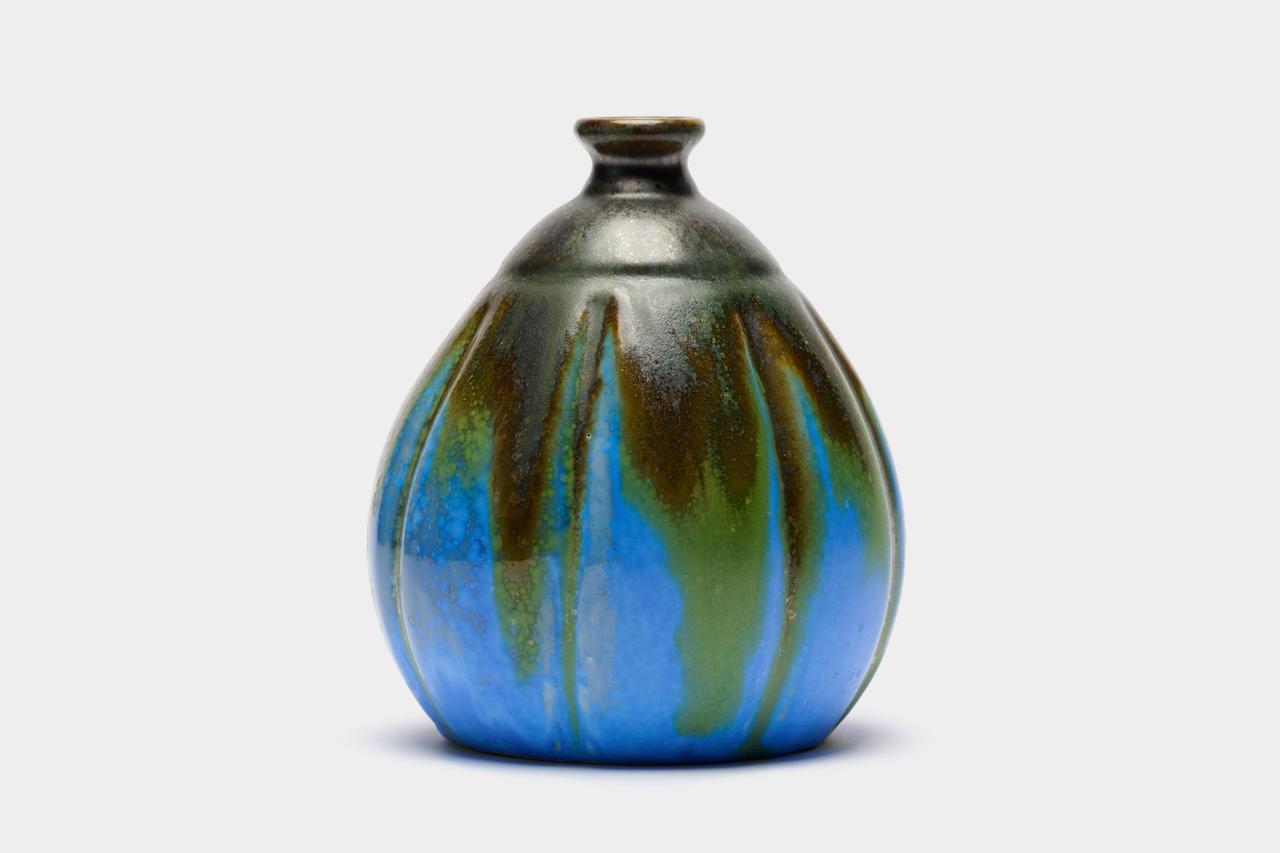
Serafino Volpi, Deruta– Italia, 1930-1950 periodo Egittizzante - Vase - Ceramic - Ceramic tray


02
days
19
hours
19
minutes
03
seconds

 | €12 | |
|---|---|---|
 | €9 | |
| €8 | |
Catawiki Buyer Protection
Your payment’s safe with us until you receive your object.View details
Trustpilot 4.4 | 145304 reviews
Rated Excellent on Trustpilot.
This hand-painted, Egyptianising Deruta ceramic tray, signed “Volpi – Deruta”, dates from 1930–1950 and is in good used condition with small signs of age and stains.
AI-assisted summary
Description from the seller
Ceramic tray – Volpi, Deruta – Egyptianizing taste, 1930–1960
Detail of a centerpiece tray in ceramic, hand-painted and decorated, signed on the base “Volpi – Deruta,” characterized by an original shaped form and a refined polychrome decoration with Egyptian-inspired motifs.
The body, with its elongated, sinuous shape, presents a wavy profile with rounded ends and a slight central concavity. The surface, glazed in ivory, is entirely decorated with figures and symbols inspired by ancient Egyptian art, executed in shades of red, ochre yellow, green, blue, and brown, with gilded details and outlines.
At the center of the composition stands a female figure with an Egyptian taste, depicted in profile, with a black wig, head ornament, and a light-colored dress adorned with small red motifs. The figure, reminiscent of representations of women in ancient Egypt, is accompanied by ornamental symbols, including the ankh (the emblem of life) and graphical elements freely inspired by hieroglyphic writing. Two wide vertical ochre-yellow bands, studded with red oval motifs and outlined in green, frame the central scene, while the red-purple edge, enriched with small gold touches, underlines the sinuous shape of the object.
The work fits into the Egyptianizing and Orientalist taste that characterized certain expressions of Italian artistic ceramics in the 20th century, finding interesting interpretations also in the Umbrian ceramic milieu, particularly Deruta. The decorative repertoire calls to mind the spread of interest in ancient Egypt, fueled by the great archaeological discoveries of the early 20th century, reinterpreted through a lively and personal ornamental language. In terms of style and decorative conception, the piece appears compatible with a 20th-century production, roughly dated to the 1930s–1960s.
The distinctive shaped form, the balance of the composition, and the richness of the decoration, enriched with gilded details, confer a notable decorative character to the object. An interesting example of Derutese artistic ceramics of the 20th century, where archaeological echoes and ornamental fantasy merge into an original and visually striking composition.
Note on the author: Serafino Volpi (1897–1963) was one of the protagonists of the Deruta ceramic artistry in the 20th century. Painter, ceramist, and entrepreneur, he collaborated with important Umbrian manufactories and in 1928 founded Maiolica Derutese Volpi. Around 1950 he started his own workshop, standing out for an original and experimental production, characterized by innovative forms, vivid polychromes and modern, Orientalist and exotic tastes in decoration. His activity contributed to the renewal and international diffusion of Deruta ceramic art.
Signature: Volpi – Deruta, present on the bottom
Material: glazed ceramic, hand-painted and decorated, with gilded details
Provenance: Deruta, Umbria
Era: first half of the 20th century, roughly 1930–1950
Dimensions: 26 × 12 cm
Style: Egyptianizing
Type: shaped tray / decorative centerpiece
Details
Era
1900-2000
Weight
300 g
Specific region of origin
Deruta
Title additional information
Ceramic tray
Number of objects
1
Country of origin
Italy
Material
Ceramic
Style
Art Deco
Manufacturer/brand
Serafino Volpi, Deruta– Italia, 1930-1950 periodo Egittizzante
Condition
Good condition - used with small signs of aging & blemishes
Height
8 cm
Width
26.5 cm
Depth
12 cm
Estimated period
1930-1940, 1940-1950
Sold by