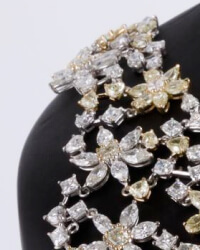
Brooch - 18 kt. Yellow gold


01
day
14
hours
28
minutes
15
seconds
Current bid
€ 35
Reserve price not met

Expert
Selected by Laura Trevino
She has 15 years' auction experience, specialising in vintage jewellery from 1920 to 2000.
Estimate € 900 - € 1,000
 | €35 | |
|---|---|---|
| €30 | |
| €25 | |
Catawiki Buyer Protection
Your payment’s safe with us until you receive your object.View details
Trustpilot 4.4 | 144916 reviews
Rated Excellent on Trustpilot.
Vintage Swedish 18-carat yellow-gold cameo brooch, weighing 7.32 g, with a classical female portrait and an ornate oval frame; no laboratory report is available.
AI-assisted summary
Description from the seller
Vintage Swedish 18 kt Yellow Gold Cameo Brooch – Classical Female Portrait – Ornate Oval Frame – 7.32 g – Twentieth-Century Fine Jewellery
Elegant Vintage 18 Karat Yellow Gold Cameo Brooch – Classical Female Portrait
An attractive vintage Swedish 18 karat yellow gold cameo brooch weighing approximately 7.32 grams, featuring a finely detailed female portrait in classical profile, set within an ornate oval gold frame.
This decorative piece combines the enduring appeal of traditional cameo jewellery with the warmth of yellow gold and the elegance of European portrait carving.
The central cameo displays a raised, pale-coloured female bust facing right, contrasted against a rich reddish-orange background. The portrait features an elaborate arrangement of curled hair, decorative floral elements, and softly modelled facial features, creating an attractive composition inspired by classical portraiture.
Surrounding the cameo is an oval gold-coloured setting with decorative twisted and openwork elements, providing an ornamental border that complements the intricacy of the central portrait.
The brooch is listed as being manufactured from 18 karat yellow gold, corresponding to a nominal gold fineness of 750/1000.
Its total recorded weight is approximately 7.32 grams, including the cameo and all metal components.
Attributed to the 1900–2000 period and listed with Sweden as its country of origin, the piece is presented in excellent pre-owned condition, with minimal signs of previous wear.
This brooch is particularly appealing to collectors of vintage cameo jewellery, classical portrait brooches, Scandinavian gold jewellery, traditional European accessories, and decorative twentieth-century precious metal jewellery.
The Cameo – A Classical Female Portrait in Relief
The principal decorative feature of this brooch is its oval cameo portraying a woman in right-facing profile.
Her facial features are depicted in raised relief, contrasting with the darker background.
The visible portrait includes an elaborate hairstyle incorporating curls and ornamental details. Decorative elements surrounding the hair contribute to the impression of a classical or neoclassical female bust.
The shoulders and neckline are also represented in relief, giving the portrait a sculptural appearance rather than the relatively flat character of an engraved design.
The composition recalls the long European tradition of cameo portraits depicting classical women, mythological figures, and idealised female subjects.
The specific identity of the woman has not been established. The portrait is therefore described as a classical female figure rather than being assigned to a particular goddess, historical person, or mythological character.
The contrast between the pale raised carving and the reddish-orange background is especially important to the overall decorative appearance.
This two-colour effect is characteristic of many traditional shell cameos, where craftsmen make use of naturally contrasting layers of material to produce a raised image.
The cameo in this brooch is visually consistent with traditional shell cameo carving, although its precise material has not been independently identified.
The exact carving technique, material, and workshop remain unverified.
Nevertheless, its detailed female portrait, contrasting colours, and ornamental gold setting make it a distinctive example of cameo-style jewellery.
For buyers searching for carved cameo brooches, female portrait cameos, classical lady brooches, oval cameo jewellery, vintage shell cameo-style jewellery, and traditional gold cameo pins, the central portrait is the most important decorative feature.
The History of Cameo Jewellery
Cameo carving has an extensive history extending back more than two thousand years.
The technique was developed in the ancient Mediterranean world, where craftsmen used gemstones and other layered materials to create decorative images in raised relief.
Unlike intaglio engraving, which produces a recessed design, cameo carving creates a raised image against a contrasting background.
Ancient Greek and Roman craftsmen produced cameos depicting rulers, deities, mythological scenes, and idealised portraits.
These objects served as jewellery, decorative possessions, and sometimes symbols of social position.
Cameo jewellery continued to attract interest during the Renaissance, when European collectors and artists developed a renewed appreciation for classical antiquity.
During the eighteenth and nineteenth centuries, cameo carving became particularly fashionable within European jewellery and decorative arts.
Classical female profiles were among the most frequently encountered subjects.
Portraits inspired by Greco-Roman art were incorporated into brooches, pendants, rings, and other accessories.
Shell cameos became particularly important during the nineteenth century because certain shells provided contrasting layers that could be used to create detailed relief portraits.
Italian cameo-carving traditions, especially those associated with southern Italy, played an influential role in the wider European market.
Throughout the twentieth century, cameo jewellery continued to be produced and worn, maintaining its association with classical decoration and traditional craftsmanship.
The present brooch belongs to this broader tradition of European cameo jewellery.
Its attributed twentieth-century date does not make it an ancient object, but its decorative subject reflects artistic traditions that originated much earlier.
For collectors interested in the history of cameos, neoclassical jewellery, antique-inspired portrait brooches, and traditional European decorative arts, this piece offers an attractive example of the enduring popularity of classical imagery.
Ornate Oval Gold Frame and Decorative Metalwork
The central cameo is surrounded by an attractive oval frame listed as 18 karat yellow gold.
The frame contributes substantially to the decorative appearance of the brooch.
The visible setting incorporates curved and twisted ornamental elements, with small open spaces and a textured outer border.
These details create a visually rich surround that complements the relief carving of the female portrait.
The warm yellow colour of the gold provides a contrast with the pale cameo image and the reddish-orange background.
The overall composition is characteristic of jewellery designs that place a decorative cameo at the centre of an ornamental precious metal setting.
A small pin element is visible extending from the side of the brooch in the supplied photograph. However, the complete fastening construction and clasp mechanism cannot be assessed without an image of the reverse.
The exact dimensions and construction of the setting have not been provided.
Although the frame has a traditional ornamental appearance, no specific historical design school, goldsmith, or manufacturer has been independently identified.
For buyers searching for ornate gold cameo brooches, oval portrait pins, 18 kt gold brooches, vintage decorative gold jewellery, and traditional European cameo settings, the combination of portrait and metalwork is particularly relevant.
18 Karat Yellow Gold – Traditional Precious Metal Jewellery
The brooch is listed as being manufactured from 18 karat yellow gold, an established precious metal standard widely used in European fine jewellery.
Eighteen karat gold contains a nominal 75% gold by mass, with the remaining proportion consisting of alloying metals.
These additional metals influence the alloy's mechanical properties, colour, and suitability for jewellery manufacture.
Yellow gold is especially appreciated for its naturally warm metallic colour.
Its appearance complements traditional cameo jewellery, particularly pieces incorporating cream-coloured relief decoration and reddish or orange backgrounds.
Gold has historically been used for cameo settings because it allows an ornamental carving to be incorporated into an object suitable for personal wear.
The present brooch has a total recorded weight of approximately 7.32 grams.
This weight includes the cameo and the complete brooch assembly. It should not be interpreted as the weight of the gold components alone.
The exact gold-only weight has not been separately established.
Likewise, the fineness is stated according to the supplied jewellery information; a readable hallmark or independent assay result has not been provided.
For buyers interested in 18 kt yellow gold jewellery, 750 gold cameo brooches, vintage precious metal accessories, and Scandinavian fine jewellery, the reported gold fineness is an important part of the piece's description.
The Classical Female Portrait in European Jewellery
Portraits of women in classical profile have occupied an important position in European decorative arts for centuries.
Ancient Greek and Roman sculpture established artistic conventions that later influenced Renaissance, neoclassical, and Victorian jewellery.
These included idealised facial features, carefully arranged hair, draped clothing, and decorative elements associated with classical beauty.
European cameo artists frequently drew upon this visual tradition.
During the nineteenth century, female portraits were particularly popular in shell cameos, with craftsmen depicting idealised women, mythological subjects, and figures inspired by ancient sculpture.
Such jewellery became fashionable throughout Europe and continued to influence designs during the twentieth century.
The present cameo features a woman with curled hair and ornamental details, presented in right-facing profile.
The raised relief emphasises the facial outline, hairstyle, and draped upper body.
The subject is consistent with classical portrait conventions, although no specific identification has been established.
This makes the brooch appealing not only as jewellery but also as a decorative object reflecting the continuing influence of classical art.
For collectors seeking classical profile jewellery, neoclassical cameo brooches, Victorian-inspired accessories, portrait cameo jewellery, and decorative female bust brooches, this piece offers a recognisable traditional subject.
Swedish Origin and Twentieth-Century Attribution
The brooch is listed with Sweden as its country of origin and attributed to the 1900–2000 period.
Sweden has an established history of precious metal craftsmanship, including the production and sale of gold jewellery, brooches, rings, necklaces, and decorative accessories.
During the twentieth century, Scandinavian jewellery reflected both regional design traditions and wider European influences.
Traditional jewellery designs, including cameo brooches, continued to circulate alongside modernist and contemporary accessories.
Cameos were not exclusive to any single country. They were carved, mounted, imported, and sold throughout Europe.
Consequently, the stated Swedish origin should not automatically be interpreted as confirmation that the cameo itself was carved in Sweden.
The gold setting, cameo carving, and final assembly may have different manufacturing histories.
No particular Swedish goldsmith, cameo carver, workshop, or manufacturer has been confirmed.
The twentieth-century attribution remains broad, and no narrower manufacturing date is claimed.
For enthusiasts of vintage Swedish jewellery, Scandinavian gold brooches, European cameo jewellery, and twentieth-century estate jewellery, the piece combines a traditional decorative subject with a stated Swedish origin.
The Appeal of Cameo Brooches as Collectible Jewellery
Cameo brooches have remained collectible because they combine jewellery craftsmanship with miniature portrait sculpture.
Unlike faceted gemstone jewellery, where much of the visual appeal comes from the reflection and refraction of light, cameo jewellery depends heavily on the quality and subject of the carving.
The relationship between the raised image and its background is particularly important.
Collectors often consider the quality of the portrait, the depth of the relief, the detail of the carving, the material, and the condition of the setting.
A finely decorated gold frame can contribute additional interest.
The present brooch incorporates several attractive features:
A raised classical female portrait in right-facing profile
An oval reddish-orange background contrasting with the pale relief
Detailed curls and ornamental elements in the hairstyle
A warm yellow-gold setting
An ornate twisted and openwork-style border
A total recorded weight of approximately 7.32 grams
Excellent pre-owned condition as listed
A twentieth-century period attribution
The brooch may appeal to collectors of traditional jewellery, historic-style accessories, cameo carving, and European decorative arts.
Its composition is also suitable for display within a jewellery collection, where the intricate portrait can be appreciated independently of the piece's function as a wearable accessory.
A Versatile Accessory for Formal and Vintage Styling
Brooches have historically served both decorative and practical purposes.
They may be worn on jackets, coats, scarves, dresses, and other suitable garments, depending on their size, weight, and fastening construction.
Cameo brooches are particularly associated with traditional European jewellery and classical decorative styling.
Their oval shape and portrait imagery make them readily recognisable among collectors of vintage accessories.
The warm yellow-gold colour of this setting can complement other yellow gold jewellery, including earrings, necklaces, rings, and bracelets.
The reddish-orange and pale tones of the central cameo contribute additional colour without requiring a faceted gemstone.
This piece may be considered for formal occasions, vintage-inspired outfits, personal collections, or as a commemorative gift.
Its exact size and fastening mechanism should be confirmed before determining its suitability for particular garments.
For individuals interested in vintage fashion accessories, classical cameo pins, traditional women's brooches, ornate gold jewellery, and collectible portrait accessories, this brooch offers a distinctive decorative appearance.
Excellent Pre-Owned Condition and Preservation
The brooch is listed in excellent pre-owned condition, with minimal signs of previous wear.
The supplied photograph shows the decorative front of the piece, including the cameo portrait and surrounding frame.
As with all previously owned jewellery, minor marks, surface variations, or traces of handling may be present.
The complete reverse, pin fastening, hallmark area, and any potential signs of historic repair are not visible in the supplied photograph.
These details should be examined carefully when assessing overall condition.
Cameo jewellery requires appropriate care because carved materials may be more vulnerable to mechanical damage than the surrounding precious metal.
Traditional shell cameos, in particular, should be protected from prolonged exposure to moisture, aggressive cleaning chemicals, excessive heat, and abrasive contact.
Because the cameo material has not been independently established, conservative cleaning methods are recommended.
A soft, dry cloth and careful handling are generally preferable to aggressive cleaning techniques.
Ultrasonic and steam cleaning should not be used without professional confirmation that the cameo and its setting are suitable.
The brooch should be stored separately from harder jewellery items to reduce the risk of scratching or damage to the relief decoration.
Technical Specifications
Jewellery Type: Vintage cameo brooch / portrait brooch
Precious Metal: Yellow gold, as listed
Gold Fineness: 18 karat / 750, as listed
Total Weight: 7.32 grams, including cameo and metal components
Gold-Only Weight: Not separately established
Central Decoration: Raised cameo portrait
Portrait Subject: Classical-style female bust facing right
Cameo Appearance: Pale relief against a reddish-orange oval background
Cameo Material: Visually consistent with layered shell; not independently verified
Decorative Elements: Curled hairstyle, floral-style ornamentation, draped female bust
Frame: Ornate oval gold-coloured frame with twisted and openwork-style detailing
Fastening: Brooch pin; complete mechanism not independently examined
Main Gemstone: No faceted gemstone listed; central cameo is decorative material
Diamonds: None listed
Brooch Width: Not specified
Brooch Height: Not specified
Cameo Dimensions: Not specified
Period: 1900–2000 (attributed)
Country of Origin: Sweden (as listed)
Gender: Women
Condition: Excellent pre-owned condition, barely used with minimal signs of wear
Laboratory Certificate: Not available
Designer / Maker: Not established
Cameo Carver: Not identified
Brand: No confirmed brand attribution
Hallmark Details: Not provided
A Classic Addition to a Vintage Jewellery Collection
This vintage 18 karat yellow gold cameo brooch weighing approximately 7.32 grams offers an attractive combination of classical portrait imagery, ornamental precious metal work, and traditional European jewellery design.
The central female portrait gives the piece a distinctive character, while the decorated oval frame contributes further visual interest.
Cameo jewellery occupies an important position within the history of European personal adornment, reflecting centuries of artistic influence and skilled relief carving.
The present brooch may appeal particularly to buyers searching for 18 kt gold cameo brooches, vintage Swedish gold jewellery, carved shell cameo-style brooches, classical female portrait jewellery, oval cameo pins, neoclassical jewellery, decorative European gold brooches, and twentieth-century Scandinavian jewellery.
Its combination of a richly detailed cameo portrait, warm yellow-gold setting, and excellent listed condition makes it suitable for both personal use and collecting.
For individuals seeking a traditional decorative accessory, it offers an alternative to modern gemstone-set brooches.
For collectors, it represents a piece associated with the wider European tradition of cameo jewellery and classical portraiture.
Whether acquired as a personal accessory, an anniversary present, a gift for a cameo enthusiast, or an addition to a vintage jewellery collection, this brooch offers the lasting appeal of classical design and precious metal craftsmanship.
Secure Packaging and Shipping
The brooch will be carefully packaged to help protect the cameo relief, surrounding frame, and fastening components during transportation.
Shipping arrangements, including tracking and insurance where applicable, will depend on the selected delivery service.
Important Information for Buyers:
This brooch is described according to the supplied information and accompanying photograph.
It is listed as 18 karat yellow gold, with a total weight of approximately 7.32 grams. This weight includes the central cameo and all metal components. The gold-only weight has not been determined.
The central decoration is visually consistent with a traditional shell cameo, although its precise material has not been independently confirmed.
The manufacturing period is attributed to 1900–2000, with Sweden listed as the country of origin. The exact date, manufacturer, cameo carver, and historical provenance have not been established.
The brooch is presented in excellent pre-owned condition. Full details of the reverse and fastening mechanism should be assessed from additional photographs.
Please examine all photographs, measurements, hallmark information, and condition details carefully before bidding. The photographs form an integral part of the description.
Seller's Story
♛ The Jewelry Company ♛
Welcome to The Jewelry Company, a trusted seller of gemstones, fine jewelry, watches, precious-metal items, and carefully selected collectibles.
Our collection includes loose gemstones, gold and silver jewelry, rings, bracelets, necklaces, vintage and modern watches, pocket watches, and other distinctive objects. Every item is individually inspected, accurately described, and photographed to give buyers a clear understanding of its condition and character.
We regularly offer both wearable pieces and collectible items, ranging from elegant everyday jewelry to unusual vintage finds and rare specialist objects. Our selection changes frequently, with new lots added on a regular basis.
We are committed to professional service, secure packaging, careful handling, and reliable worldwide shipping. Whether you are a collector, dealer, investor, or simply searching for a unique piece, we aim to provide attractive objects at competitive auction prices.
Thank you for visiting ♛ The Jewelry Company ♛
Details
Era
1900-2000
Laboratory report
No laboratory report
Metal
Yellow gold
Brand jewellery
No
Fineness
18 kt.
Total weight
7.32 g
Condition
Excellent condition - barely used with minimal signs of wear
Gender
Women
Country of origin
Sweden
Sold by
Disclaimer
Catawiki always aims to offer you the best possible buying experience. Our experts virtually review and select every object in line with our submission guidelines. While we strive to provide a detailed description and photographs of each jewellery object, discrepancies or inaccuracies may occur. It is your responsibility to review all of the information provided about an object, including the condition and description, before placing an order. Sellers are responsible for the information, pictures and description provided, including the quality, quantity and nature of the jewelry supplied. A small imperfection that cannot be seen in the photo but is included in the description is not a non-conformity. A Lab Report is not a guarantee, valuation or appraisal regarding the articles described therein. A Lab Report contains only the characteristics of an article described after it has been graded, tested, examined, and analyzed using the techniques and equipment used at the time of the examination from that specific Lab. The results of any other examination performed on the article may differ depending when, how, by whom and with which grading standard the article is examined. In addition, any changes and improvements in techniques and equipment that may have occurred which may enable the examiner to detect, among other things, the use of processes for altering the characteristics of an article which use was previously undetectable, does not automatically mean the object does not conform to its description.
Catawiki always aims to offer you the best possible buying experience. Our experts virtually review and select every object in line with our submission guidelines. While we strive to provide a detailed description and photographs of each jewellery object, discrepancies or inaccuracies may occur. It is your responsibility to review all of the information provided about an object, including the condition and description, before placing an order. Sellers are responsible for the information, pictures and description provided, including the quality, quantity and nature of the jewelry supplied. A small imperfection that cannot be seen in the photo but is included in the description is not a non-conformity. A Lab Report is not a guarantee, valuation or appraisal regarding the articles described therein. A Lab Report contains only the characteristics of an article described after it has been graded, tested, examined, and analyzed using the techniques and equipment used at the time of the examination from that specific Lab. The results of any other examination performed on the article may differ depending when, how, by whom and with which grading standard the article is examined. In addition, any changes and improvements in techniques and equipment that may have occurred which may enable the examiner to detect, among other things, the use of processes for altering the characteristics of an article which use was previously undetectable, does not automatically mean the object does not conform to its description.