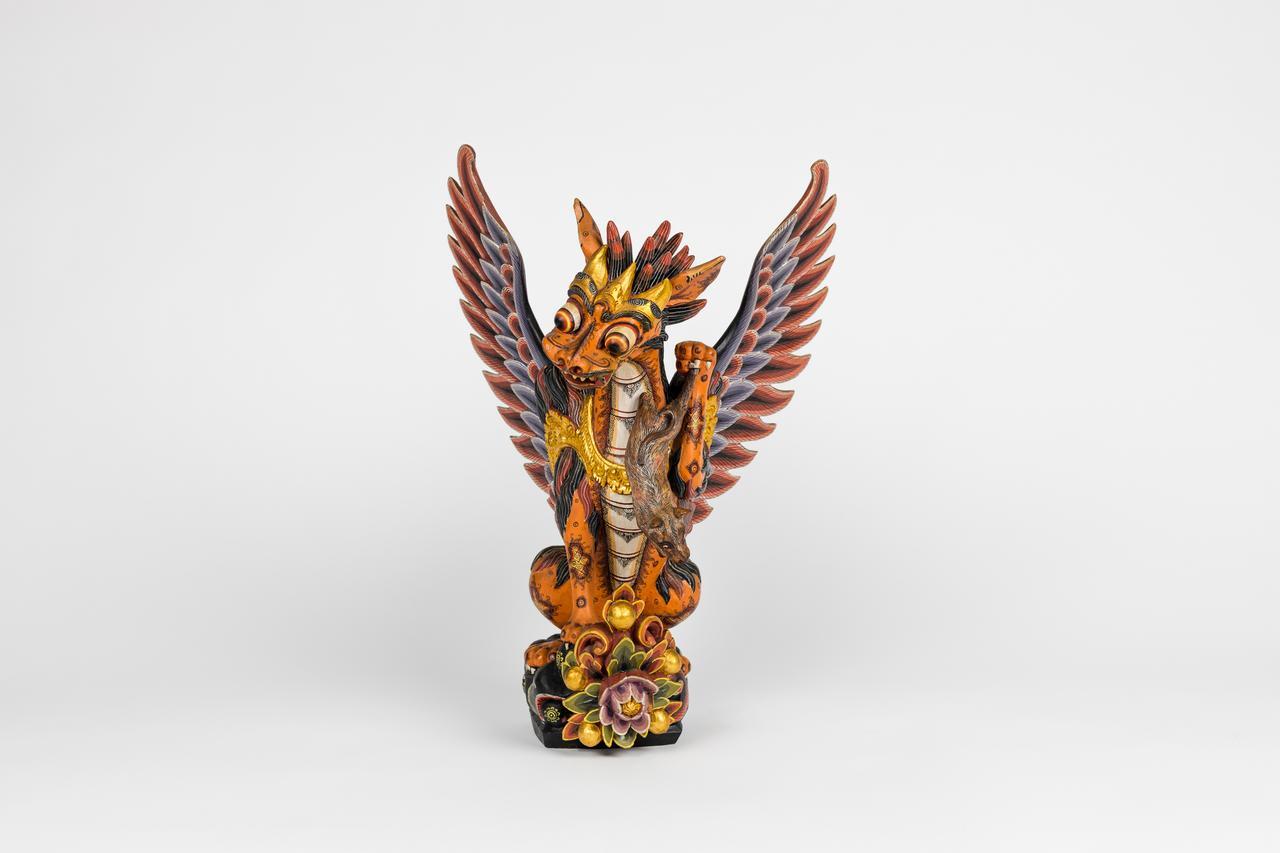
Marapu statue - West Sumba - Indonesia (No reserve price)


02
days
18
hours
02
minutes
59
seconds

 | €3 |
|---|
Catawiki Buyer Protection
Your payment’s safe with us until you receive your object.View details
Trustpilot 4.4 | 145414 reviews
Rated Excellent on Trustpilot.
Two original wooden Marapu figures from West Sumba, Indonesia, dating from the late 20th century, with stylised faces and white and red details, each measuring 15 × 3 × 2 cm and sold with a stand.
AI-assisted summary
Description from the seller
These wooden sculptures represent the Marapu, the ancestral deities and spirits of the ancestors venerated in the indigenous animist religion of the island of Sumba. For the local people, the Marapu are not merely reminders of the past, but living, present entities that mediate between the earthly and divine worlds, protecting the community, ensuring bountiful harvests, and bringing prosperity.
Sculptures of this kind were traditionally placed inside homes or at ritual and ceremonial sites. They served as temporary dwellings or points of contact for the ancestor’s spirit during prayers, rites, or offerings.
The highly stylized facial features—such as elongated faces, prominent straight noses, and fixed gazes—are typical of Sumba tribal art. The color combination of white applied to the face and red details (such as the bands around the neck and the beads on the eyes) carries strong symbolic meaning linked to the cycles of life, blood, ritual, and spiritual status.
These two statuettes were collected locally by an Italian anthropologist in 1990 and have remained in his collection until now.
The photographs are an integral part of the description.
Details
Indigenous object name
Marapu statue
Number of objects
2
Ethnic group/ culture
West Sumba
Country of Origin
Indonesia
Period
Late 20th century
Material
Wood
Sold with stand
Yes
Condition
Good condition
Height
15 cm
Width
3 cm
Depth
2 cm
Provenance
Private collection
Authenticity
Original/official