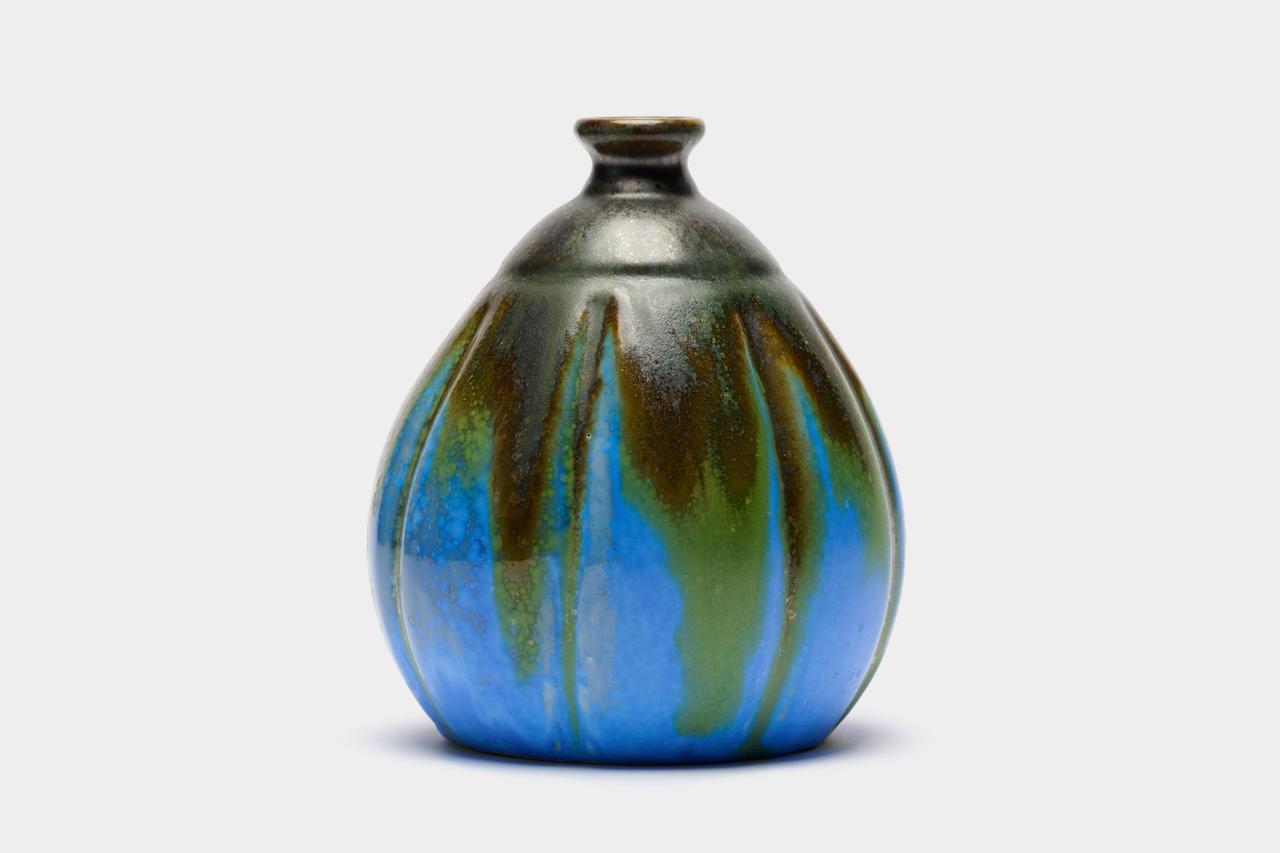
manifattura azienda italiana Giulia Mangani Firenze - Vase - Tulip vase in a corbeille shape with a square base (Sèvres style) featuring foliate reliefs - luxury - paste porcelain - golden coin scene


02
days
17
hours
00
minutes
28
seconds
Current bid
€ 116
Reserve price met

Expert
Selected by Florentin Brunz Gaborieau
Holds a master’s in Art History, specialising in Second French Empire and Dutch Golden Age.
Estimate € 200 - € 250
 | €116 | |
|---|---|---|
 | €106 | |
 | €99 | |
Catawiki Buyer Protection
Your payment’s safe with us until you receive your object.View details
Trustpilot 4.4 | 145304 reviews
Rated Excellent on Trustpilot.
A 1960 porcelain Tulipe vase by Giulia Mangani of Florence, in Luigi XV style, with a square base, foliate reliefs, multicoloured decoration and a gilt scene.
AI-assisted summary
Description from the seller
SHIPPING: I can ship within 24-48 hours, which is why the shipping cost is a bit higher; the item will be carefully packed with bubble wrap and cardboard, as it is a fragile and precious object. Moreover, to avoid any issues it will also be insured.
-Are you on vacation? I offer a premium service, Maximum flexibility for delivery, I can ship to the nearest pickup point to you, so you can collect it at your leisure when you prefer.
DISPLAY IN CLOSED VITRINE
I am one of the few sellers able to ship worldwide thanks to owning and registering the EORI CODE, which guarantees peace of mind and faster shipping even outside the European Union.
AUCTION HISTORY
Single vases (Sevres-style or school, 19th century): Average final bid value between €400 and €1,200.
Pairs of vases: The pair of this model typically fetches €1,500 to €3,500 at auction.
Pieces with the original Sèvres mark from royal manufacture: If it bears the original eighteenth/nineteenth-century mark (not just “in the style”), the valuations easily exceed €5,000 - €10,000+.
HISTORY
The piece was a 'Modèle de Présentation', i.e., a specimen personally selected to be displayed in the family’s representation galleries to impress guests during diplomatic receptions. Meticulously preserved for generations away from direct light and temperature fluctuations, the vase has retained the original brilliance of the gold and the deep cobalt blue, making it a museum-worthy piece that elevates any private collection.
Historical Context
The vase belongs to the golden age of European porcelain manufacture of the XX century created by the Florence-based luxury company of Giulia Mangani, characterized by Rococo Revival taste (XV French style). This manufactory embodies the period when hand-painted porcelain represented the ultimate status symbol of European nobility and the upper bourgeoisie. The complex relief modeling and the hand-applied gold gilding reflect atelier-level technical mastery, close to the prestigious standards of French Sèvres or German Meissen manufactories.
The Subject
The central cartouche, inset within a gilded rocaille frame, presents a pastoral gallant scene. Hand-painted in meticulous detail, it draws inspiration from the famous compositions of Antoine Watteau and François Boucher: figures dressed according to the era’s standards immersed in a bucolic nature, symbolizing idyll, grace, and elegance from times past.
Symbolism of the Vase
Every decorative element conveys a precise message of prestige:
- The acanthus and palm leaves in relief: rendered in deep blue with gilded gold, they have long symbolized victory, eternal life, and the triumph of unshakable beauty.
- The cup shape and the radiating gold above: symbolize abundance, prosperity, and the regal light emanating from within the house.
- The pastoral scene: recalls the quest for harmony, courtly love, and inner peace, values highly sought after in aristocratic homes.
Rarity of the Pendant (Overall Value)
In high-end collecting, the presence or pairing with a pendant (mirror image pair) exponentially increases the artwork’s commercial value. Vases of this type were conceived as display pieces for fireplaces or entrance consoles: obtaining an example in excellent condition with intact gilding is a rare endeavor in itself, but offering it as a unique elite piece or paired with its pendant transforms the purchase into a true art investment.
Noble History of the Vase
Objects of this architectural and decorative scale were not intended for everyday use, but as parade pieces destined for the reception rooms of noble homes and historic palaces of European aristocracy. The sculpted base with a rigid plinth and curled feet, joined with the commanding 360-degree decorative presence, attest to provenance from refined, elevated commissioning contexts.
Final Meaning
This vase represents the quintessence of 20th-century ceramic art: not a simple furnishing element, but a porcelain sculpture that blends exceptional painting, mastery of shaping, and the precious luster of gold. A piece of history capable of imparting immediacy, solemnity, and timeless charm to any private collection.
Color disclaimer and condition of the item: Since these are period porcelains/art objects, please note that color tones, gilding reflections, and details visible in the images may show slight variations in shade compared to the actual object due to photographic reproduction and lighting. The images are considered an integral part of the description, but the actual object prevails.
Details
Over 200 years old
No
Specific region of origin
Firenze
Style subtype
Louis XV
Weight
100 g
Era
1400-1900
Title additional information
golden coin scene
Number of objects
1
Country of origin
Italy
Model
Tulip vase in a corbeille shape with a square base (Sèvres style) featuring foliate reliefs - luxury
Material
paste porcelain
Style
Antique
Manufacturer/brand
manifattura azienda italiana Giulia Mangani Firenze
Colour
Blue, Green, Multicolour, Pink, White
Condition
Good condition - used with small signs of aging & blemishes
Height
21 cm
Width
12 cm
Depth
12 cm
Diameter
10 cm
Estimated period
1960
Sold by