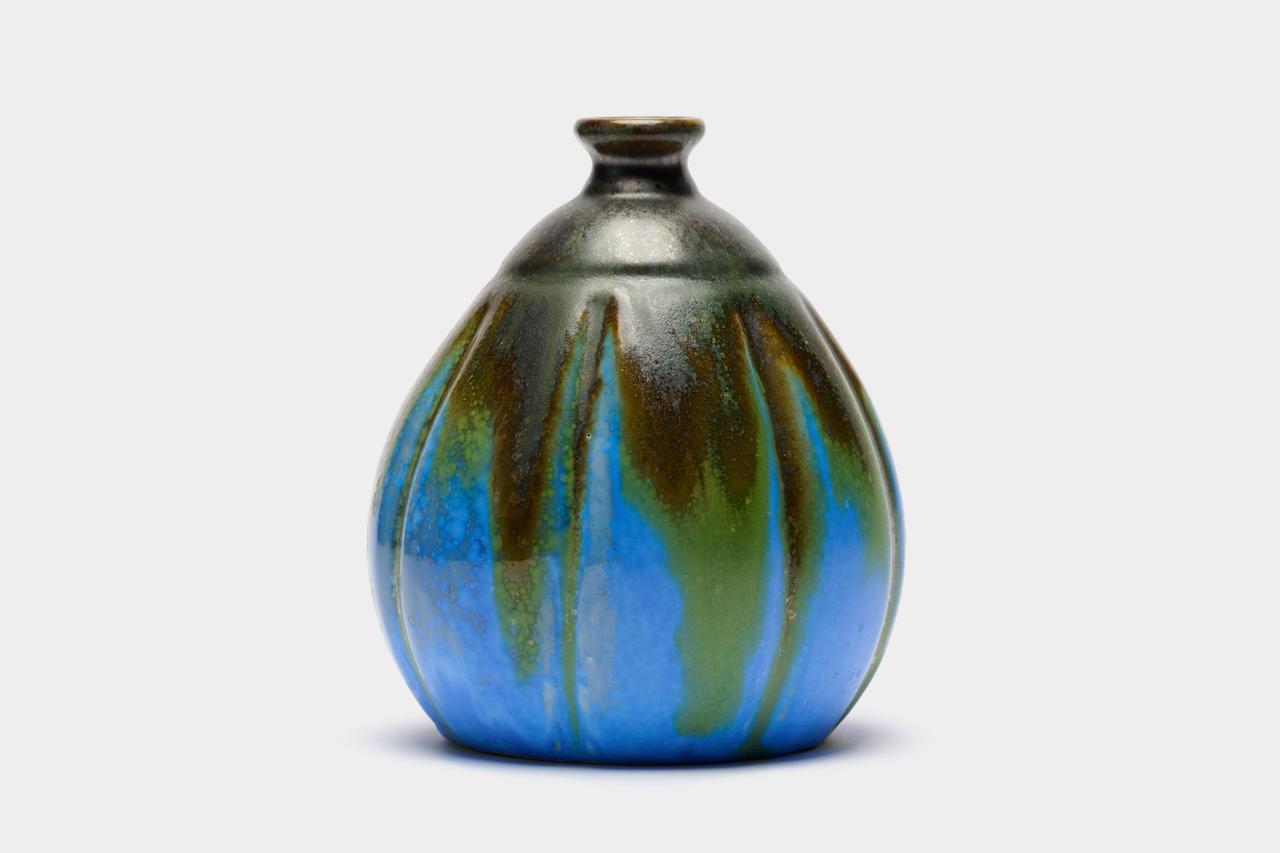
Delft, Plateelbakkerij - Vase (2) - Delftware


09
days
00
hours
57
minutes
33
seconds
Current bid
€ 2
No reserve price

Expert
Selected by Florentin Brunz Gaborieau
Holds a master’s in Art History, specialising in Second French Empire and Dutch Golden Age.
Estimate € 150 - € 200
 | €2 |
|---|
Catawiki Buyer Protection
Your payment’s safe with us until you receive your object.View details
Trustpilot 4.4 | 145304 reviews
Rated Excellent on Trustpilot.
This pair of octagonal Delftware vases from the Netherlands, dating to 1850–1900, is decorated with hand-painted heraldic and floral motifs and measures 25 cm high.
AI-assisted summary
Description from the seller
Netherlands / Delft — Exceptional and rare pair of octagonal faience vases — Heraldic and floral “Delft Imari” style decoration — Early period, late 18th century or very early 19th century — Handcrafted collectible pieces — Impressive height: 28 cm.
HISTORICAL CONTEXT:
This magnificent pair of eight-sided vases embodies the golden age and technical genius of the Dutch faience makers in the city of Delft. During the 17th and 18th centuries, in order to compete with the precious Chinese and Japanese porcelains imported at great expense by the Dutch East India Company (VOC), Dutch potters developed a unique expertise. The “Delft Imari” style, combining the depth of cobalt blue with the brilliance of iron red/terracotta on a milky white glaze, is directly inspired by Japanese porcelain from the Edo period (Arita workshops). Today, it is one of the most sought-after and highly valued styles of European faience.
TECHNICAL AND DECORATIVE ANALYSIS:
Shaping these octagonal-section (eight-sided) vases required great skill in throwing and hand-calibrating the clay. After an initial biscuit firing, the pieces were coated with a thick tin-based glaze, providing the characteristic opaque white background.
The decoration, entirely hand-painted, features a richly detailed ornamental scheme inspired by the Baroque and Chinoiserie styles:
Large lambrequins and geometric heraldic cartouches structure the body, framing stylized peony foliage, sinuous scrollwork, and trellis or checkerboard patterns. The raw ochre terracotta bases and the irregular texture of the glaze confirm their authentic, handcrafted workshop production (in the style of the prestigious Star or Gilt Rose manufactories).
TECHNICAL SPECIFICATIONS:
• Type: Pair of mantel vases / apothecary garniture
• Material: Period tin-glazed earthenware (Delftware)
• Technique: Hand-painted high-fire decoration (cobalt blue) and low-fire decoration (iron red)
• Quantity: Inseparable lot of 2 pieces (original pair)
• Dimensions: Height: 25 cm
CONDITION AND PATINA:
Antique art pieces presented in their historically authentic condition, with no modern restoration concealing their history. The glaze retains remarkable brilliance and color.
For complete scholarly transparency, several signs of age should be noted (visible in the macro photographs): the vase on the right has a clean chip of approximately 1.5 cm on the upper rim of its neck. The pair also has light, normal signs of wear (period glaze losses or “flea bites”) along the sharp edges of the eight sides and around the bases, characteristic of 18th/19th-century faience.
Details
Era
1400-1900
Number of objects
2
Country of origin
Netherlands
Material
Delftware
Manufacturer/brand
Delft, Plateelbakkerij
Condition
Fair condition - heavily used & with possibly minor parts missing
Height
25 cm
Width
11 cm
Depth
11 cm
Diameter
11 cm
Estimated period
1850-1900
Sold by