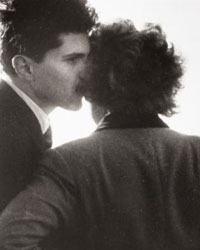
Robert Capa (1913–1954) - Group of the women (Trümmerfrauen) engaged in clearing away the Rubble (1945)


03
days
18
hours
23
minutes
02
seconds
Current bid
€ 32
No reserve price

Expert
Selected by Kai Brückner
Over 35 years' experience; former gallery owner and Museum Folkwang curator.
Estimate € 250 - € 300
 | €32 | |
|---|---|---|
 | €29 | |
| €26 | |
Catawiki Buyer Protection
Your payment’s safe with us until you receive your object.View details
Trustpilot 4.4 | 145414 reviews
Rated Excellent on Trustpilot.
Robert Capa’s *Group of the women (Trümmerfrauen) engaged in clearing away the Rubble (1945)* is a gelatin-silver print from 2018.
AI-assisted summary
Description from the seller
Trümmerfrauen — women aged roughly 15 to 50 enlisted by Allied command to clear millions of tons of bomb debris.
Berlin 1945 months after the war ended to document the "anticlimax" of total destruction and civilian survival.
The Human Face of Recovery: Capa was famous for capturing intense combat, but his post-war Berlin photographs shifted focus toward everyday survivors living in the ruins of the Nazi regime. The Myth & Reality of the Trümmerfrauen: While Allied occupation authorities paid women in meager food rations (Category II cards) and small hourly wages to clear debris, post-war West and East German governments turned the Trümmerfrauen into powerful symbols of national resilience and reconstruction.Capa's Personal Connection: Capa had studied journalism in Berlin in 1931 before fleeing Nazi persecution as a Jewish refugee. Returning in 1945 to photograph the capital in ruins held deep personal weight.
Early Life & Rise
Born Endre Ernő Friedmann in Budapest, Hungary, in 1913, Capa left his home country as a teenager to study political science and journalism in Berlin. Facing the rise of the Nazi regime in 1933, he fled to Paris as a Jewish refugee.
In Paris, he adopted the American-sounding pseudonym Robert Capa alongside his partner and fellow photographer, Gerda Taro, as a strategy to command higher rates from international editors.
Defining Career & Major Conflicts
Capa made his reputation during five major global conflicts:
Spanish Civil War (1936–1939): He captured his famous image The Falling Soldier. During this conflict, Gerda Taro was killed on assignment, deeply affecting Capa.
Second Sino-Japanese War (1938): Documented the resistance of Chinese forces against Japanese invasion.
World War II (1939–1945): Worked as a war correspondent for Life magazine, accompanying Allied troops through North Africa, Sicily, Italy, and the liberation of Berlin. His famous "Magnificent Eleven" photographs capture the first waves of soldiers landing on Omaha Beach on D-Day (June 6, 1944).
First Arab-Israeli War (1948): Photographed the founding of Israel and the ensuing conflict.
First Indochina War (1954): Documented French troops fighting in Southeast Asia.
Legacy & Co-Founding Magnum Photos
In 1947, Capa co-founded Magnum Photos in Paris alongside Henri Cartier-Bresson, David "Chim" Seymour, and George Rodger. Magnum was the world's first cooperative agency owned entirely by freelance photographers, giving photojournalists copyright ownership and creative control over their assignments.
Death
On May 25, 1954, while on assignment covering the First Indochina War for Life magazine in Thai Binh, Vietnam, Capa stepped on an anti-personnel landmine while photographing a French troop advance. He died at the age of 40, clutching his camera.
His golden rule remains one of the defining principles of modern photojournalism:
"If your photographs aren't good enough, you're not close enough."
Wikipedia
Details
Date of print
2018
Artist
Robert Capa (1913–1954)
Sold by
Owner or reseller
Title of artwork
Group of the women (Trümmerfrauen) engaged in clearing away the Rubble (1945)
Condition
Extremely fine
Technique
Gelatin-silver print
Height
22 cm
Edition
5
Width
22 cm
Signature
Stamped
Genre
Documentary photography
Sold by