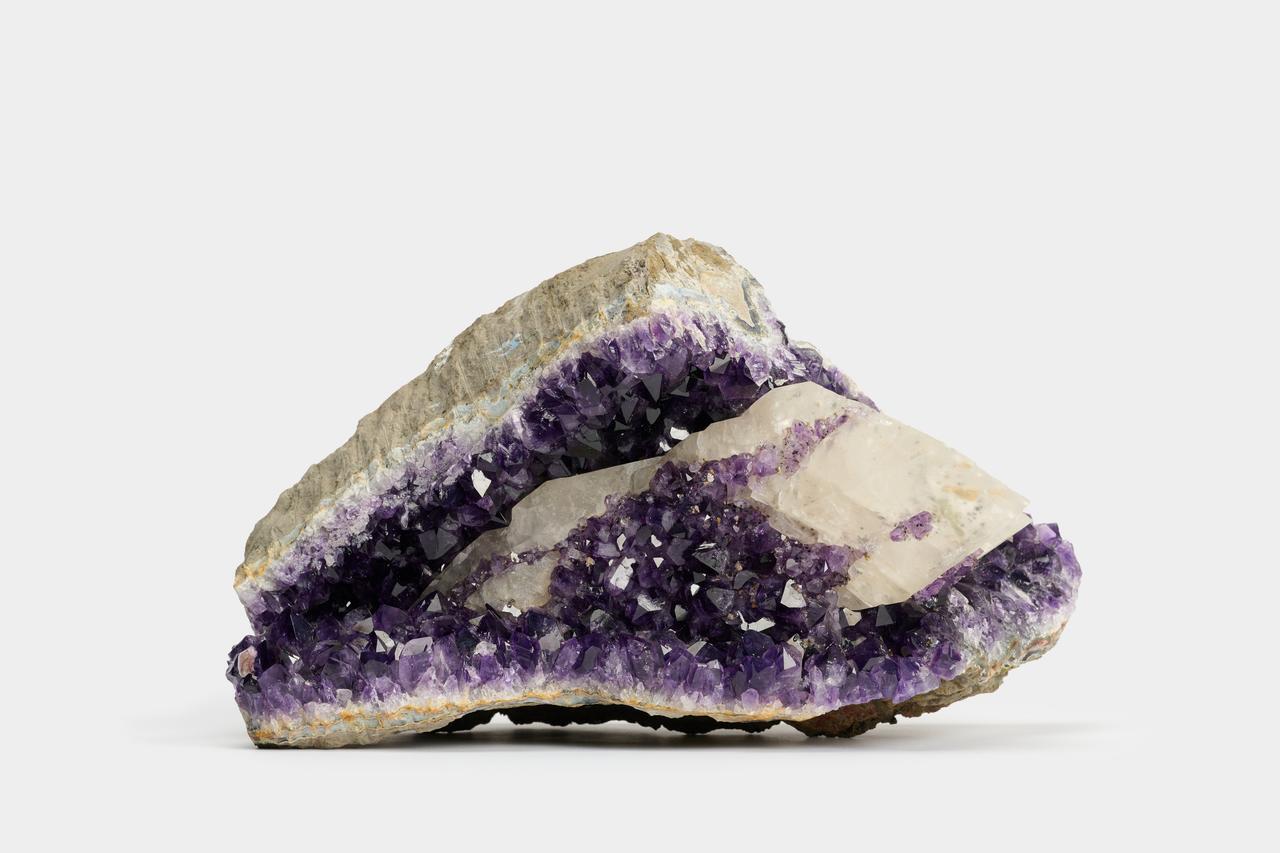
Carbonaceous chondrite - Height: 3 mm - Width: 1.6 mm - 0.02 g - (1)


05
days
03
hours
46
minutes
42
seconds

 | €10 | |
|---|---|---|
 | €9 | |
| €6 | |
Catawiki Buyer Protection
Your payment’s safe with us until you receive your object.View details
Trustpilot 4.4 | 146014 reviews
Rated Excellent on Trustpilot.
This 0.02 g carbonaceous CM2 chondrite meteorite is from Agua Zarcas, Costa Rica, and measures 3 × 1.6 × 2.4 mm.
AI-assisted summary
Description from the seller
The Aguas Zarcas meteorite is a CM2-type carbonaceous chondrite that fell on April 23, 2019, at around 9:07 p.m. in Aguas Zarcas, in Costa Rica’s Alajuela Province.
Main characteristics:
* Fall and recovery: It is the most significant CM2 fall, both in scale and scientific importance, since the Murchison fall in 1969. Fragments notably pierced the roof of a house (a 1,152 g piece) and struck a doghouse (nicknamed “la Esmeralda,” a 280 g piece). [1, 2, 3]
*
* Composition: Rich in organic matter (amino acids, hydrocarbons, dicarboxylic acids, sugars) and water, it is dominated by phyllosilicates (serpentines) and contains refractory inclusions (CAIs) as well as chondrules. [1, 2, 3]
*
* Scientific interest: Because it was recovered very soon after it fell, it offers researchers an almost intact, pristine sample of the early solar system, free from terrestrial contamination.The building blocks of life
* Amino acids: Analyses have revealed the presence of dozens of different amino acids. Crucially, both amino acids common on Earth (such as glycine, alanine, and isoleucine) and extremely rare or nonexistent in terrestrial biology (such as isovaline) have been found.
* Molecular asymmetry (chirality): Some amino acids (such as isovaline) show an excess of the “left-handed” form (the L-enantiomer). This asymmetry is similar to that found in life on Earth, suggesting that the origin of this biological preference may lie in space.
* Nitrogenous bases and sugars: Traces of components essential to nucleic acids (DNA/RNA), as well as sugar derivatives, have been detected.
Hydrocarbons and volatile compounds
* Aliphatic and aromatic hydrocarbons: The meteorite contains straight- or branched-chain carbon compounds, as well as polycyclic aromatic hydrocarbons (PAHs).
* Sulfur- and nitrogen-bearing compounds: Molecules containing heteroatoms (sulfur, nitrogen, oxygen) add to this primitive chemical soup.
* Carboxylic acids: Monocarboxylic and dicarboxylic acids have been measured in significant concentrations.
The insoluble fraction (IOM)
* Most of the carbon in Aguas Zarcas is in the form of insoluble macromolecular organic matter (IOM). This is a complex, highly cross-linked carbon network, similar to kerogen or very ancient coal, that has preserved isotopic signatures (deuterium, nitrogen-15) typical of the interstellar medium or the primitive solar nebula.
Details
Number of objects
1
Type of meteorite
Carbonaceous chondrite
Supplement
Type CM2
Weight
0.02 g
Origin (region/city)
Agua Zarcas
Country of origin
Costa Rica
Height
3 mm
Width
1.6 mm
Depth
2.4 mm
Sold by