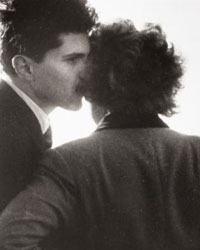
Esther Bubley - Washington, D.C. Feeding the pigeons in Lafayette Park. This woman has been bringing grain to the


00
days
01
hour
14
minutes
33
seconds
Current bid
€ 32
No reserve price

Expert
Selected by Kai Brückner
Over 35 years' experience; former gallery owner and Museum Folkwang curator.
Estimate € 350 - € 430
 | €32 | |
|---|---|---|
 | €29 | |
| €2 | |
Catawiki Buyer Protection
Your payment’s safe with us until you receive your object.View details
Trustpilot 4.4 | 145662 reviews
Rated Excellent on Trustpilot.
Esther Bubley’s 2022 gelatin-silver print is titled “Washington, D.C. Feeding the pigeons in Lafayette Park. This woman has been bringing grain to the pigeons almost daily for thirteen years”.
AI-assisted summary
Description from the seller
Washington, D.C. Feeding the pigeons in Lafayette Park. This woman has been bringing grain to the pigeons almost daily for thirteen years
Esther Bubley (1921–1998) was a prominent American documentary photographer known for her exceptional ability to capture the ordinary lives of everyday people with deep empathy and nuance.
Captured in December 1943, the photograph "Washington, D.C. Feeding the pigeons in Lafayette Park. This woman has been bringing grain to the pigeons almost daily for thirteen years" stands as a compelling example of her work during World War II.
The Background & Context
• The Assignment: In 1942, Bubley was hired as a microfilmer for the Office of War Information (OWI), which had absorbed the photographic unit of the Farm Security Administration (FSA) under Roy Stryker. Recognizing her talent, Stryker gave her photographic assignments tracking life on the American home front during WWII.
• The Setting: Lafayette Park is a public park located directly north of the White House in Washington, D.C. While much of the photography coming out of the capital at the time focused on politicians, soldiers, and the war effort, Bubley focused her lens on a quiet, intimate routine playing out in the shadow of power.
• The Subject: The formal caption notes that the featured woman had been coming to the park to feed the pigeons almost daily for thirteen years—meaning her routine began around 1930, lasting through the height of the Great Depression and into the war.
Artistic & Cultural Significance
Bubley’s style differed from some of her contemporaries because she chose not to sentimentalize or dramatize her subjects. Instead, she captured moments of quiet dignity. The image portrays a deeply human, repetitive ritual of care amidst a turbulent global conflict.
Because the photograph was produced for a federal agency, the original nitrate negative is held by the Library of Congress Prints and Photographs Division and exists in the public domain with no known restrictions. The collection also contains uncaptioned outtakes or related negatives from the same day, showcasing Bubley's process as she photographed the woman from different angles.
Details
Date of print
2022
Artist
Esther Bubley
Sold by
Owner or reseller
Title of artwork
Washington, D.C. Feeding the pigeons in Lafayette Park. This woman has been bringing grain to the
Condition
Extremely fine
Technique
Gelatin-silver print
Height
30 cm
Edition
11
Width
30 cm
Signature
Stamped
Genre
Portrait
Sold by