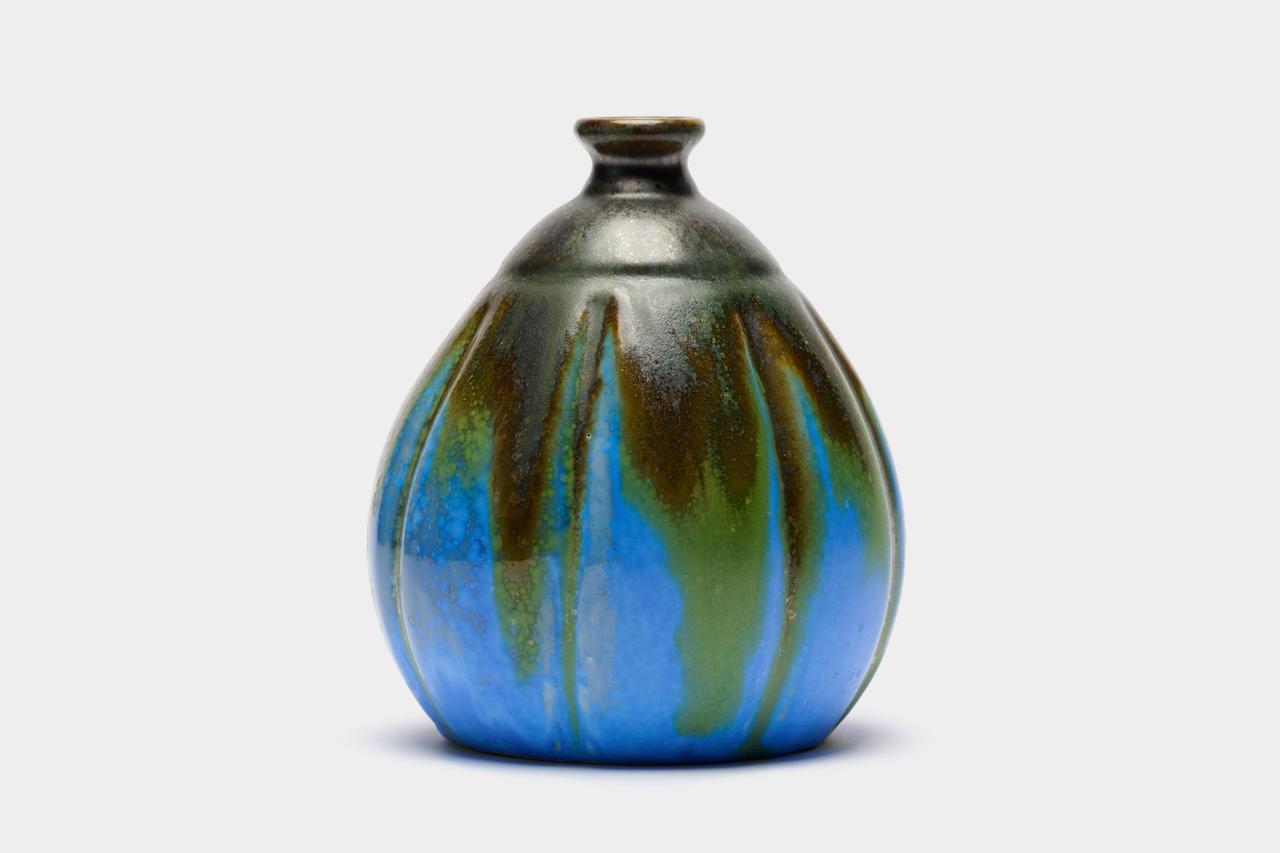
De Sphinx - Petrus Regout - Vase (2) - Earthenware - DELFT POLYCHROME


09
days
05
hours
25
minutes
22
seconds
Starting bid
€ 1
No reserve price

Expert
Selected by Florentin Brunz Gaborieau
Holds a master’s in Art History, specialising in Second French Empire and Dutch Golden Age.
Estimate € 150 - € 200
No bids placed
Catawiki Buyer Protection
Your payment’s safe with us until you receive your object.View details
Trustpilot 4.4 | 145304 reviews
Rated Excellent on Trustpilot.
This 1900–1910 Dutch faience covered vase by De Sphinx – Petrus Regout, made in Maastricht, has a polychrome Delft-style decoration and measures 30.5 cm high by 17 cm wide.
AI-assisted summary
Description from the seller
This elegant faience-covered lidded Hop pot (potiche) is a product of the Dutch manufacturer De Sphinx, based in Maastricht and historically associated with Petrus Regout. Dating from the late 19th century or the very beginning of the 20th century, around 1900, it testifies to the decorative know-how of the great European faience manufacturers of that period. Its generous silhouette, characterized by a swollen belly, a tightened neck, and a domed lid topped with a knob-shaped handle, gives it a particularly decorative presence.
The piece features a remarkable Delft polychrome decoration, consisting of vertical panels richly adorned with floral arrangements, foliage, and stylized botanical motifs. These different registers are framed by broad borders with geometric and ornamental motifs, in a palette combining blue, red, green, purple, and black. Orange metallic highlights emphasize certain parts of the decoration and impart subtle light effects to the surface of the glaze. The lid harmoniously repeats the motifs of the belly, ensuring a beautiful decorative continuity. The pot measures 30.5 cm in total height with a maximum width of 17 cm and weighs 1,800 grams.
The item is in strictly new condition, with no obvious defects or signs of use. The glaze retains its brilliant shine, and the colors show remarkable freshness. The lid is present and perfectly matches the belly.
Founded in Maastricht in the 19th century by Petrus Regout, the De Sphinx manufactory became one of the leading names in Dutch ceramic industry. Its development accompanies the rise of industrial faience production in the Netherlands, with a wide variety of shapes and décors inspired notably by European and Oriental ornamental traditions. The mark of De Sphinx, a public company associated with the name Petrus Regout, enables this piece to be linked to this prestigious Maastricht factory.
Details
Era
1900-2000
Weight
1800 g
Specific region of origin
Maastricht
Title additional information
DELFT POLYCHROME
Number of objects
2
Country of origin
Netherlands
Material
Earthenware
Style
Antique
Manufacturer/brand
De Sphinx - Petrus Regout
Colour
Multicolour
Condition
As new - unused
Height
30.5 cm
Width
17 cm
Depth
30.5 cm
Diameter
17 cm
Estimated period
1900-1910
Sold by