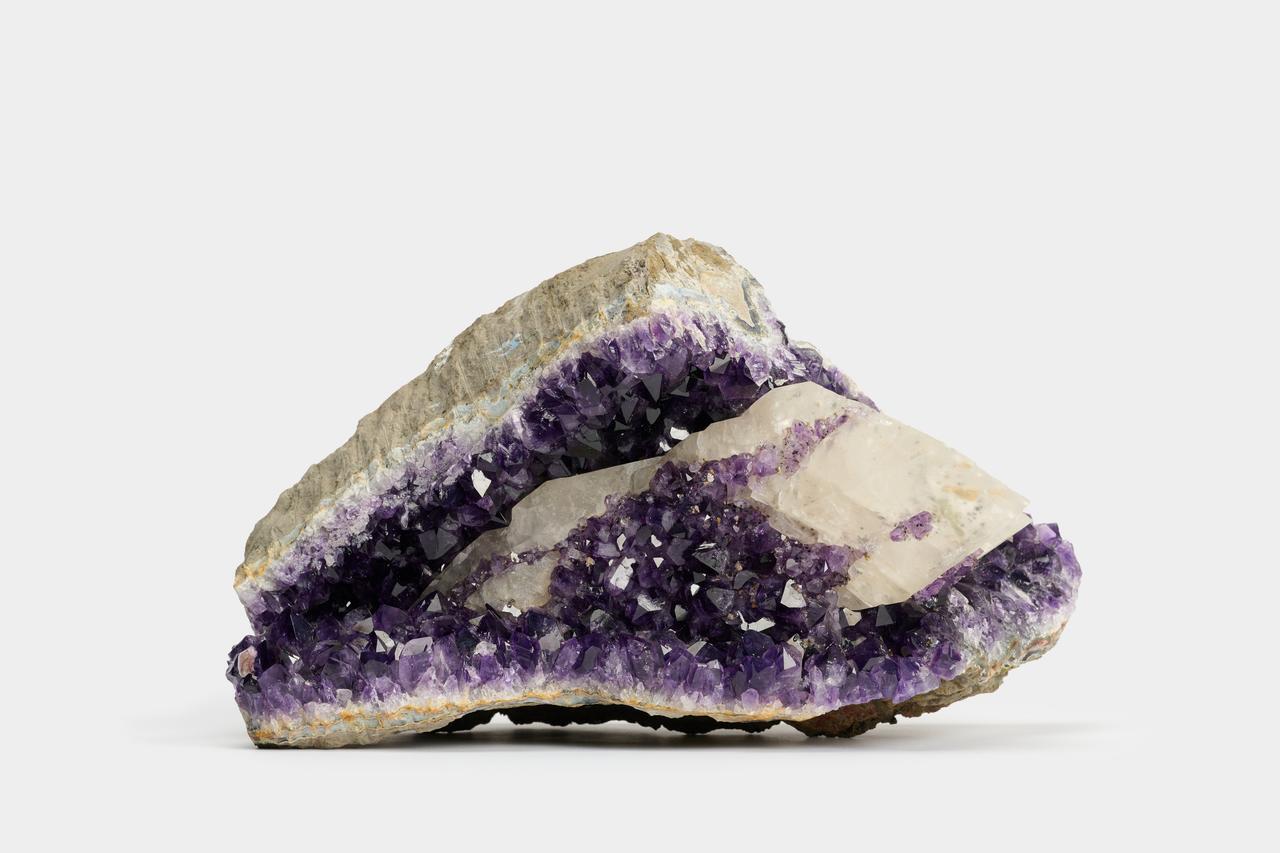
NWA 869 Meteorite, L3-6. The most famous chondrite. - 50.56 g


00
days
13
hours
12
minutes
26
seconds

 | €20 | |
|---|---|---|
 | €15 | |
 | €15 | |
Catawiki Buyer Protection
Your payment’s safe with us until you receive your object.View details
Trustpilot 4.4 | 145414 reviews
Rated Excellent on Trustpilot.
This 50.56 g NWA 869 meteorite is an L3-6 chondritic breccia from Northwest Africa and comes with a certificate of authenticity.
AI-assisted summary
Description from the seller
Northwest Africa 869
Find: 2000 or 2001
Physical characteristics: Most samples are individual meteorites, but some fragments (mostly >1 kg) also occur. In most cases, the fusion crust has been polished or ablated by wind erosion. Many samples are more severely affected and show faces with deep wind-erosion features. Fracture faces formed by ground impact show a typical gray-green color and sometimes visible brecciation (light and/or dark clasts). Due to the coarse nature of this breccia, some stones consist of only a single lithology.
Petrography: This chondritic breccia consists of about 75 vol% matrix with unequilibrated and equilibrated L-chondrite clasts (up to 5.5 cm), some of which display shock darkening. Impact melt-rock clasts, themselves either clast-free or clast-poor, also occur and are strongly depleted in Fe,Ni metal and sulfide.
Geochemistry: Northwest Africa 869 is a regolith breccia containing solar noble gases and preirradiated lithologies. Olivine in lithic clasts: Fa0.2-49.2; olivine in matrix: Fa10.3-29.3; low-Ca pyroxene in lithic clasts: Fs2.1-35.9; low-Ca pyroxene in matrix: Fs7.0-23.9. Bulk oxygen isotopes: δ17O = 3.52; δ18O = 4.67; Δ17O = 1.09 per mil. Terrestrial age: 4.4 ± 0.7 ka. Preatmospheric meteoroid size and mass: 225 ± 25 cm, 120-230 T.
Classification: Because NWA 869 contains unequilibrated clasts, its classification is revised to L3-6.
This lot comes with a certificate of authenticity.
Thanks for your interest.
Details
Name of meteorite
NWA 869 Meteorite, L3-6.
Type of meteorite
The most famous chondrite.
Supplement
Do not reserve price.
Weight
50.56 g
Country of origin
NWA
Sold by