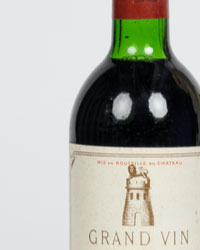
2010 Chapoutier, 2013 Saint Cyrille Grande Reserve & 2015 Etienne Daudevieille x 2 - Châteauneuf-du-Pape, Rhône - 4 Bottles (0.75L)


02
days
07
hours
33
minutes
20
seconds

 | €22 | |
|---|---|---|
 | €17 | |
| €6 | |
Catawiki Buyer Protection
Your payment’s safe with us until you receive your object.View details
Trustpilot 4.4 | 145879 reviews
Rated Excellent on Trustpilot.
A lot of four 0.75-litre Chapoutier bottles from Châteauneuf-du-Pape, including Saint Cyrille Grande Reserve 2013 and two bottles of Etienne Daudevieille 2015.
AI-assisted summary
Description from the seller
Châteauneuf-du-Pape is a historic wine region located between the towns of Orange and Avignon, in France's southern Rhône Valley. It is famous for powerful, full-bodied red wine, largely made from the classic southern Rhône grape trio of Grenache-Syrah-Mourvèdre.
The three grape varieties are behind the vast majority of the appellation's red wines. However, a total of eighteen red and white grape varieties are approved for use. Red and white grape varieties are permitted in both red and white wines of the appellation with no restrictions around the proportions.
Grenache is the principle variety of Châteauneuf-du-Pape. It is well suited to the terroir and performs better here than in any other French wine region. Varietal Grenache is juicy with jammy red-fruit and black-cherry flavors with a high potential alcohol. It is aged in either vats or oak barrels for up to 18 months to create a rich and complex wine.
The region is most notable for the GSM blend, with many producers creating Grenache dominant wines with Syrah and Mourvèdre in smaller proportions.
Syrah grows most successfully in the town's cooler sites, and brings structure and spiced black-fruit notes to the blend. The late ripening Mourvèdre flourishes only in the hotter, drier vineyards, and adds dark depths and bitter chocolate notes. These three varieties constitute approximately 90 percent of vineyards in Châteauneuf-du-Pape.
The vineyards here also produce white wines in smaller quantities which are tangy, weighty and intensely perfumed. These are made from a number of rustic southern French varieties. A few of the minor varieties are entirely unknown outside southern France.
The soils of the appellation are pebbly and sandy, as is common in the southern half of the Rhône Valley. They were created from ancient riverbeds, with the town and its vineyards located just to the east of the Rhône river.
The archetypal Châteauneuf vineyard is strewn with large pebbles known as galets. These stones prevent water evaporation from the soil surface and encourage the reflection of sunlight into the canopy.
Despite the Mediterranean climate, the appellation is technically the driest in all of the Rhône Valley. This makes it all the more significant that irrigation or watering is strictly forbidden during the Graves.
The name may be drenched in history, but as a wine title it has been prestigious for less than a century. Up until the early 20th Century, the town's wines were unspecified and grouped together with others from the Avignon area.
This all changed in the 1920s, when owner of Château Fortia, Baron Le Roy drafted a set of quality focused wine production conditions. This document became the precursor of France's famous appellation system.
The official title was declared in June of 1929. It was one of the country's very first, and remains one of the most prestigious even today. Thirteen varieties of grapes were approved for production upon establishment of the appellation. After a 2009 review, eighteen varieties are now permissible.
Seller's Story
Specialist in fine and rare wines predominantly from France. We are mainly focussed on wines from Burgundy, Rhone Valley & Champagne. We buy wines directly from importers and/or private collectors (only with a good provenance). Do not hesitate to contact us when you have any guestions. Instagram: DPF 4 Wines!
Details
Vintage
2010
Producer, Name of wine
Chapoutier, 2013 Saint Cyrille Grande Reserve & 2015 Etienne Daudevieille x 2
Number of bottles
4
Bottle size
Bottles (0.75L)
Country
France
Region
Châteauneuf-du-Pape, Rhône
Sold by