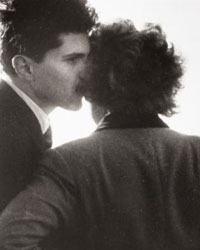
Marion Post Wolcott - Barber, Natchez, Mississippi, 1940


03
days
10
hours
14
minutes
33
seconds
Current bid
€ 5
No reserve price

Expert
Selected by Kai Brückner
Over 35 years' experience; former gallery owner and Museum Folkwang curator.
Estimate € 350 - € 430
 | €5 | |
|---|---|---|
 | €2 |
Catawiki Buyer Protection
Your payment’s safe with us until you receive your object.View details
Trustpilot 4.4 | 145414 reviews
Rated Excellent on Trustpilot.
Marion Post Wolcott’s *Barber, Natchez, Mississippi, 1940* is an edition 11 gelatin-silver print made in 2022.
AI-assisted summary
Description from the seller
Marion Post Wolcott's August 1940 photograph of a barber cutting hair in Natchez, Mississippi is a compelling piece of documentary photography captured for the Farm Security Administration (FSA).
The Context of the Image
• The Setting: Shot in August 1940, the photograph captures a candid, everyday moment of personal care and community interaction among African American men in Natchez.
• The Cultural Space: In the Jim Crow South, Black-owned barbershops and informal open-air spaces served a purpose far beyond hygiene. They were safe, vital community hubs where men could talk freely about work, politics, family, and local news without surveillance.
• The FSA Mission: Wolcott was tasked by the New Deal agency to record the stark economic realities of the rural South following the Great Depression. While many FSA photographs focused heavily on extreme poverty, Wolcott often looked for moments of dignity, resilience, leisure, and community organization within Black communities.
• Marion Post Wolcott (1910–1990) was a pioneering American photojournalist best known for her groundbreaking documentary work during the Great Depression. As the first woman hired for a full-time, long-term photography position by the Farm Security Administration (FSA)
• , she captured more than 9,000 images that remain cornerstone records of American history. Born on June 7, 1910, in Montclair, New Jersey.
• Radical Roots: Educated at the New School for Social Research and New York University, she immersed herself in the artistic and socially conscious environment of Greenwich Village.
• The Vienna Turning Point: While studying at the University of Vienna in the 1930s, she witnessed the terrifying rise of Adolf Hitler. During this time, her sister’s photography mentor, Trude Fleischmann, saw Wolcott’s talent and urged her to pursue photography full-time.
The FSA Years (1938–1942)
• The Appointment: Returning to the U.S. amid the Depression, she worked briefly as a staff photographer for the Philadelphia Evening Bulletin. Iconic photographers Paul Strand and Ralph Steiner recognized her talent and recommended her to FSA director Roy Stryker.
• Life on the Road: Traveling entirely alone as an unaccompanied woman in the Jim Crow South—which was highly unusual and dangerous at the time—she logged thousands of miles in a beat-up car.
• A Unique Lens: While colleagues like Dorothea Lange focused strictly on severe hardship, Wolcott’s photographs were unique because they deliberately juxtaposed extreme poverty with scenes of middle-class leisure, wealth inequality, and community joy. She was also an early pioneer in using color film.
Later Life and Disappearance from the Spotlight
• Stepping Away: In 1941, she married Leon Oliver Wolcott, a high-ranking official in the Department of Agriculture. The compounding pressures of raising a family, wartime travel restrictions, and moving frequently forced her to resign from the FSA in 1942.
• The Lost Archives: Her husband later joined the Foreign Service, prompting moves to Iran, Afghanistan, Pakistan, and India. Tragically, during a forced military evacuation from Egypt during the 1967 Six-Day War, she had to destroy almost all of her remaining personal photographic archives to prevent them from being captured.
Details
Date of print
2022
Artist
Marion Post Wolcott
Sold by
Owner or reseller
Title of artwork
Barber, Natchez, Mississippi, 1940
Condition
Extremely fine
Technique
Gelatin-silver print
Height
30 cm
Edition
11
Width
30 cm
Signature
Stamped
Genre
Documentary photography
Sold by