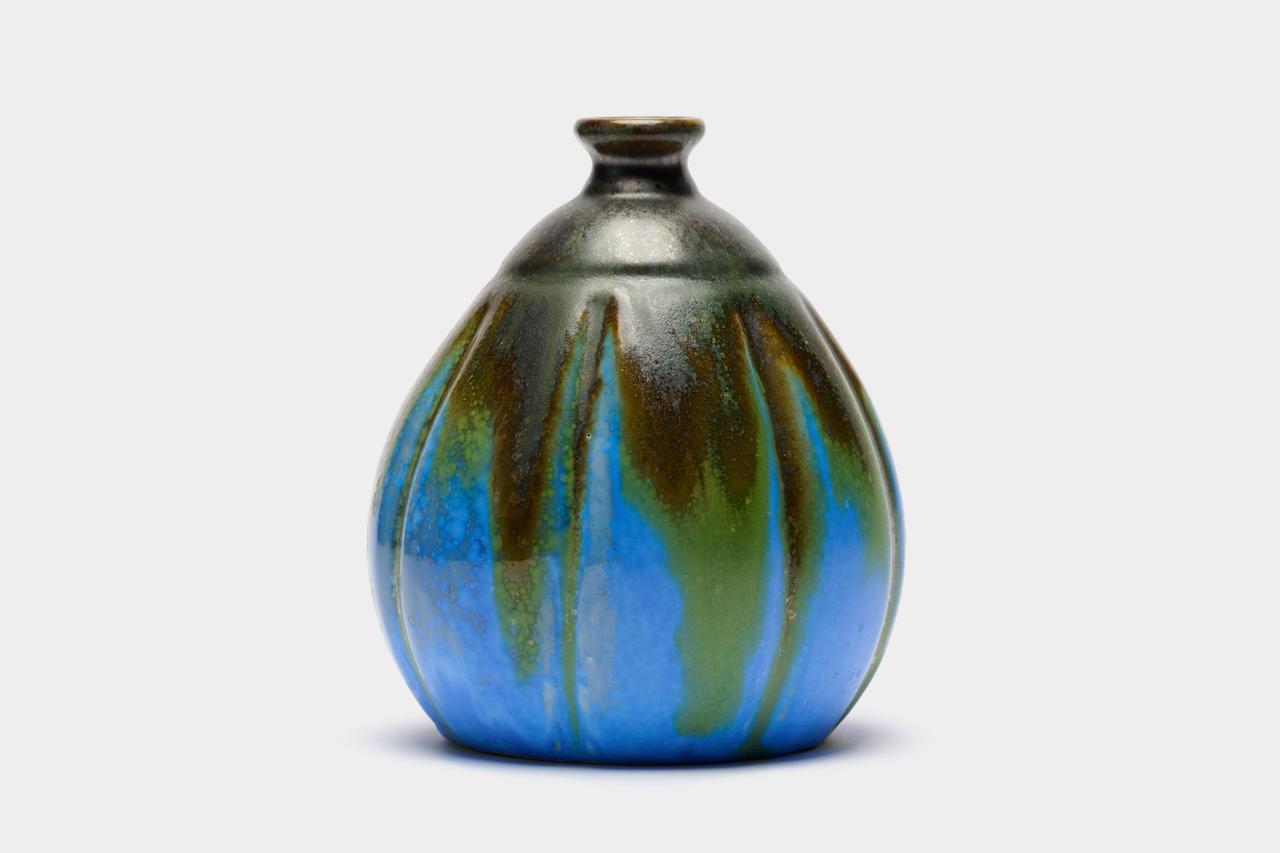
Vase - Ceramic - Double-necked amphora


00
days
17
hours
40
minutes
26
seconds
Current bid
€ 45
No reserve price

Expert
Selected by Florentin Brunz Gaborieau
Holds a master’s in Art History, specialising in Second French Empire and Dutch Golden Age.
Estimate € 120 - € 170
 | €45 | |
|---|---|---|
| €40 | |
| €35 | |
Catawiki Buyer Protection
Your payment’s safe with us until you receive your object.View details
Trustpilot 4.4 | 146014 reviews
Rated Excellent on Trustpilot.
This ceramic amphora vase with a two-part neck and two ribbon handles dates from 1800–1850 and measures 39 cm high, with a dark patina and age-related wear and marks.
AI-assisted summary
Description from the seller
Amphora-shaped two-tier neck vase — dark patinated ceramic — H. 39 cm
Elegant ovoid-bodied vase resting on a small annular foot, with two long ribbon-like handles. Its silhouette is distinguished by a particularly worked neck: a concave lower section, highlighted by a projecting collar receiving the handles, followed by a slightly conical upper neck with an everted lip.
The dark brown-black surface displays warm tints, traces of wear and light deposits, especially noticeable on the body and the handles. These variations emphasize the volumes and give the whole a sculptural presence.
The construction of the neck and the placement of the handles offer resemblances with certain ancient Mediterranean ceramics. The geographic origin and the dating of this piece remain undetermined; no antique attribution is guaranteed.
Condition: wear, abrasions, deposits and surface irregularities visible in the photographs, which are an integral part of the description.
Former private collection, Amsterdam
Details
Era
1400-1900
Weight
2420 g
Title additional information
Double-necked amphora
Country of origin
Unknown
Material
Ceramic
Condition
Good condition - used with small signs of aging & blemishes
Height
39 cm
Width
23 cm
Depth
18 cm
Estimated period
1800-1850