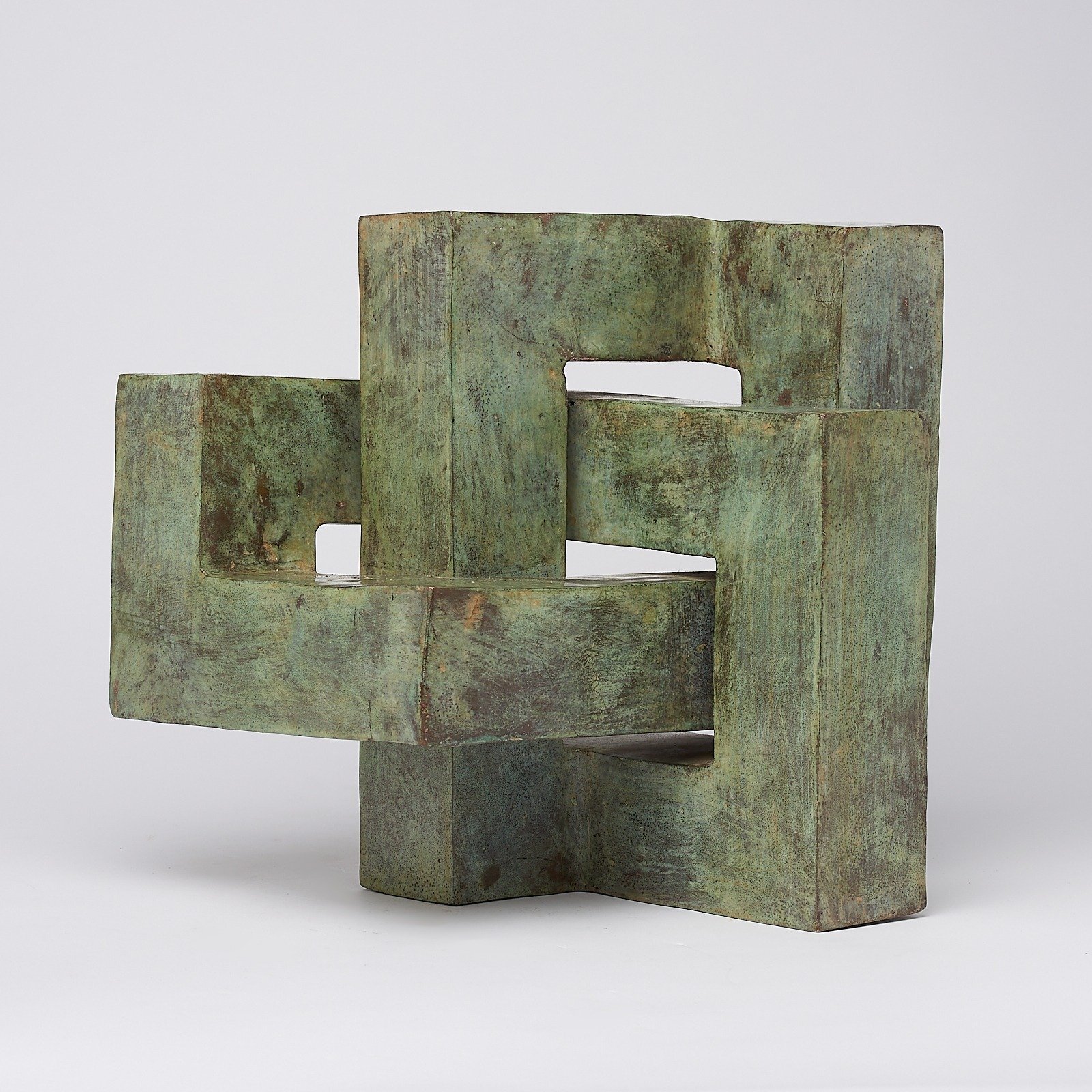
Terraco - Plaquette - Our Lady of Den Bosch, burgundy and steel-blue high relief • ca. 1930–1960 - Earthenware


03
days
19
hours
07
minutes
24
seconds
Current bid
€ 16
No reserve price

Expert
Selected by Clément Floch
Has 20 years of experience trading curios, including 15 years with a leading French dealer.
Estimate € 100 - € 150
 | €16 | |
|---|---|---|
| €11 | |
| €1 |
Catawiki Buyer Protection
Your payment’s safe with us until you receive your object.View details
Trustpilot 4.4 | 145414 reviews
Rated Excellent on Trustpilot.
Description from the seller
In rich relief, Mary wears the cone-shaped ceremonial mantle in which the Bossche grace image is dressed, burgundy with vines. This Terraco (attrib.) from Beesel shows the Sweet Our Lady of Den Bosch, 37 cm high, with crown, scepter and Child perched high, shaped from clay. The glaze runs from burgundy via cream and ochre to steel blue. On the wall she reads from afar as one warm tableau.
Description:
Mary stands facing forward, with crown, veil and scepter and the crowned Child on the left arm. In the mantle lie vines, rosettes and a beaded necklace in relief; at the bottom a panel with two animals. Along the steel-blue mantle edge is relief with O.L. Vrouwe en Bosch. The oak-wood Our Lady in St. Jan was found around 1380 and returned to Den Bosch in 1853 after more than two centuries in Brussels. The reverse side is hollow and shows the red clay.
About the maker:
Terraco, also Atelier St. Joris, began in 1937 as the art department of Steenfabriek St. Joris in Beesel, under director Herman Driessen. It worked with clay from Brunsum and German stoneware, in molds and on the potter’s wheel, and until the fifties mainly produced religious objects.
In the interior:
On a light wall, in the afternoon sun, the steel blue catches the light and the burgundy keeps the mantle warm.
Follow DECADERS Gallery via the heart next to my name above: every week new pieces of Dutch and Belgian ceramics, you see them first.
———
Condition:
Good, with a few flakes. Upper right of the crown and mantle edge a piece of glaze and clay has broken off, about 1.5 cm, where the red body is visible. Bottom-right corner: a flake of a few millimeters. Along the edges a few small chipping spots. The glaze has run along the lower edge and back, production-related. See the images.
At a glance:
Material: earthenware of red clay, relief-formed and multicolored glazed; backside hollow and unglazed
Dimensions and weight: h 37 x w 26 x d 4 cm, 3.1 kg
Brand: without factory mark; attributed to form, technique and decoration, see Description and sources
Dating: ca. 1930–1960
Provenance: from a religious private collection
Description and sources:
Attributed to Terraco (Atelier St. Joris), Beesel. Grounds: the Dutch-language inscription, the Den Bosch subject and the combination of red-firing body and thick, flowing glaze on the front, which closely matches Southern Dutch work. The absence of a blind stamp (Beesel, Terraco or Draak, which Atelier St. Joris usually used) is not unusual for religious souvenirs or anonymous monastic works from the mid-twentieth century. Source: Kunstveiling.nl, artist page Terraco, formerly St. Joris.
Shipping:
Professionally packaged in a sturdy box with cushioning material, for fragile objects a double box. Always insured with Track and Trace. More than 1,100 reviews from previous buyers; see the feedback.
Seller's Story
Decaders Gallery
Region Eindhoven, Netherlands
Our passion lies in 20th-century applied art and design, with a particular focus on the periods Art Nouveau, Art Deco and Mid-Century Modern. But styles from the sixties, seventies, and later also capture our attention. Each decade has made a unique contribution to the art world, which perfectly reflects our name – Decaders Gallery.
Thanks to our love for art and design, we present new, exceptional decorative objects weekly. In addition, we have a broad interest in Asian art, antiques, and collectibles.
Our scavenges across Europe have led to a valuable network of like-minded enthusiasts who help us track down unique finds. This network has paid off: we are proud to have supplied artworks to renowned museums, including:
Museums & collections
Netherlands:
• CODA Museum, Apeldoorn
• Drents Museum, Assen
• National Textile Museum, Tilburg
• National Glass Museum, Leerdam
• Museum 'Amsterdam School' ('t Schip), Amsterdam
• PSV Football Museum, Eindhoven
• National War Museum, Overloon
Belgium:
• Musée de la Famenne, Marche-en-Famenne
• Museum of Natural Sciences, Belgium
Spain:
• Maritime Museum, Barcelona
---
We warmly invite you to visit our auctions with surprising artworks and to follow us on Instagram. Discover your favorite decade at Decaders Gallery!
Marc van der Heijden
Decaders Gallery, Netherlands.
Translated by Google TranslateIn rich relief, Mary wears the cone-shaped ceremonial mantle in which the Bossche grace image is dressed, burgundy with vines. This Terraco (attrib.) from Beesel shows the Sweet Our Lady of Den Bosch, 37 cm high, with crown, scepter and Child perched high, shaped from clay. The glaze runs from burgundy via cream and ochre to steel blue. On the wall she reads from afar as one warm tableau.
Description:
Mary stands facing forward, with crown, veil and scepter and the crowned Child on the left arm. In the mantle lie vines, rosettes and a beaded necklace in relief; at the bottom a panel with two animals. Along the steel-blue mantle edge is relief with O.L. Vrouwe en Bosch. The oak-wood Our Lady in St. Jan was found around 1380 and returned to Den Bosch in 1853 after more than two centuries in Brussels. The reverse side is hollow and shows the red clay.
About the maker:
Terraco, also Atelier St. Joris, began in 1937 as the art department of Steenfabriek St. Joris in Beesel, under director Herman Driessen. It worked with clay from Brunsum and German stoneware, in molds and on the potter’s wheel, and until the fifties mainly produced religious objects.
In the interior:
On a light wall, in the afternoon sun, the steel blue catches the light and the burgundy keeps the mantle warm.
Follow DECADERS Gallery via the heart next to my name above: every week new pieces of Dutch and Belgian ceramics, you see them first.
———
Condition:
Good, with a few flakes. Upper right of the crown and mantle edge a piece of glaze and clay has broken off, about 1.5 cm, where the red body is visible. Bottom-right corner: a flake of a few millimeters. Along the edges a few small chipping spots. The glaze has run along the lower edge and back, production-related. See the images.
At a glance:
Material: earthenware of red clay, relief-formed and multicolored glazed; backside hollow and unglazed
Dimensions and weight: h 37 x w 26 x d 4 cm, 3.1 kg
Brand: without factory mark; attributed to form, technique and decoration, see Description and sources
Dating: ca. 1930–1960
Provenance: from a religious private collection
Description and sources:
Attributed to Terraco (Atelier St. Joris), Beesel. Grounds: the Dutch-language inscription, the Den Bosch subject and the combination of red-firing body and thick, flowing glaze on the front, which closely matches Southern Dutch work. The absence of a blind stamp (Beesel, Terraco or Draak, which Atelier St. Joris usually used) is not unusual for religious souvenirs or anonymous monastic works from the mid-twentieth century. Source: Kunstveiling.nl, artist page Terraco, formerly St. Joris.
Shipping:
Professionally packaged in a sturdy box with cushioning material, for fragile objects a double box. Always insured with Track and Trace. More than 1,100 reviews from previous buyers; see the feedback.
Seller's Story
Decaders Gallery
Region Eindhoven, Netherlands
Our passion lies in 20th-century applied art and design, with a particular focus on the periods Art Nouveau, Art Deco and Mid-Century Modern. But styles from the sixties, seventies, and later also capture our attention. Each decade has made a unique contribution to the art world, which perfectly reflects our name – Decaders Gallery.
Thanks to our love for art and design, we present new, exceptional decorative objects weekly. In addition, we have a broad interest in Asian art, antiques, and collectibles.
Our scavenges across Europe have led to a valuable network of like-minded enthusiasts who help us track down unique finds. This network has paid off: we are proud to have supplied artworks to renowned museums, including:
Museums & collections
Netherlands:
• CODA Museum, Apeldoorn
• Drents Museum, Assen
• National Textile Museum, Tilburg
• National Glass Museum, Leerdam
• Museum 'Amsterdam School' ('t Schip), Amsterdam
• PSV Football Museum, Eindhoven
• National War Museum, Overloon
Belgium:
• Musée de la Famenne, Marche-en-Famenne
• Museum of Natural Sciences, Belgium
Spain:
• Maritime Museum, Barcelona
---
We warmly invite you to visit our auctions with surprising artworks and to follow us on Instagram. Discover your favorite decade at Decaders Gallery!
Marc van der Heijden
Decaders Gallery, Netherlands.
Translated by Google TranslateDetails
Era
1900-2000
Number of objects
1
Country of origin
Netherlands
Material
Earthenware
Manufacturer/brand
Terraco
Model
Our Lady of Den Bosch, burgundy and steel-blue high relief • ca. 1930–1960
Style
Antique inspired
Colour
Multicolour
Condition
Good condition - used with small signs of aging & blemishes
Height
37 cm
Width
26 cm
Depth
4 cm
Weight
3100 g
Estimated period
1930-1940, 1940-1950, 1950-1960
Qualification
Original/official
Sold by