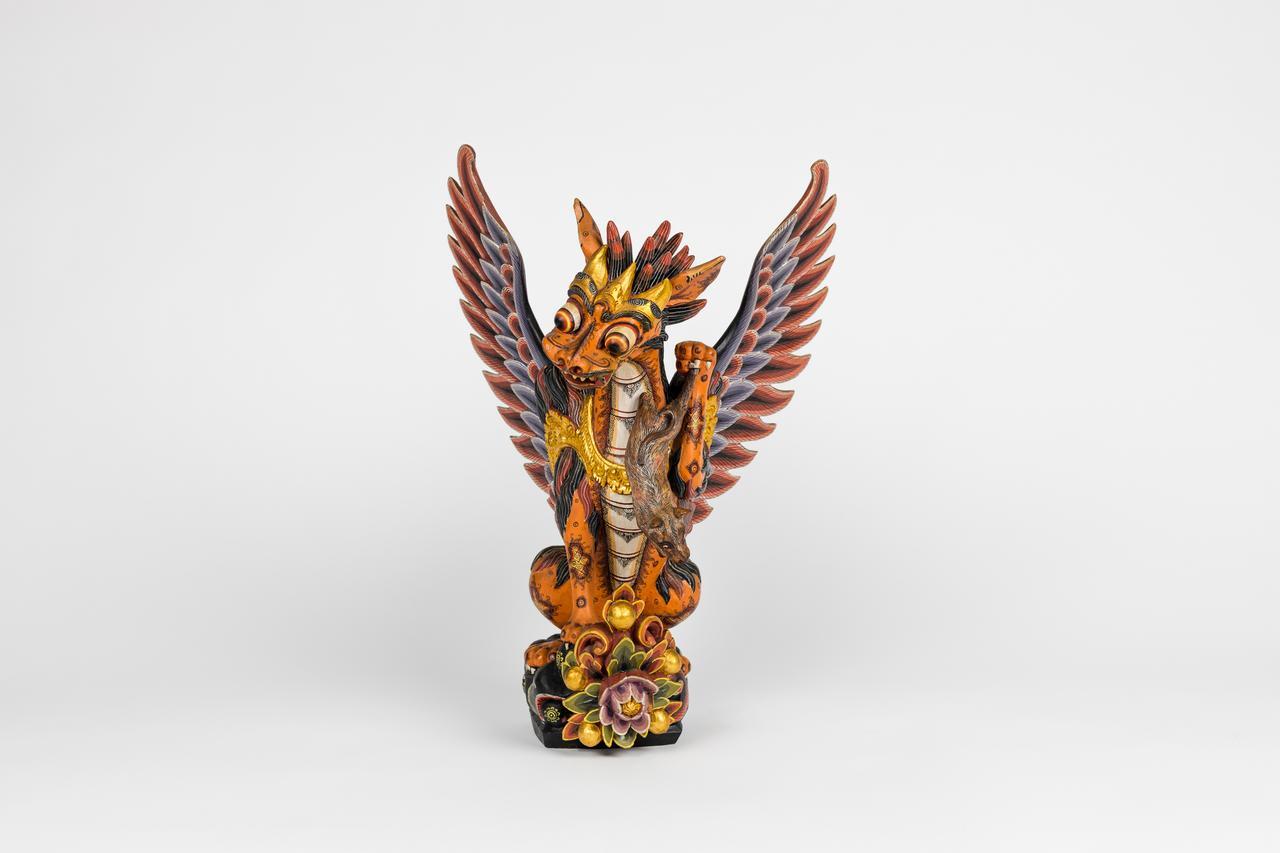
Bread slicer - Rare Areca Nut Nutcracker (Betel / Sarota), zoomorphic in wrought and chased iron—adorned with a - Wrought iron


06
days
09
hours
48
minutes
34
seconds

 | €1 |
|---|
Catawiki Buyer Protection
Your payment’s safe with us until you receive your object.View details
Trustpilot 4.4 | 146014 reviews
Rated Excellent on Trustpilot.
This 19th-century Indonesian areca-nut cutter is made of forged iron and decorated with a dragon or Makara motif.
AI-assisted summary
Description from the seller
[Asian Art / Ethnography] Rare Arec Nut-Cutter (Betel / Sarota) Zoomorphic in Forged and Chiseled Iron – Adorned with a Mythological Dragon/Makara and Friezes of Swastikas – India or Southeast Asia, 19th century
Superb and highly decorative antique areca nut cutter (Sarota), traditionally used for preparing betel quid in India and Southeast Asia.
Zoomorphic Iconography:
The instrument’s head is beautifully cut and sculpted in the round as a mythological creature (dragon, Makara, or crowned Naga with a blazing crest) with an open mouth.
At the rear of the blade stands a sculpted appendage depicting an eagle head or Garuda.
Chiseling & Engraving Work:
Fully chiselled hand-forged iron with great finesse.
The blade is adorned with a grid-pattern engraved frieze of swastikas (an ancestral sacred symbol of good omen in Hindu and Buddhist traditions), surrounded by scrolling floral motifs and stylized clouds.
Origin & Dating:
India (Rajasthan / Gujarat / South India) or Southeast Asia (Indonesia / Burma), 19th century.
Length: 21.5 cm
Width: 9 cm
Weight: 231 g
Material: Forged iron, chiselled.
Overall Condition: Very good ancient conservation state, mechanism fully functional.
Condition Details:
Beautiful old iron patina with slight surface oxidation in the hollows of the engravings which accentuate the relief of the motifs.
Some minor wear from use on the blade’s edge, attesting to its authenticity.
Details
Era
1400-1900
Weight
231 g
Iron type
Wrought iron
Specific region of origin
Inde ou Asie du Sud-Est
Over 200 years old
Yes
Country of Origin
Indonesia
Model
Rare Areca Nut Nutcracker (Betel / Sarota), zoomorphic in wrought and chased iron—adorned with a
Material
Iron
Condition
Excellent condition: barely used with minimal signs of wear
Height
21.5 cm
Width
9 cm
Depth
0 cm
In Working Order
Yes
Estimated period
19th
Sold by