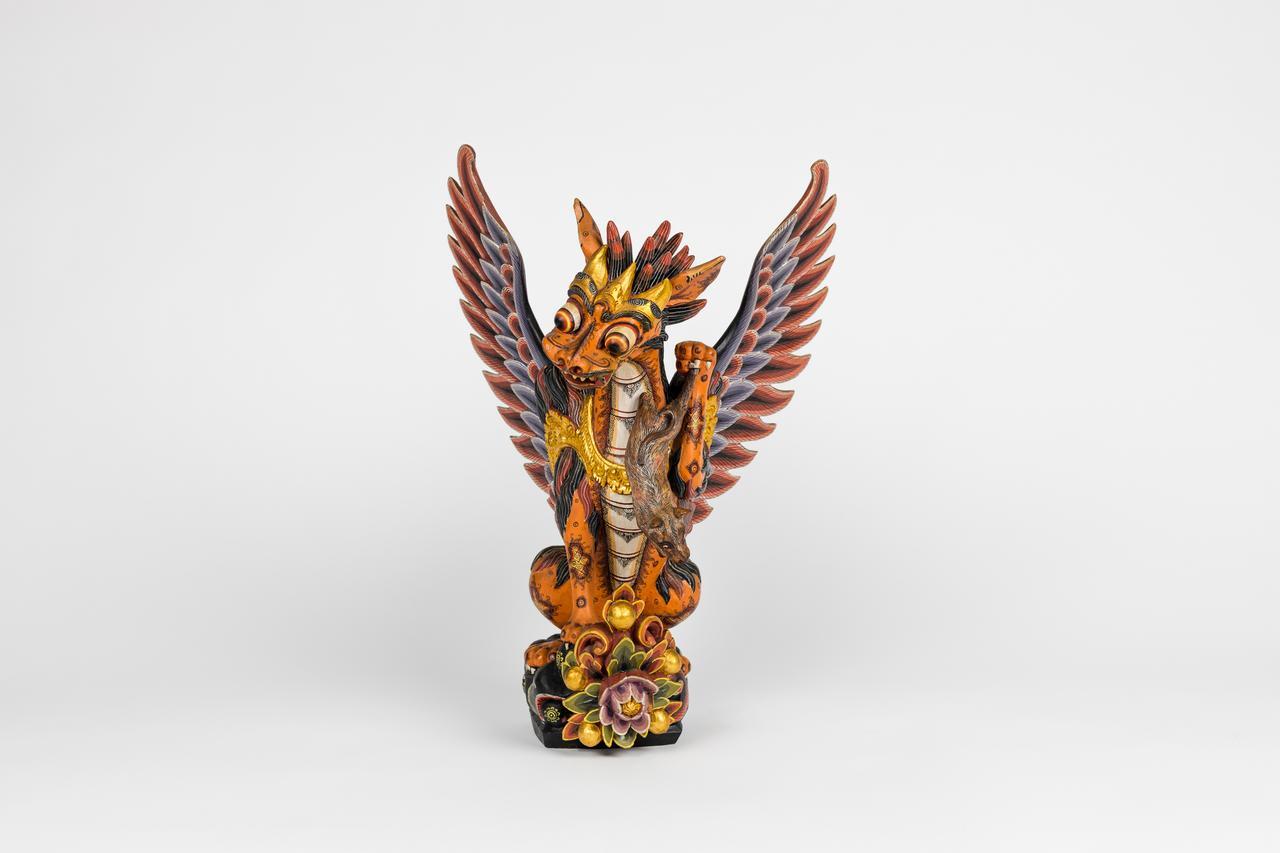
Balinese traditional sculpture, "Dewi Sinta", XL - Wood - Indonesia - 20th century


03
days
10
hours
09
minutes
11
seconds

 | €1 |
|---|
Catawiki Buyer Protection
Your payment’s safe with us until you receive your object.View details
Trustpilot 4.4 | 145414 reviews
Rated Excellent on Trustpilot.
This original 20th-century Indonesian wooden sculpture depicts Dewi Sinta with joined hands and a ceremonial headdress, and measures 64 cm high by 17 cm wide.
AI-assisted summary
Description from the seller
Balinese handcrafted sculpture in carved and hand-painted wood, depicting Dewi Sinta (or Sita), the famous heroine of the Hindu epic Ramayana.
In Bali's traditional craftsmanship, Indonesia, these figures are typically made in pairs together with her consort, the prince Rama, as a symbol of love, harmony, and protection for the home.
Main features
• Iconography and posture. The figure is portrayed with hands joined at the chest in the traditional gesture of greeting and prayer (Anjali Mudra). On the head she wears the elaborate Balinese ceremonial headdress (gelungan) with the distinctive dark rounded hairstyle on top, an element that distinguishes her from the male figure of Rama (who wears a pointed crown).
• Material and craftsmanship. It is carved from a single block of light wood (often albesia or suar, typical of Indonesian carving) and finished with polychrome paints in an antique or shabby effect, with gold detailing on the crown, jewelry, and the folds of the garment.
• Intended use. These statues are designed as decorative wall or tabletop elements (often sold on a small base or with a hook on the back) for spaces in ethnic or boho-chic style.
Details
Dynastic Style/Period
20th century
Number of objects
1
Country of Origin
Indonesia
Material
Wood
Height
64 cm
Width
17 cm
Title of artwork
Balinese traditional sculpture, "Dewi Sinta", XL
Condition
Good condition
Provenance
Private collection
Authenticity
Original/official