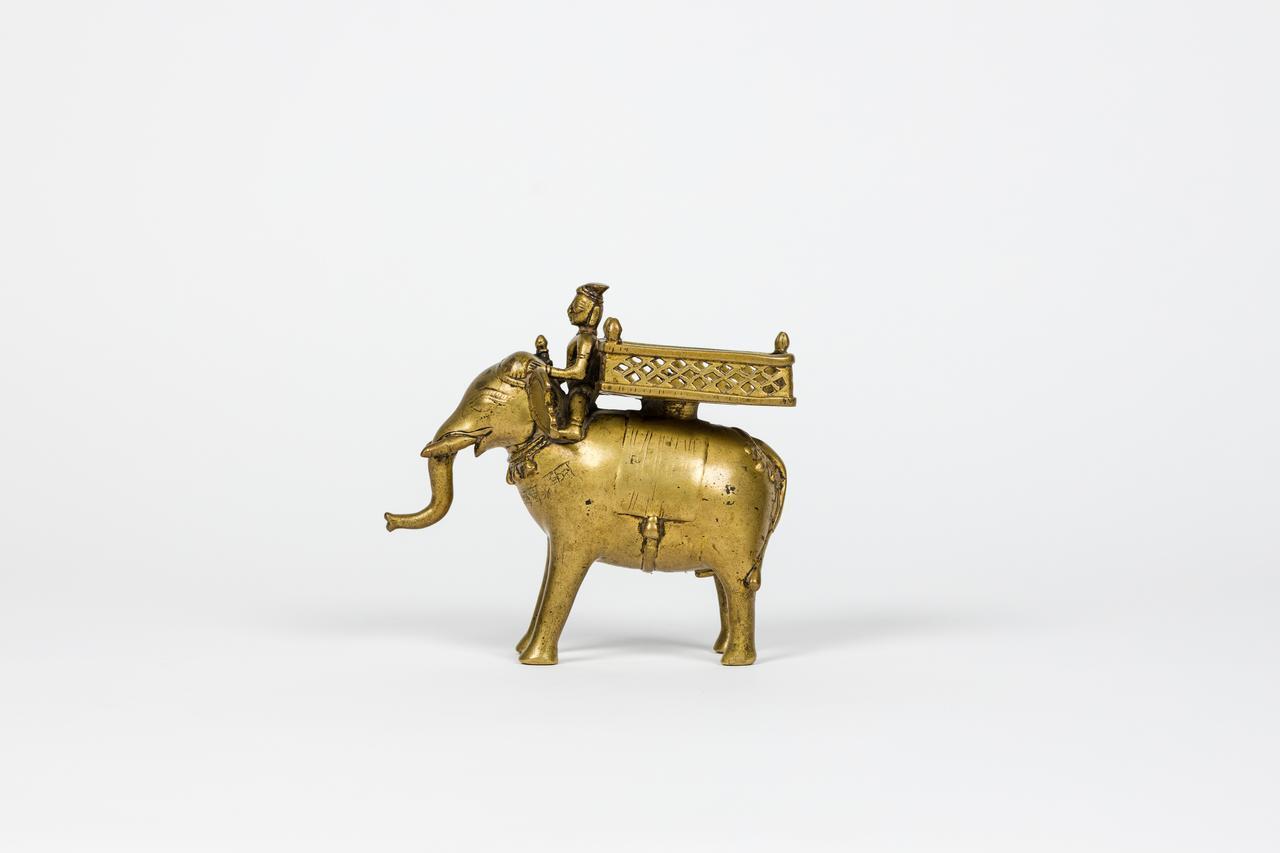
Religious objects - Antique - Jain devotional sculpture in bronze depicting the Tirthankara Parshvanatha - 1700-1750 Mughal Dynasty – III (1627 - 1857) - Dhyana Mudra Position


04
days
09
hours
18
minutes
24
seconds
Current bid
€ 93
Reserve price not met

Expert
Selected by Surya Rutten
Has over 25 years' experience in Asian art and owned an art gallery.
Estimate € 300 - € 500
 | €93 | |
|---|---|---|
| €90 | |
| €1 |
Catawiki Buyer Protection
Your payment’s safe with us until you receive your object.View details
Trustpilot 4.4 | 145967 reviews
Rated Excellent on Trustpilot.
This original Indian bronze Jain devotional sculpture depicts the Tirthankara Parshvanatha in Dhyana Mudra and dates to the Mughal dynasty period (1700–1750).
AI-assisted summary
Description from the seller
Jain devotional bronze sculpture depicting the Tirthankara Parshvanatha in the Dhyana Mudra position, surmounted by a serpent, with inscriptions on the base, India, 17th - 18th century.
This refined lost-wax bronze alloy sculpture constitutes a precious devotional artifact related to the Jain tradition, one of the oldest philosophical religions of India. The work intricately depicts the figure of Parshvanatha, the twenty-third of the twenty-four Tirthankaras, i.e., the spiritual teachers who attained liberation and crossed the ford to transcend the cycle of rebirths. The ascetic is represented seated in the classical meditative lotus position, called the Dhyana Mudra, characterized by crossed legs with the soles of the feet turned upward and hands resting in the lap to symbolize perfect detachment, inner equilibrium, and ascetic immobility typical of Jain doctrine.
The most distinctive and solemn iconographic element of the artifact is the great serpent rising behind the saint, whose coils wrap around the back of the body and then open at the top of the head into a majestic multi-headed canopy, typically seven heads in the tradition associated with this particular deity.
The base of the sculpture bears on the reverse a series of inscriptions carved in Devanagari characters, a philological detail of exceptional importance for cataloging the object. The presence of such texts confirms the votive nature of the piece, configuring it as a ritual offering donated by a devotee to be permanently displayed inside a Jain temple or on a home altar.
Stylistically, the formal rigidity of the posture combined with the plasticity of the figure and the portrayal of the protective naga allow us to place its creation between the seventeenth and eighteenth centuries, a mature artistic period when workshops in western and northern India produced finely chased devotional bronzes intended for daily veneration.
The piece is presented in excellent conservation condition, exhibiting an authentic patina polished by centuries of anointings and ritual adoration.
Seller's Story
Ethnologica was born from the love and passion for the ancient culture of Oriental, Islamic and Indian art. Refined works of art make up a constantly evolving collection capable of satisfying the needs of admirers, enthusiasts and collectors.
Ethnologica has also contributed as a lender to sector cultural exhibitions alongside prestigious public and private cultural associations and foundations.
Translated by Google TranslateJain devotional bronze sculpture depicting the Tirthankara Parshvanatha in the Dhyana Mudra position, surmounted by a serpent, with inscriptions on the base, India, 17th - 18th century.
This refined lost-wax bronze alloy sculpture constitutes a precious devotional artifact related to the Jain tradition, one of the oldest philosophical religions of India. The work intricately depicts the figure of Parshvanatha, the twenty-third of the twenty-four Tirthankaras, i.e., the spiritual teachers who attained liberation and crossed the ford to transcend the cycle of rebirths. The ascetic is represented seated in the classical meditative lotus position, called the Dhyana Mudra, characterized by crossed legs with the soles of the feet turned upward and hands resting in the lap to symbolize perfect detachment, inner equilibrium, and ascetic immobility typical of Jain doctrine.
The most distinctive and solemn iconographic element of the artifact is the great serpent rising behind the saint, whose coils wrap around the back of the body and then open at the top of the head into a majestic multi-headed canopy, typically seven heads in the tradition associated with this particular deity.
The base of the sculpture bears on the reverse a series of inscriptions carved in Devanagari characters, a philological detail of exceptional importance for cataloging the object. The presence of such texts confirms the votive nature of the piece, configuring it as a ritual offering donated by a devotee to be permanently displayed inside a Jain temple or on a home altar.
Stylistically, the formal rigidity of the posture combined with the plasticity of the figure and the portrayal of the protective naga allow us to place its creation between the seventeenth and eighteenth centuries, a mature artistic period when workshops in western and northern India produced finely chased devotional bronzes intended for daily veneration.
The piece is presented in excellent conservation condition, exhibiting an authentic patina polished by centuries of anointings and ritual adoration.
Seller's Story
Ethnologica was born from the love and passion for the ancient culture of Oriental, Islamic and Indian art. Refined works of art make up a constantly evolving collection capable of satisfying the needs of admirers, enthusiasts and collectors.
Ethnologica has also contributed as a lender to sector cultural exhibitions alongside prestigious public and private cultural associations and foundations.
Translated by Google TranslateDetails
Era
1400-1900
Title additional information
Dhyana Mudra Position
Number of objects
1
Material
Jain devotional sculpture in bronze depicting the Tirthankara Parshvanatha
Country of origin
India
Height
5.5 cm
Dynastic style/period
Mughal Dynasty – III (1627 - 1857)
Width
0 cm
Depth
0 cm
Condition
Good condition - used with small signs of aging & blemishes
Attribution
Original
Style
Antique
Sold with stand
No
Estimated period
1700-1750
Sold by