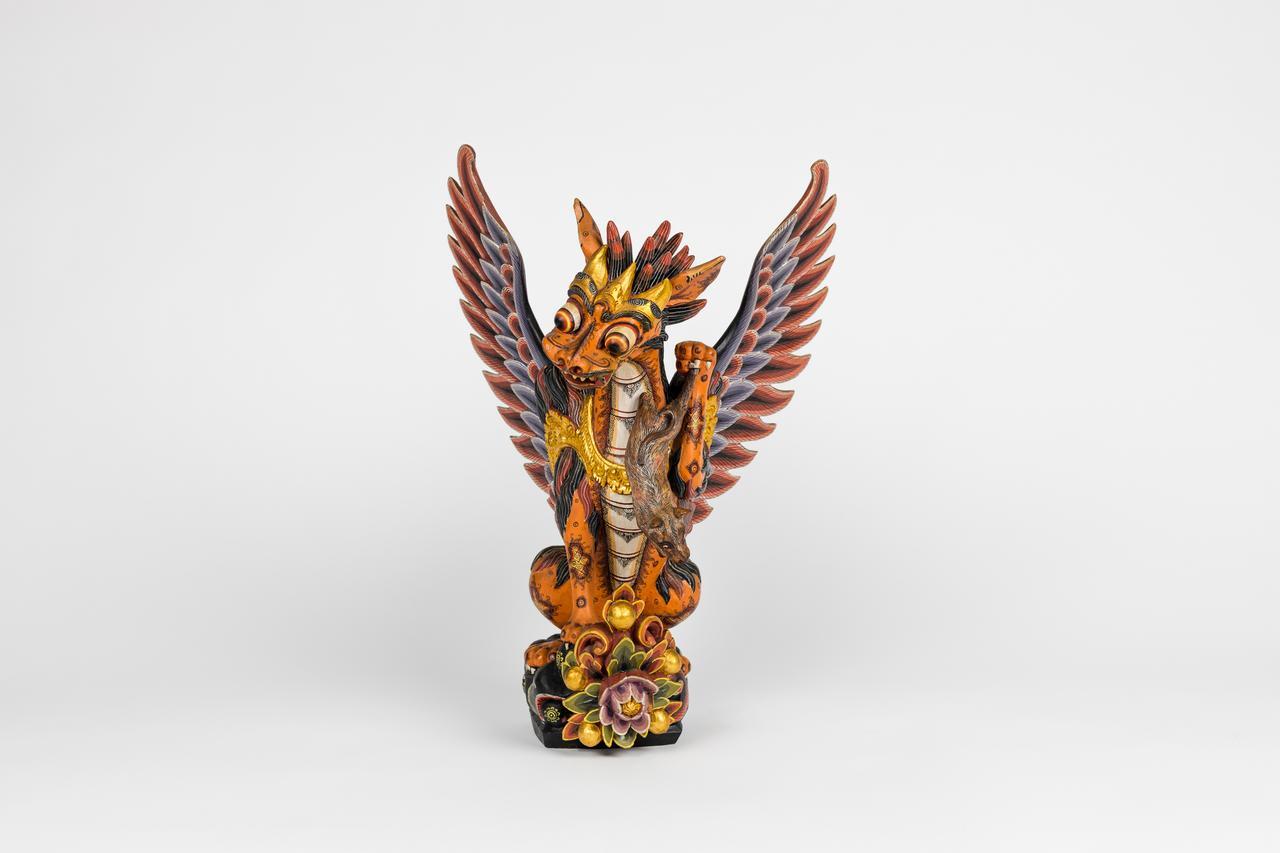
Kabiru Board (Sliced Board) - Indonesia (No reserve price)


02
days
09
hours
35
minutes
39
seconds

No bids placed
Catawiki Buyer Protection
Your payment’s safe with us until you receive your object.View details
Trustpilot 4.4 | 146014 reviews
Rated Excellent on Trustpilot.
This original wooden Kabiru Board (Papan Hiris), a traditional cotton beater from Sumba, Indonesia, dates to the mid-20th century and is presented on a stand.
AI-assisted summary
Description from the seller
Traditional cotton beater from the island of Sumba (Indonesia), locally known as Kabiru or Papan Hiris. It is an anthropomorphic sculpture carved from dark wood (mounted on a metal display stand).
Main features
• Shape and body: The main structure consists of a solid, flat rectangular board with rounded corners. The wood has a very dark, time-worn finish, with a distinct lighter reddish circular area at the center caused by prolonged use.
• Carved head: At the top, a neck rises from a small stepped base and supports a stylized human head. The face has simple, symmetrical features, with pronounced brow ridges joining a long, slender nose, almond-shaped eyes, a closed mouth, and small ears that protrude from the sides.
• Original function: Although it is now displayed as a tribal art object, this piece was originally an everyday tool. The carved head served as an ergonomic handle for gripping the tool and beating raw cotton fibers before spinning.
• Stand: The board is mounted vertically on a modern black iron pedestal with a square base, designed to showcase its sculptural profile in a home or museum setting.
Details
Number of objects
1
Country of Origin
Indonesia
Period
Mid 20th century
Material
Wood
Sold with stand
Yes
Condition
Good condition
Title of artwork
Kabiru Board (Sliced Board)
Height
40 cm
Width
19 cm
Depth
6 cm
Weight
2500 g
Provenance
Private collection
Authenticity
Original/official
Sold by