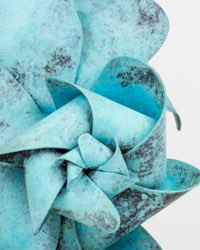
Mario Borrelli - Sintesi


03
days
21
hours
15
minutes
51
seconds
Current bid
€ 250
Reserve price not met

Expert
Selected by Maurizio Buquicchio
Holds a master's degree in film and visual arts; experienced curator, writer, and researcher.
Gallery Estimate € 2,000 - € 2,400
 | €250 | |
|---|---|---|
 | €125 | |
 | €3 | |
Catawiki Buyer Protection
Your payment’s safe with us until you receive your object.View details
Trustpilot 4.4 | 146211 reviews
Rated Excellent on Trustpilot.
Description from the seller
Spedita with the utmost professionalism.
The Grace of Eros by Mario Borrelli
‘’Now, you’ll agree that preferring the soft to what is hard is a demonstration of the nature of Eros’’. Plato, Symposium, 195 d-e
The young painter Mario Borrelli, whom criticism regards as the last of the Romantics, places at the center of his artistic experience the body. In continuity with classical thought, which made man the measure of all things, the painter tells his story in his first solo show through a series of figurative canvases, where the human being, the human body, is the measure of all things. A genre underappreciated today for fashion, but one that has deep roots and dwells in every soul even if in a concealed way, as archetypes, after all, teach. The representation of the nude has ancient origins; it can be said that the body was born before the face, before the landscape, before still life, even before writing. Think of the Venus of Willendorf kept in Vienna and all prehistoric Venuses. The erotic body that Mario Borrelli tells through his works is not a body that is “dressed down,” “perfect,” “stripped.” To better understand this perspective, it is useful to pause on a brief and fortunate intuition by Kenneth Clark, the British art historian of the 1950s. Clark introduces a distinction that would gain much fortune in the English language. To be naked, naked, means to be without clothes, and at the same time suggests that sense of embarrassment that almost all of us in this condition experience. The word nude, on the contrary, does not imply this sense of discomfort and is used in art. It is a re-shaped body, therefore harmonious, flourishing and confident. It is as if nudity were a form of clothing. But of what kind? Our painter-tailor clothes bodies with Eros, evoking the life-desire through sacred epiphanies of the flesh, thus the nude body slips out of the contingent to elevate itself to an idea, a union of sacred love and profane love. Freedberg writes that images operate in a way that excites desire; and it is through the eyes, that gaze on Mario Borrelli’s paintings carries other senses to the mystical contemplation of the image. It is the flesh that becomes sacred, it is earthly prayer that lifts the spirit revitalized by the images, excited by the Dionysian impulse; it is rebellion and revolution of the instinct, which in turn transmutes into feeling. Therefore the mysticism of the flesh that derives from the artist’s erotic narrative is powerful, poignant, and drives to investigate what lies hidden, what is concealed, almost ashamed for convenience, convention, moralizing fiction. One should never forget, the artist seems to suggest, that the seduction of forms is as sacred as the bodies moved by Eros are sacred. Naked bodies, veiled, partly covered, erotically bind the viewer through a detail: a hand, a drapery, a lock of hair, etc. A transfiguration occurs: Eros becomes mystery and the sacred matrix emerges in all its shameless power, and it is here where one can glimpse the ultimate truth of existence. Naked bodies, veiled, partly covered, erotically bind the viewer through a detail: a hand, a drapery, a lock of hair, etc. A transfiguration occurs: Eros becomes mystery and the sacred matrix emerges in all its shameless power, and it is here where one can glimpse the ultimate truth of existence. Vitalism explodes, perhaps the beauty of truth takes on different forms, the transparency of Eros asserts itself without shame to show itself because it is the measure of all things. In the nudity depicted by Mario Borrelli one perceives veritas, the verity that the Latins, not by chance, made coincide with nudity free of flagitium, the naked veritas of Klimt, the naked and pure truth that has no fear of showing itself. The naturalistic images tell their story in a space-non-space metastory, outside precise spatio-temporal connotations and within boundaries that could be defined as heroic: the relationship between spaces and figures is, for the painter, an evocative necessity and does not limit the immersive suggestiveness; rather it amplifies it in a non-place that produces estrangement. Vitalism explodes, perhaps the beauty of truth takes on different forms, the transparency of Eros asserts itself without shame to show itself because it is the measure of all things. In the nudity depicted by Mario Borrelli one perceives veritas, the verity that the Latins, not by chance, made coincide with nudity good free of flagitium, the naked veritas of Klimt, the naked and pure truth, that has no fear of showing itself. The naturalistic images tell their story in a space-non-space metastory, outside precise spatio-temporal connotations and within boundaries that could be defined as heroic: the relationship between spaces and figures is, for the painter, an evocative necessity and does not limit the immersive suggestiveness, indeed it amplifies it in a non-place that produces estrangement. Finally the artist, preferring the female nude with soft shapes, not for gender vanity, but because in those softnesses lies the victorious eros, emphasizes a erotic triumph, which translates into the tangible form of that creative force that eternally fights against Thanatos, his antagonist, bearer of destruction. Finally the artist, preferring the female nude with soft shapes, not for gender vanity, but because in those softnesses lies the victorious eros, emphasizes an erotic triumph, which translates into the tangible form of that creative force that eternally fights against Thanatos, But the tension between Eros and Thanatos is told with indescribable tenderness. And it is perhaps, in that ecstasy in which the figures are crystallized, the spiritual place where the artist unexpectedly manages to speak of himself, of his art and of his painting as prayer and poetry.
By Daniela Marra
Details
Sold with frame
Yes
Sold by
Direct from the artist
Edition
Original
Artist
Mario Borrelli
Title of artwork
Sintesi
Technique
Oil painting
Signature
Hand signed
Country of origin
Italy
Year
2026
Condition
Good condition
Height
50 cm
Width
40 cm
Depiction/theme
Nude
Period
2020+
Sold by