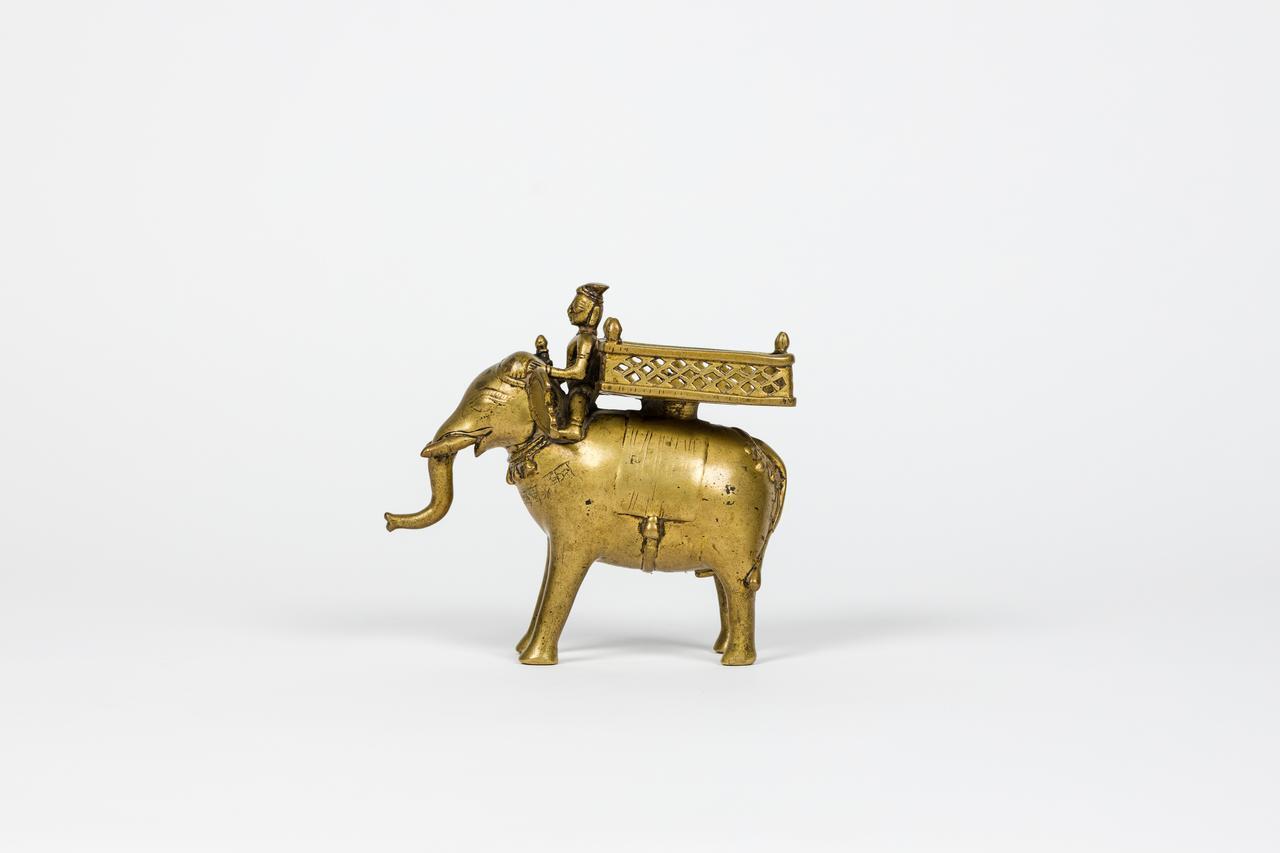
Ekamukhalinga of Shiva with Naga and Yoni, votive bronze - Lost-wax bronze casting - India - 18th - 19th century


04
days
09
hours
27
minutes
46
seconds
Starting bid
€ 1
Reserve price not met

Expert
Selected by Surya Rutten
Has over 25 years' experience in Asian art and owned an art gallery.
Estimate € 280 - € 330
No bids placed
Catawiki Buyer Protection
Your payment’s safe with us until you receive your object.View details
Trustpilot 4.4 | 145967 reviews
Rated Excellent on Trustpilot.
This Indian 18th–19th-century votive bronze, titled “Ekamukhalinga di Shiva con Naga e Yoni, bronzo votivo”, depicts Shiva as an Ekamukhalinga beneath a Naga cobra hood, rising from a yoni, and was made using the lost-wax casting method.
AI-assisted summary
Description from the seller
Ekamukhalinga of Shiva with Naga and Yoni – Votive bronze – India, Maharashtra, 18th–19th century
An interesting Indian devotional bronze made using the lost-wax casting technique, depicting Shiva in the form of Ekamukhalinga, a distinctive iconographic expression that combines the aniconic symbolism of the linga with an anthropomorphic representation of the deity’s face. Shiva’s head, characterized by a serene expression, large eyes, an incised hairstyle, and large ear ornaments, emerges from the center of a circular yoni with a spout for draining ritual offerings, supported by a bell-shaped molded base. Rising behind the deity is an imposing Naga cobra with an expanded hood, made separately and fitted into the structure. The serpent serves a protective and sacred function, also symbolically evoking kundalini, the latent spiritual energy associated with the Tantric tradition. The union of the linga, the masculine cosmic principle identified with Shiva, and the yoni, an expression of Shakti, represents the complementarity of creative energies and the perpetual renewal of the universe. The sculpture retains an evocative dark patina of veneration, with widespread surface accretions and pronounced signs of wear attributable to prolonged ritual use. On stylistic, technical, and iconographic grounds, the work is attributable to devotional production in west-central India (Maharashtra) and dates to the 18th–19th century.
A significant example of Shaivite religious bronzework, especially noteworthy for the simplicity of its composition and the symbolic power of its divine representation.
Seller's Story
Ethnologica was born from the love and passion for the ancient culture of Oriental, Islamic and Indian art. Refined works of art make up a constantly evolving collection capable of satisfying the needs of admirers, enthusiasts and collectors.
Ethnologica has also contributed as a lender to sector cultural exhibitions alongside prestigious public and private cultural associations and foundations.
Translated by Google TranslateEkamukhalinga of Shiva with Naga and Yoni – Votive bronze – India, Maharashtra, 18th–19th century
An interesting Indian devotional bronze made using the lost-wax casting technique, depicting Shiva in the form of Ekamukhalinga, a distinctive iconographic expression that combines the aniconic symbolism of the linga with an anthropomorphic representation of the deity’s face. Shiva’s head, characterized by a serene expression, large eyes, an incised hairstyle, and large ear ornaments, emerges from the center of a circular yoni with a spout for draining ritual offerings, supported by a bell-shaped molded base. Rising behind the deity is an imposing Naga cobra with an expanded hood, made separately and fitted into the structure. The serpent serves a protective and sacred function, also symbolically evoking kundalini, the latent spiritual energy associated with the Tantric tradition. The union of the linga, the masculine cosmic principle identified with Shiva, and the yoni, an expression of Shakti, represents the complementarity of creative energies and the perpetual renewal of the universe. The sculpture retains an evocative dark patina of veneration, with widespread surface accretions and pronounced signs of wear attributable to prolonged ritual use. On stylistic, technical, and iconographic grounds, the work is attributable to devotional production in west-central India (Maharashtra) and dates to the 18th–19th century.
A significant example of Shaivite religious bronzework, especially noteworthy for the simplicity of its composition and the symbolic power of its divine representation.
Seller's Story
Ethnologica was born from the love and passion for the ancient culture of Oriental, Islamic and Indian art. Refined works of art make up a constantly evolving collection capable of satisfying the needs of admirers, enthusiasts and collectors.
Ethnologica has also contributed as a lender to sector cultural exhibitions alongside prestigious public and private cultural associations and foundations.
Translated by Google TranslateDetails
Dynastic Style/Period
18th - 19th century
Number of objects
1
Country of Origin
India
Attribution
Original
Material
Lost-wax bronze casting
Height
19 cm
Width
12 cm
Title of artwork
Ekamukhalinga of Shiva with Naga and Yoni, votive bronze
Depth
12 cm
Condition
Good condition
Authenticity
Original/official
Sold by