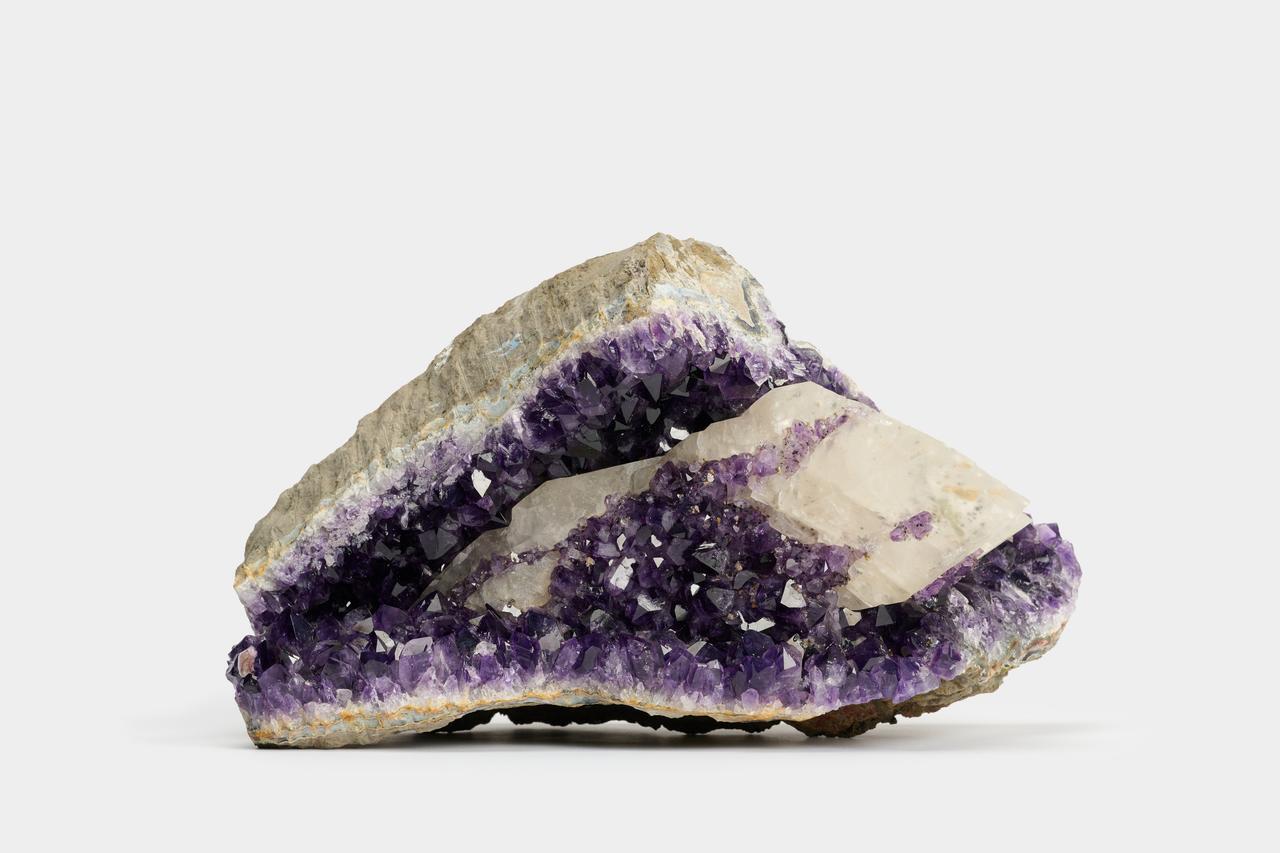
Gold Basin Chondrite Meteorite - Height: 10 cm - Width: 6 cm - 177.8 g


05
days
23
hours
00
minutes
56
seconds
Starting bid
€ 1
Reserve price not met

Expert
Selected by Francesco Moser
Over 20 years collecting meteorites; former museum curator and experienced restorer.
Estimate € 450 - € 550
No bids placed
Catawiki Buyer Protection
Your payment’s safe with us until you receive your object.View details
Trustpilot 4.4 | 146353 reviews
Rated Excellent on Trustpilot.
Gold Basin is a 177.8 g L4 chondrite meteorite from Arizona, United States.
AI-assisted summary
Description from the seller
Gold Basin is a stony meteorite found on November 24, 1995, in Mohave County, Arizona, United States, in a desert area near White Hills.
Its discovery came about in an unusual way: Professor Jim Kriegh was searching for gold with a metal detector when he found a stone that turned out to be a meteorite. Subsequent prospecting recovered thousands of fragments scattered across a vast area of the Mojave Desert.
By November 1997, 1,484 fragments had been recovered, with a combined mass of 61 kg. The largest individual fragment recorded weighed 1.52 kg.
Initial studies suggest that the meteorite fell to Earth during the last glacial period, approximately 20,000 to 25,000 years ago. This age has been estimated by analyzing cosmogenic isotopes.
Physical Characteristics
Gold Basin has the typical characteristics of an ordinary chondrite, with a grayish rocky matrix and a composition of silicates, small metal grains, and sulfides.
Specimens that retain their original surface may show areas of fusion crust, formed by intense heating as the meteorite passed through Earth's atmosphere.
Because of the time elapsed since its fall and its exposure to a desert environment, many fragments show varying degrees of oxidation and surface alteration.
Petrography
Gold Basin belongs to the L group of ordinary chondrites, which are characterized by a relatively low total iron content compared with H chondrites.
Its petrologic type is 4, indicating that it underwent thermal metamorphism on its parent body, while retaining some of the textural and compositional characteristics of its primitive components.
Its main minerals include:
Olivine: a magnesium-iron silicate mineral, with an average composition of Fa 24.
Pyroxene: mainly low-calcium in composition, with approximate values of Fs 20 and Wo 1.
Kamacite: a naturally occurring iron-nickel alloy found in small metal grains.
Troilite: an iron sulfide commonly found in chondrites.
Initial studies also noted the presence of fragments of another type of meteoritic material in some specimens from the strewn field, prompting research into the possible heterogeneity of the material recovered in the region.
Geochemistry
Analyses of its minerals indicate a composition characteristic of L4 ordinary chondrites.
Olivine: has an average fayalite content of Fa 24 ± 1.
Pyroxene: has an approximate composition of Fs 20 and Wo 1.
Kamacite: contains approximately 0.72 ± 0.09 wt% cobalt.
These values distinguish it from other groups of ordinary chondrites and support its classification as an L4 chondrite.
Classification
Stony meteorite belonging to the L4 group of ordinary chondrites (Ordinary chondrite L4).
Its significance lies both in its mineral composition and in the extent of its strewn field. The large number of recovered fragments and its estimated age make it a particularly interesting meteorite for studying ancient falls and the distribution of meteoritic material in desert environments.
This lot includes a certificate of authenticity.
Thank you for your interest.
Details
Name of meteorite
Gold Basin
Type of meteorite
Chondrite Meteorite
Supplement
L4
Weight
177.8 g
Origin (region/city)
Arizona
Country of origin
U.S.
Height
10 cm
Width
6 cm
Depth
3.5 cm
Sold by