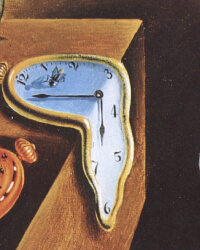
Bob Bonies (1937) - CFM II Original Serigraph Portfolio (1987)


03
days
07
hours
56
minutes
09
seconds

17 other people are watching this object
 Bidder 5339 Bidder 5339 | €40 | |
|---|---|---|
 Bidder 6076 Bidder 6076 | €7 |
Catawiki Buyer Protection
Your payment’s safe with us until you receive your object.View details
Trustpilot 4.4 | 126253 reviews
Rated Excellent on Trustpilot.
Bob Bonies, CFM II Original Serigraph Portfolio (1987), hand signed and numbered 60/90, 1988, limited edition silkscreen on paper, 30 × 30 cm, Netherlands, Minimalism, in good condition, printed by Edition Partanen.
AI-assisted summary
Description from the seller
Bob Bonies - CFM Original Serigraph (1987) by Edition Partanen - one of five handprinted serigraphs - printed by hand on high-quality paper at Edition Partanen in 1987. Proportion 30,0 x 30,0 cm each. In good condition, marks of two removed taped on the back. Handsigned and numbered (edition 60 of 90) in pencil.
Bob Bonies was born in The Hague in 1937. As a young artist, he turned to lyrical, expressive abstraction thanks to the influence of COBRA. After his first journey to the US in 1963, his works became more particular. With his constructivist style, he gave new stimulation to the Dutch geometric art. He considers himself as a descendant of the Dutch movement called De Stijl, which was founded by artists like Mondrian and Van Doesburg. His artistic attitude, which is based on determined principles, can partly be traced back to the well-known constructive group.
Seller's Story
Kunstkontor Basel was founded as online art dealership in Basel, Switzerland in 2018. We are focused on Concrete, Constructive and Digital Art spanning avant-garde positions from the 1920s until today. Kunstkontor presents a selection of original prints, multiples and unique works by European artists in collaboration with renowned publishers. Works by artists such Lajos Kassák, Victor Vasarely, Lou Loeber, Lothar Schreyer, Günther Fruhtrunk, Jo Niemeyer, Lars-Gunnar Nordström, Matti Kujasalo, Peter Vogel and many more.
Translated by Google TranslateBob Bonies - CFM Original Serigraph (1987) by Edition Partanen - one of five handprinted serigraphs - printed by hand on high-quality paper at Edition Partanen in 1987. Proportion 30,0 x 30,0 cm each. In good condition, marks of two removed taped on the back. Handsigned and numbered (edition 60 of 90) in pencil.
Bob Bonies was born in The Hague in 1937. As a young artist, he turned to lyrical, expressive abstraction thanks to the influence of COBRA. After his first journey to the US in 1963, his works became more particular. With his constructivist style, he gave new stimulation to the Dutch geometric art. He considers himself as a descendant of the Dutch movement called De Stijl, which was founded by artists like Mondrian and Van Doesburg. His artistic attitude, which is based on determined principles, can partly be traced back to the well-known constructive group.
Seller's Story
Kunstkontor Basel was founded as online art dealership in Basel, Switzerland in 2018. We are focused on Concrete, Constructive and Digital Art spanning avant-garde positions from the 1920s until today. Kunstkontor presents a selection of original prints, multiples and unique works by European artists in collaboration with renowned publishers. Works by artists such Lajos Kassák, Victor Vasarely, Lou Loeber, Lothar Schreyer, Günther Fruhtrunk, Jo Niemeyer, Lars-Gunnar Nordström, Matti Kujasalo, Peter Vogel and many more.
Translated by Google TranslateDetails
Artist
Bob Bonies (1937)
Sold by
Gallery
Edition
Limited edition
Title of artwork
CFM II Original Serigraph Portfolio (1987)
Technique
Silkscreen
Signature
Hand signed
Country of Origin
Netherlands
Year
1988
Condition
Good condition
Height
30 cm
Width
30 cm
Style
Minimalism
Period
1980-1990
Sold with frame
No
Sold by