Oliviero Toscani (1946–2025) - TOSCANI 1


07
days
21
hours
18
minutes
23
seconds

12 other people are watching this object
 Bidder 7666 Bidder 7666 | €45 | |
|---|---|---|
 Bidder 4437 Bidder 4437 | €40 | |
| Bidder 4437 | €1 |
Catawiki Buyer Protection
Your payment’s safe with us until you receive your object.View details
Trustpilot 4.4 | 122473 reviews
Rated Excellent on Trustpilot.
Description from the seller
Oliviero Toscani
Sinful Love
Authenticity certificate on the back (check the images).
approximately 49x40cm including the passepartout and approximately
35x23cm image
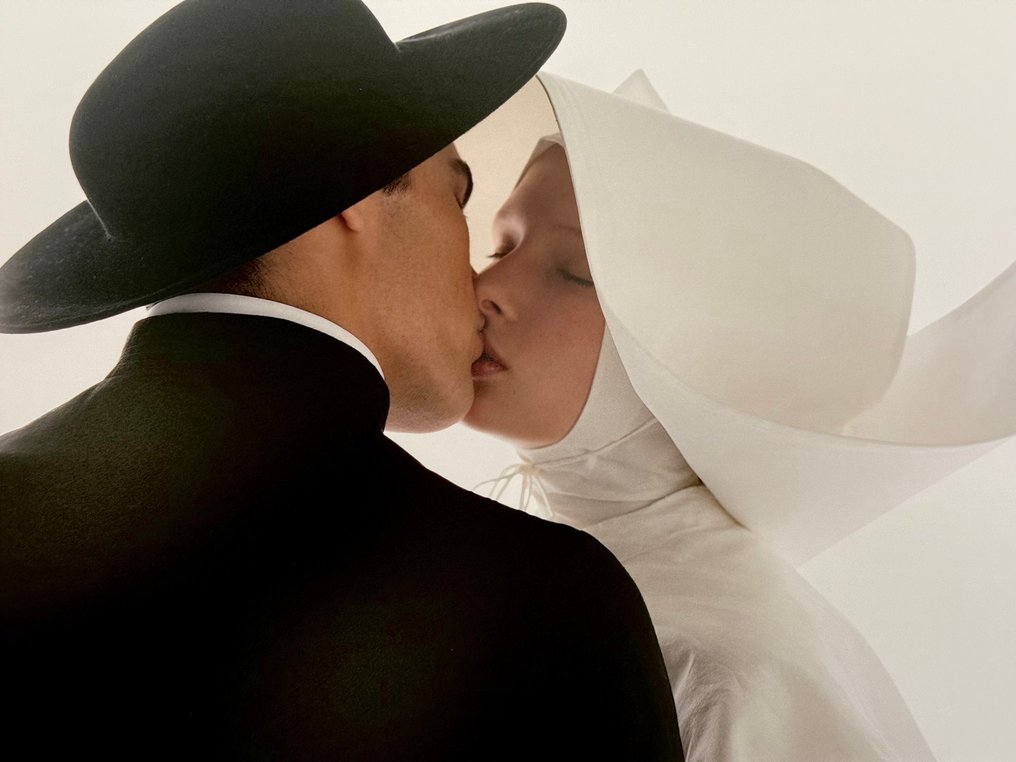
Oliviero Toscani's painting, titled 'The Nun and the Priest,' is a work of strong visual and conceptual impact. In this painting, Toscani addresses controversial themes related to religion, sexuality, and morality. The scene depicts a nun kissing a priest, creating a provocative contrast between the traditional image of religious life and human desire.
The kiss is depicted intensely, highlighting the emotions and tension between the two characters. The colors and composition help emphasize the moment, making the work both attractive and unsettling. Toscani uses this image to challenge social and religious conventions, inviting the audience to reflect on the complexities of faith and desire.
This work is emblematic of Toscani's bold style, which often seeks to provoke debate and elicit reactions through his works.
Oliviero Toscani
Sinful Love
Authenticity certificate on the back (check the images).
approximately 49x40cm including the passepartout and approximately
35x23cm image
Oliviero Toscani's painting, titled 'The Nun and the Priest,' is a work of strong visual and conceptual impact. In this painting, Toscani addresses controversial themes related to religion, sexuality, and morality. The scene depicts a nun kissing a priest, creating a provocative contrast between the traditional image of religious life and human desire.
The kiss is depicted intensely, highlighting the emotions and tension between the two characters. The colors and composition help emphasize the moment, making the work both attractive and unsettling. Toscani uses this image to challenge social and religious conventions, inviting the audience to reflect on the complexities of faith and desire.
This work is emblematic of Toscani's bold style, which often seeks to provoke debate and elicit reactions through his works.
Details
Date of print
2000
Artist
Oliviero Toscani (1946–2025)
Sold by
Gallery
Title of artwork
TOSCANI 1
Condition
Fine
Technique
Digital print, Fine art print
Height
40 cm
Edition
1892/5000
Width
49 cm
Signature
Hand signed
Genre
Fashion
Sold by