Anton Heyboer (1924-2005) - Can Can


12
days
07
hours
46
minutes
25
seconds
Current bid
€ 125
Reserve price not met

Expert
Selected by Florent Fressier
Specialises in works on paper and (New) School of Paris artists. Former gallery owner.
Estimate € 450 - € 550
5 other people are watching this object
 Bidder 5586 Bidder 5586 | €125 | |
|---|---|---|
| Bidder 5586 | €75 |
Catawiki Buyer Protection
Your payment’s safe with us until you receive your object.View details
Trustpilot 4.4 | 121980 reviews
Rated Excellent on Trustpilot.
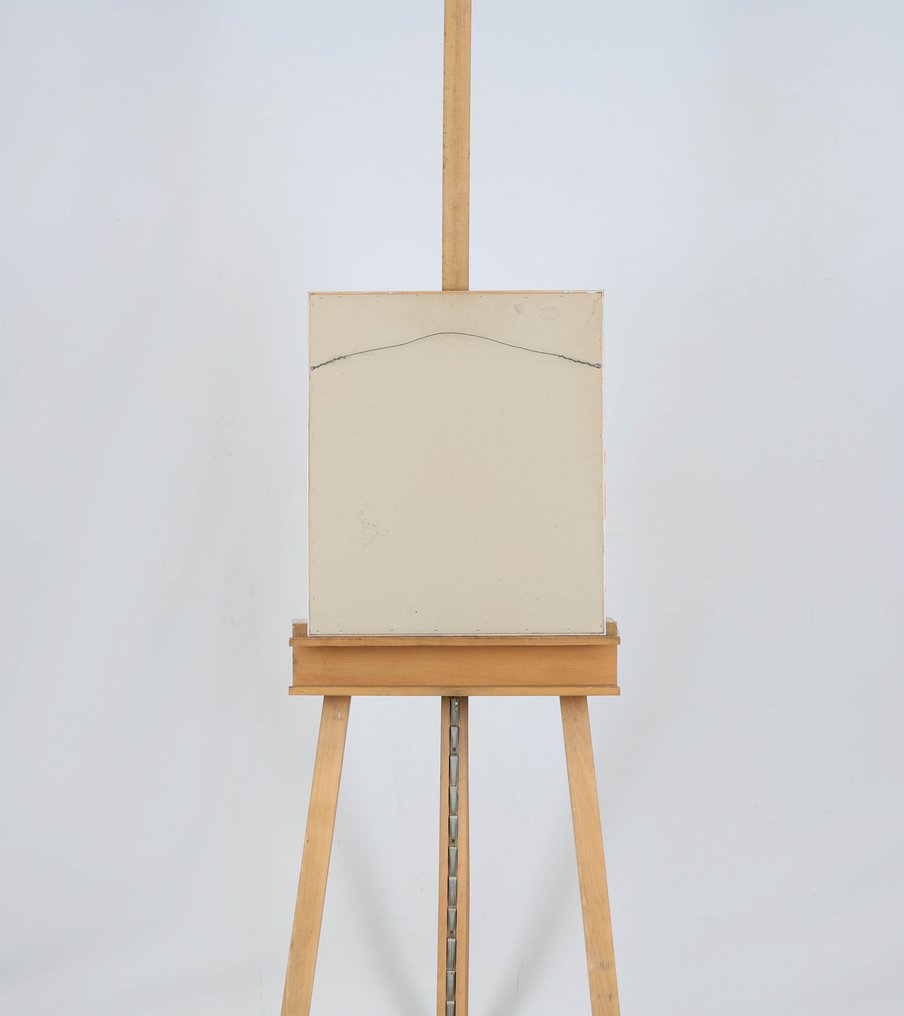
Anton Heyboer, Can Can, mixed technique on paper, original edition, framed, from 1980 to 1990.
AI-assisted summary
Description from the seller
Nice work by Anton Heyboer. Mixed technique on paper and nicely framed. The size of the work is 32 x 25 cm.
Anton Heyboer (1924 – 2005) was a Dutch painter and etcher. He lived with four women in a commune in Den Ilp (Landsmeer). The 'fifth' woman was his art saleswoman across the street. Heyboer was born in Sabang, on the Indonesian island of Pulau Weh (north of Sumatra), as the son of a mechanical engineer. Five months after his birth, the family moved to Haarlem, in 1925 to Delft, in 1929 to Voorburg, and from 1933 to 1938, the family lived in Curaçao. Thereafter, he also spent some time in New York. Heyboer was trained as a mechanical engineer. Before the outbreak of World War II, the family returned to Haarlem. In 1943, Heyboer was arrested by the Germans as part of the Forced Labor Deployment and taken to a transit camp for foreign forced laborers in Prenzlauer Berg (Berlin). He managed to escape and, traumatized, fled to the Netherlands, where he went into hiding in Vinkeveen and did agricultural work.
Viewing is, of course, possible. Additionally, we have our own in-house framing workshop, which is celebrating its 85th anniversary. Furthermore, we collaborate with restorers from the professional organization: 'Restauratoren Nederland'. If you wish to make use of this service, we would of course be happy to hear from you.
Seller's Story
Over Art Dumay
Art Dumay in Nuenen is much more than just a gallery. It is a versatile art enterprise that brings together modern and classical art under one roof. From our gallery for contemporary painting and our art dealership with classical works, we are engaged in evaluating, purchasing, and selling art. We do this both directly and through carefully organized art auctions for modern and classical art.
Our selection is broad and varied — from modern Dutch artists to renowned masters from the past.
With more than 25 years of experience, we successfully guide purchase and sale processes for individuals, companies, governments, and institutions.
Art Dumay has an extensive regional, national, and international network of buyers and collectors.
In addition to our sales activities, we also provide professional appraisals, restorations, and repair work in-house. Thanks to our effective auction methodology, we are able to reach a large international audience, while our art collections are safely stored and insured in our 1,000 m² building in Nuenen.
At Art Dumay, expertise, a passion for art, and personal attention are at the core — each day again.
Translated by Google TranslateNice work by Anton Heyboer. Mixed technique on paper and nicely framed. The size of the work is 32 x 25 cm.
Anton Heyboer (1924 – 2005) was a Dutch painter and etcher. He lived with four women in a commune in Den Ilp (Landsmeer). The 'fifth' woman was his art saleswoman across the street. Heyboer was born in Sabang, on the Indonesian island of Pulau Weh (north of Sumatra), as the son of a mechanical engineer. Five months after his birth, the family moved to Haarlem, in 1925 to Delft, in 1929 to Voorburg, and from 1933 to 1938, the family lived in Curaçao. Thereafter, he also spent some time in New York. Heyboer was trained as a mechanical engineer. Before the outbreak of World War II, the family returned to Haarlem. In 1943, Heyboer was arrested by the Germans as part of the Forced Labor Deployment and taken to a transit camp for foreign forced laborers in Prenzlauer Berg (Berlin). He managed to escape and, traumatized, fled to the Netherlands, where he went into hiding in Vinkeveen and did agricultural work.
Viewing is, of course, possible. Additionally, we have our own in-house framing workshop, which is celebrating its 85th anniversary. Furthermore, we collaborate with restorers from the professional organization: 'Restauratoren Nederland'. If you wish to make use of this service, we would of course be happy to hear from you.
Seller's Story
Over Art Dumay
Art Dumay in Nuenen is much more than just a gallery. It is a versatile art enterprise that brings together modern and classical art under one roof. From our gallery for contemporary painting and our art dealership with classical works, we are engaged in evaluating, purchasing, and selling art. We do this both directly and through carefully organized art auctions for modern and classical art.
Our selection is broad and varied — from modern Dutch artists to renowned masters from the past.
With more than 25 years of experience, we successfully guide purchase and sale processes for individuals, companies, governments, and institutions.
Art Dumay has an extensive regional, national, and international network of buyers and collectors.
In addition to our sales activities, we also provide professional appraisals, restorations, and repair work in-house. Thanks to our effective auction methodology, we are able to reach a large international audience, while our art collections are safely stored and insured in our 1,000 m² building in Nuenen.
At Art Dumay, expertise, a passion for art, and personal attention are at the core — each day again.
Translated by Google TranslateDetails
Artist
Anton Heyboer (1924-2005)
Sold with frame
Yes
Sold by
Gallery
Edition
Original
Title of artwork
Can Can
Technique
Mixed media
Signature
Hand signed
Country of Origin
Netherlands
Condition
Good condition
Height
57 cm
Width
50 cm
Style
Abstract
Period
1980-1990
