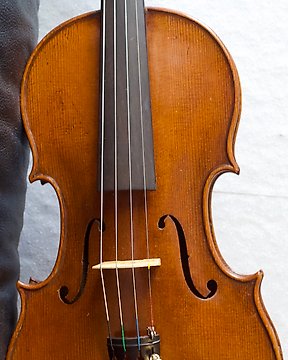
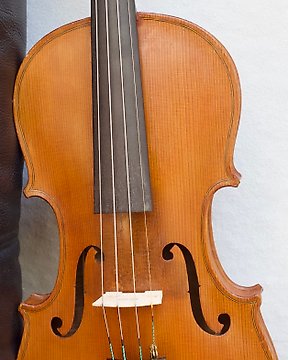
EDUARDO FERRER - Unknown - - Classical guitar - Spain - 1968


Add to your favourites to get an alert when the auction starts.
Catawiki Buyer Protection
Your payment’s safe with us until you receive your object.View details
Trustpilot 4.4 | 122385 reviews
Rated Excellent on Trustpilot.
Description from the seller
Vintage 1968 classical concert guitar handmade from
Eduardo Ferrer, a famous luthier in Granada (Spain).
He's known as the 'father of the Granada school'.
Label is signed by the maestro, new bone nut and saddle just installed.
Very good sounding guitar. I leave the action at 4 mm but it could be easily lowered depending on the player.
See pictures, some dings and scratches from age.
Come with a professional Alhambra case.
A guitar by one of the most famous luthiers in Spain, Eduardo Ferrer, was the nephew of Benito Ferrer, the founder of the renowned Granada School. He was the master of most guitar makers in Granada and is therefore a key figure in the history of guitar making.
Eduardo Ferrer was born in 1905. When he was about ten or twelve years old, he entered his uncle Benito Ferrer's shop as an apprentice. He also attended seminar school for a while, thinking he would like to be a priest, but he changed his mind. When his uncle died in 1925, Eduardo took over his shop.
His life was a long adventure: from his apprenticeship when he earned nothing, to the war when he sold a guitar for twenty pesetas, which seemed to be a fortune. Like a luthier, his work closely followed that of his uncle. Although he tried several experiments, he continued to rely on the tried and true traditional methods of Benito Ferrer and Antonio de Torres. In his opinion, they had explored everything that needed to be explored and there was nothing new to invent.
His importance as a luthier, however, was also as a teacher. Almost every guitar maker working in Granada today learned from him or from those who did. His apprentices include José Castaño and Milan, who continued their studies with him after the death of his uncle; Juan López, who died during the war; Miguel Robles; Manuel Fernández; Francisco Manuel Díaz; Manuel López; Antonio Marín; his own son José Ferrer; and many more. He also helped train classical guitar makers in Japan. He spent three months each year between 1966 and 1968 in Japan, showing Yamaha workers how to build guitars. (So, this guitar was made in the last year of the Japan sessions.)
The provided link is a URL to a YouTube Shorts video, which cannot be directly translated as it is not a textual content. Since the task requires translating text, and no text is provided in the link, I cannot produce a translation. If you can provide the transcript or the content of the video, I would be happy to translate it.
The link provided is a URL to a YouTube video, which does not contain translatable text.
Vintage 1968 classical concert guitar handmade from
Eduardo Ferrer, a famous luthier in Granada (Spain).
He's known as the 'father of the Granada school'.
Label is signed by the maestro, new bone nut and saddle just installed.
Very good sounding guitar. I leave the action at 4 mm but it could be easily lowered depending on the player.
See pictures, some dings and scratches from age.
Come with a professional Alhambra case.
A guitar by one of the most famous luthiers in Spain, Eduardo Ferrer, was the nephew of Benito Ferrer, the founder of the renowned Granada School. He was the master of most guitar makers in Granada and is therefore a key figure in the history of guitar making.
Eduardo Ferrer was born in 1905. When he was about ten or twelve years old, he entered his uncle Benito Ferrer's shop as an apprentice. He also attended seminar school for a while, thinking he would like to be a priest, but he changed his mind. When his uncle died in 1925, Eduardo took over his shop.
His life was a long adventure: from his apprenticeship when he earned nothing, to the war when he sold a guitar for twenty pesetas, which seemed to be a fortune. Like a luthier, his work closely followed that of his uncle. Although he tried several experiments, he continued to rely on the tried and true traditional methods of Benito Ferrer and Antonio de Torres. In his opinion, they had explored everything that needed to be explored and there was nothing new to invent.
His importance as a luthier, however, was also as a teacher. Almost every guitar maker working in Granada today learned from him or from those who did. His apprentices include José Castaño and Milan, who continued their studies with him after the death of his uncle; Juan López, who died during the war; Miguel Robles; Manuel Fernández; Francisco Manuel Díaz; Manuel López; Antonio Marín; his own son José Ferrer; and many more. He also helped train classical guitar makers in Japan. He spent three months each year between 1966 and 1968 in Japan, showing Yamaha workers how to build guitars. (So, this guitar was made in the last year of the Japan sessions.)
The provided link is a URL to a YouTube Shorts video, which cannot be directly translated as it is not a textual content. Since the task requires translating text, and no text is provided in the link, I cannot produce a translation. If you can provide the transcript or the content of the video, I would be happy to translate it.
The link provided is a URL to a YouTube video, which does not contain translatable text.